


Request Quote
(Ships tomorrow)
HT40 Equivalent & Substitute Parts
Part Overview
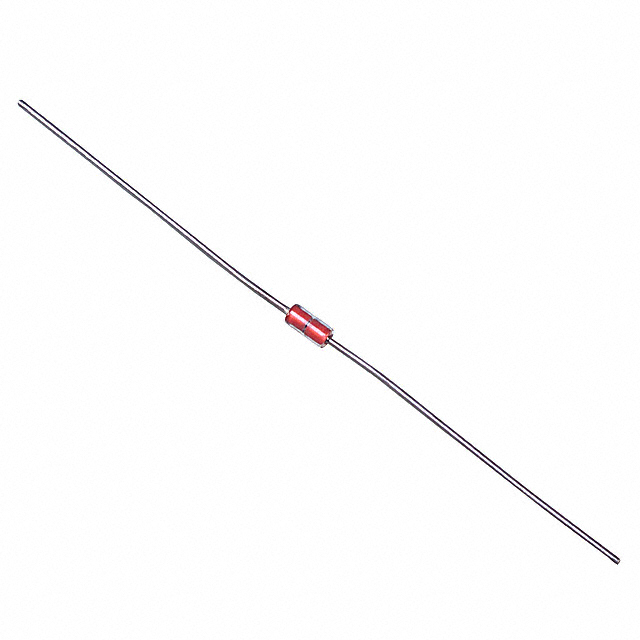
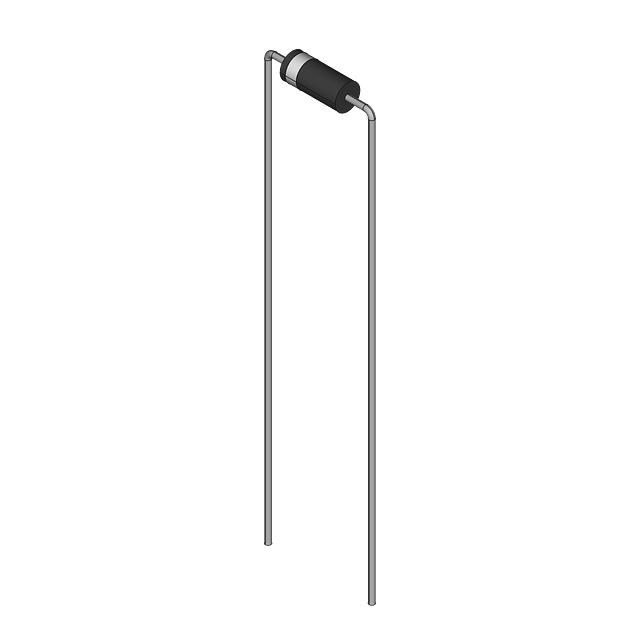
The HT40 is a DIAC thyristor manufactured by Littelfuse Inc., rated for 35–45V breakover voltage with 2A peak output current in a DO-35 axial package. This component is classified as obsolete, making equivalent substitutes necessary for ongoing production and maintenance applications. DIAC thyristors function as bidirectional trigger devices in AC circuits, commonly used in triac gate drive and phase control applications. The HT40's electrical characteristics define the scope of compatible alternatives.
Substiute Parts
Key Parameters
| Parameter | HT40 Specification |
|---|---|
| Voltage - Breakover | 35 – 45V |
| Current - Breakover | 15 µA |
| Current - Peak Output | 2 A |
| Operating Temperature Range | –40°C to +125°C (TJ) |
| Package / Case | DO-204AH, DO-35, Axial |
| RoHS Status | ROHS3 Compliant |
| Moisture Sensitivity Level | 1 (Unlimited) |
Substitute Part Grouping Explanation
Substitution eligibility for DIAC thyristors is determined by three critical parameters: breakover voltage range, peak output current rating, and package compatibility. The HT40 operates within a 35–45V breakover window with 2A peak current capacity in a DO-35 package.
Substitute parts are grouped into two categories based on these constraints:
Category 1: Direct Voltage Match (35–45V) Parts with breakover voltage specifications overlapping or contained within the HT40's 35–45V range qualify as direct substitutes. These maintain identical voltage-triggered operation in the target application.
Category 2: Lower Voltage Range (28–36V) Parts with breakover voltages below the HT40 specification are listed for reference but operate at reduced trigger thresholds. Selection requires circuit-level verification that lower trigger voltage does not compromise application performance.
All substitute candidates share the DO-35 package format, 2A peak current rating, identical temperature range, and ROHS3 compliance with the HT40.
Parameter Comparison
| Part Number | Manufacturer | Voltage - Breakover | Current - Breakover | Current - Peak Output | Operating Temperature | Package | Product Status | RoHS Status |
|---|---|---|---|---|---|---|---|---|
| HT40 | Littelfuse Inc. | 35 – 45V | 15 µA | 2 A | –40°C to +125°C | DO-35 | Obsolete | ROHS3 Compliant |
| DB4 | STMicroelectronics | 35 – 45V | 50 µA | 2 A | –40°C to +125°C | DO-35 | Active | ROHS3 Compliant |
| DB3TG | STMicroelectronics | 30 – 34V | 15 µA | 2 A | –40°C to +125°C | DO-35 | Active | ROHS3 Compliant |
| DB3 | Fairchild Semiconductor | 28 – 36V | 50 µA | 2 A | –40°C to +125°C | DO-35 | Obsolete | ROHS3 Compliant |
Engineering Selection Recommendations
Primary Substitute: DB4 (STMicroelectronics)
The DB4 provides the closest functional match to the HT40. Both parts share identical 35–45V breakover voltage specification and 2A peak current rating. The DB4 is currently in active production status, ensuring long-term availability and supply chain stability. Higher breakover current (50 µA vs. 15 µA) does not compromise circuit operation in standard DIAC trigger applications. ROHS3 compliance and identical temperature range confirm full compatibility.
Secondary Substitute: DB3TG (STMicroelectronics)
The DB3TG is an active-status alternative with matching 15 µA breakover current and identical thermal specifications. Breakover voltage range of 30–34V is lower than the HT40's 35–45V specification. This part is suitable only for applications where trigger voltage reduction does not affect circuit performance or safety margins.
Reference Parts: DB3 (Fairchild Semiconductor)
The DB3 shares the lower voltage range (28–36V) with DB3TG but carries obsolete product status. While electrically functional, DB3 availability is limited and declining. New designs should prioritize active-status alternatives.
Frequently Asked Questions (FAQ)
Q: Can DB4 replace HT40 in all applications?
A: DB4 matches the HT40's breakover voltage range (35–45V) and peak current (2A) in identical DO-35 packaging. The higher breakover current specification (50 µA) does not prevent substitution in standard DIAC gate-drive circuits. Confirmation that application circuit does not depend on the specific 15 µA breakover current value is required.
Q: What is the difference between DB3TG and DB3?
A: Both parts operate at 30–34V breakover voltage. DB3TG is actively manufactured by STMicroelectronics with current availability, while DB3 (Fairchild) is obsolete with declining inventory. For new applications, DB3TG is the preferred choice within the lower voltage category.
Q: Is the DO-35 package identical across all substitute parts?
A: Yes. All listed substitutes use DO-204AH / DO-35 axial packaging, ensuring mechanical and electrical pin compatibility with the HT40 footprint.
Q: Why does DB4 have higher breakover current than HT40?
A: Breakover current (15 µA vs. 50 µA) represents the gate trigger current threshold. Higher values do not degrade DIAC function in applications designed for standard trigger thresholds. Circuit-level analysis is required only if the design depends on the specific 15 µA specification.
Q: Are all substitutes RoHS3 compliant?
A: Yes. HT40, DB4, DB3TG, and DB3 all carry ROHS3 Compliant certification, meeting environmental and material restriction requirements.
Q: What is the temperature operating range for these parts?
A: All listed parts operate across –40°C to +125°C junction temperature, matching the HT40 specification for industrial and consumer applications.
Alternative Parts

SJ6012L2TP
Littelfuse Inc.
6 Alternative Parts

JMK107BBJ476MA-RE
Taiyo Yuden
10 Alternative Parts

GMK107BBJ475MA-T
Taiyo Yuden
5 Alternative Parts
SJ6020N2ARP
Littelfuse Inc.
3 Alternative Parts
SJ6025R2ATP
Littelfuse Inc.
4 Alternative Parts

2474-05L
API Delevan Inc.
1 Alternative Parts

4590R-684K
API Delevan Inc.
1 Alternative Parts

CM6560R-334
API Delevan Inc.
1 Alternative Parts

CM6460-104
API Delevan Inc.
1 Alternative Parts

5526-12
API Delevan Inc.
1 Alternative Parts