


Request Quote
(Ships tomorrow)
Equivalent & Substitute Parts for HSM5100J/TR13
Part Overview
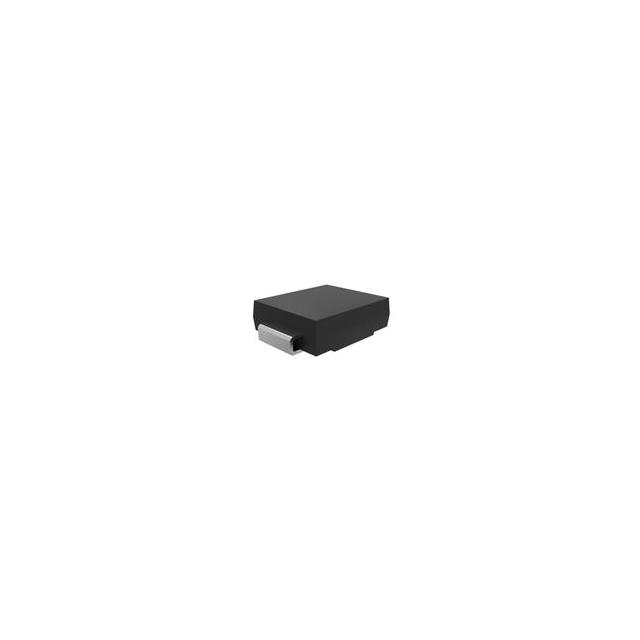
The HSM5100J/TR13 from Microchip Technology is a Schottky diode in the Diodes, Rectifiers category. It is a surface-mount component with a maximum DC reverse voltage of 100 V and an average rectified current rating of 5 A, housed in a DO-214AB (SMC) package. Currently active, this diode serves fast-recovery, high-efficiency rectification needs in power supply and switching applications. Finding alternative models is important for ensuring supply continuity, inventory risk mitigation, compliance with environmental directives, and uninterrupted production in case of end-of-life announcements.
Substiute Parts
Key Parameters
| Parameter | HSM5100J/TR13 |
|---|---|
| Technology | Schottky |
| Voltage - DC Reverse (Vr) (Max) | 100 V |
| Current - Average Rectified (Io) | 5A |
| Voltage - Forward (Vf) (Max) @ If | 800 mV @ 5 A |
| Speed | Fast Recovery =< 500ns, > 200mA (Io) |
| Current - Reverse Leakage @ Vr | 250 µA @ 100 V |
| Mounting Type | Surface Mount |
| Package / Case | DO-214AB, SMC |
| Operating Temperature - Junction | -55°C ~ 175°C |
| RoHS Status | RoHS non-compliant |
Substitute Part Grouping Explanation
Substitution is determined strictly by matching essential parameters as provided:
- Technology: Schottky
- Voltage - DC Reverse (Vr) (Max): 100 V
- Current - Average Rectified (Io): 5A
- Voltage - Forward (Vf) (Max) @ If: ≤850 mV @ 5 A
- Speed: Fast Recovery =< 500ns, >200mA (Io)
- Mounting Type: Surface Mount
- Package / Case: DO-214AB, SMC
- Operating Temperature - Junction: Must meet or exceed the minimum requirement
- Compliance and status: Product must be active
Diode substitutes within the Diodes, Rectifiers category are grouped based on these factors to ensure strict electrical and mechanical compatibility.
Parameter Comparison
| Parameter | HSM5100J/TR13 | CDBC5100-G | SK510L-TP |
|---|---|---|---|
| Manufacturer | Microchip Technology | Comchip Technology | Micro Commercial Co |
| Technology | Schottky | Schottky | Schottky |
| Voltage - DC Reverse (Vr) (Max) | 100 V | 100 V | 100 V |
| Current - Average Rectified (Io) | 5A | 5A | 5A |
| Voltage - Forward (Vf) (Max) @ If | 800 mV @ 5 A | 850 mV @ 5 A | 850 mV @ 5 A |
| Speed | Fast Recovery =< 500ns, > 200mA (Io) | Fast Recovery =< 500ns, > 200mA (Io) | Fast Recovery =< 500ns, > 200mA (Io) |
| Current - Reverse Leakage @ Vr | 250 µA @ 100 V | 500 µA @ 100 V | 1 mA @ 100 V |
| Mounting Type | Surface Mount | Surface Mount | Surface Mount |
| Package / Case | DO-214AB, SMC | DO-214AB, SMC | DO-214AB, SMC |
| Operating Temperature - Junction | -55°C ~ 175°C | 125°C (Max) | -55°C ~ 150°C |
| RoHS Status | RoHS non-compliant | ROHS3 Compliant | ROHS3 Compliant |
| Product Status | Active | Active | Active |
Engineering Selection Recommendations
All compared diodes are active and available in the same package and mounting type. The HSM5100J/TR13 does not meet RoHS compliance; both CDBC5100-G and SK510L-TP are ROHS3 Compliant. Select CDBC5100-G or SK510L-TP if environmental compliance is a requirement. Ensure the maximum operating temperature rating aligns with specific application needs, as maximum junction temperature varies between parts.
Frequently Asked Questions (FAQ)
Q1: Which parameters are essential for substituting Schottky rectifier diodes?
A1: Substitution requires matching the technology type, maximum reverse voltage, average rectified current, forward voltage rating, speed, mounting type, and package.
Q2: Are all substitute diodes in the DO-214AB (SMC) package interchangeable mechanically?
A2: All compared parts use the DO-214AB (SMC) package and are suitable for surface-mount applications with compatible board layouts.
Q3: How important is RoHS status when selecting substitutes?
A3: RoHS compliance is necessary for regions or applications requiring lead-free or environmentally safe components. The main part is non-compliant; both substitutes are ROHS3 Compliant.
Q4: Does the difference in maximum junction temperature affect compatibility?
A4: Selection should ensure the substitute’s operating temperature meets system requirements. The main part allows up to 175°C; substitutes offer lower maximum temperatures.
Q5: Is there a significant difference in electrical characteristics among these substitutes?
A5: All parts meet the required core electrical parameters but differ in forward voltage and reverse leakage current ratings; these differences must align with application tolerances.
Alternative Parts

SJ6012L2TP
Littelfuse Inc.
6 Alternative Parts

JMK107BBJ476MA-RE
Taiyo Yuden
10 Alternative Parts

GMK107BBJ475MA-T
Taiyo Yuden
5 Alternative Parts
SJ6020N2ARP
Littelfuse Inc.
3 Alternative Parts
SJ6025R2ATP
Littelfuse Inc.
4 Alternative Parts

2474-05L
API Delevan Inc.
1 Alternative Parts

4590R-684K
API Delevan Inc.
1 Alternative Parts

CM6560R-334
API Delevan Inc.
1 Alternative Parts

CM6460-104
API Delevan Inc.
1 Alternative Parts

5526-12
API Delevan Inc.
1 Alternative Parts