


Request Quote
(Ships tomorrow)
HFW7S-2STAE1LF Equivalent & Substitute Parts
Part Overview
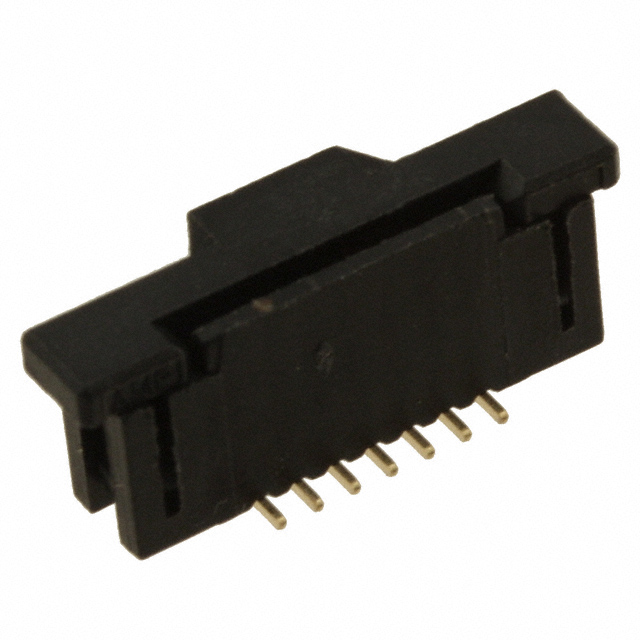
The HFW7S-2STAE1LF is a 7-position FPC (Flat Flexible Connector) with vertical, 1-sided contacts manufactured by Amphenol ICC (FCI). This surface mount connector operates at 1.00mm pitch and is designed for applications requiring flexible circuit interconnection. The part is currently obsolete, making identification of compatible substitutes essential for ongoing production support and design updates.
Substiute Parts
Key Parameters
| Parameter | Value |
|---|---|
| Connector Type | FPC Contacts, Vertical - 1 Sided |
| Number of Positions | 7 |
| Pitch | 0.039" (1.00mm) |
| Mounting Type | Surface Mount |
| Termination | Solder |
| FFC/FCB Thickness | 0.30mm |
| Voltage Rating | 100V |
| Current Rating | 1A |
| Operating Temperature Range | -55°C ~ 85°C |
| Contact Material | Phosphor Bronze |
| Contact Finish | Gold |
| Housing Material | Polyamide (PA6T), Nylon 6T, Glass Filled |
| RoHS Status | RoHS Compliant |
| Flammability Rating | UL94 V-0 |
Substitute Part Grouping Explanation
Substitution eligibility for the HFW7S-2STAE1LF is determined by the following critical parameters:
- Connector Configuration: 7-position FPC connector with vertical, 1-sided contact arrangement
- Pitch Specification: 0.039" (1.00mm) contact spacing
- Mounting Method: Surface mount termination
- Electrical Ratings: Minimum 100V voltage rating and 1A current capacity
- Mechanical Compatibility: 0.30mm FFC/FCB thickness tolerance
- Material Compliance: RoHS compliance and UL94 V-0 flammability rating
The substitute part 1734248-7 (TE Connectivity AMP Connectors) meets all critical substitution criteria. Both connectors share identical position count, pitch, mounting type, termination method, FFC thickness, contact material, contact finish, and compliance certifications.
Parameter Comparison
| Parameter | HFW7S-2STAE1LF (Amphenol ICC) | 1734248-7 (TE Connectivity) | Compatibility |
|---|---|---|---|
| Number of Positions | 7 | 7 | Match |
| Pitch | 0.039" (1.00mm) | 0.039" (1.00mm) | Match |
| Connector Type | Contacts, Vertical - 1 Sided | Contacts, Vertical - 1 Sided | Match |
| Mounting Type | Surface Mount | Surface Mount | Match |
| Termination | Solder | Solder | Match |
| FFC/FCB Thickness | 0.30mm | 0.30mm | Match |
| Height Above Board | 0.209" (5.30mm) | 0.217" (5.50mm) | Compatible (0.008" difference) |
| Voltage Rating | 100V | 125V | Compatible (higher rating) |
| Current Rating | 1A | 1A | Match |
| Operating Temperature | -55°C ~ 85°C | -20°C ~ 85°C | Compatible (narrower range) |
| Contact Material | Phosphor Bronze | Phosphor Bronze | Match |
| Contact Finish | Gold | Gold | Match |
| Housing Material | Polyamide (PA6T), Nylon 6T, Glass Filled | Polyamide (PA9T), Nylon 9T | Compatible (different polymer grade) |
| RoHS Status | RoHS Compliant | RoHS Compliant | Match |
| Flammability Rating | UL94 V-0 | UL94 V-0 | Match |
| Product Status | Obsolete | Active | Substitute available |
Engineering Selection Recommendations
The 1734248-7 (TE Connectivity AMP Connectors) is a direct functional substitute for the obsolete HFW7S-2STAE1LF. Selection is supported by the following factors:
Compliance & Certification: Both parts maintain RoHS compliance and UL94 V-0 flammability certification, meeting regulatory requirements for equivalent applications.
Electrical Performance: The substitute provides a higher voltage rating (125V vs. 100V), ensuring compatibility with the original part's electrical specifications while offering additional margin.
Mechanical Compatibility: Identical pitch (1.00mm), position count (7), and FFC thickness (0.30mm) ensure direct mechanical interchangeability in existing PCB layouts. The height difference of 0.008" (0.20mm) is within typical manufacturing tolerances for surface mount connectors.
Product Availability: The substitute is in active production status with substantial inventory availability (16,992 pcs), ensuring long-term supply continuity compared to the obsolete original part.
Material Consideration: The substitute uses PA9T polymer housing versus PA6T in the original. Both materials meet the same flammability standard and are suitable for equivalent thermal and mechanical environments within the specified operating temperature range of the substitute (-20°C ~ 85°C).
Frequently Asked Questions (FAQ)
Q: Can the 1734248-7 be used as a direct replacement in existing designs using HFW7S-2STAE1LF?
A: Yes. Both connectors share identical electrical ratings (1A, 100V minimum), mechanical pitch (1.00mm), position count (7), and mounting configuration (surface mount, solder termination). The 0.008" height difference and higher voltage rating of the substitute do not affect functional compatibility.
Q: What is the significance of the different housing materials (PA6T vs. PA9T)?
A: Both materials are polyamide-based polymers meeting UL94 V-0 flammability requirements. PA9T offers enhanced thermal and chemical resistance compared to PA6T. For applications within the substitute's operating range (-20°C ~ 85°C), both materials are functionally equivalent.
Q: Does the substitute's narrower operating temperature range (-20°C ~ 85°C vs. -55°C ~ 85°C) affect compatibility?
A: The substitute's lower temperature limit of -20°C is suitable for most commercial and industrial applications. If your design requires operation below -20°C, the original part's -55°C rating would be necessary. Verify your application's minimum operating temperature requirement.
Q: What is the difference between the locking features?
A: The original HFW7S-2STAE1LF has no locking feature, while the 1734248-7 includes a Slide Lock mechanism. This additional feature enhances connector retention and does not prevent mechanical or electrical compatibility.
Q: Are there packaging differences between these parts?
A: The original part packaging is not specified. The substitute is supplied in Cut Tape (CT) packaging. Confirm your assembly process compatibility with this packaging format.
Q: What is the mating cycle difference (30 vs. 20)?
A: The original part specifies 30 mating cycles, while the substitute specifies 20. For applications requiring frequent connector mating and unmating, this difference should be evaluated against your specific use case requirements.
Alternative Parts

SJ6012L2TP
Littelfuse Inc.
6 Alternative Parts

JMK107BBJ476MA-RE
Taiyo Yuden
10 Alternative Parts

GMK107BBJ475MA-T
Taiyo Yuden
5 Alternative Parts
SJ6020N2ARP
Littelfuse Inc.
3 Alternative Parts
SJ6025R2ATP
Littelfuse Inc.
4 Alternative Parts

2474-05L
API Delevan Inc.
1 Alternative Parts

4590R-684K
API Delevan Inc.
1 Alternative Parts

CM6560R-334
API Delevan Inc.
1 Alternative Parts

CM6460-104
API Delevan Inc.
1 Alternative Parts

5526-12
API Delevan Inc.
1 Alternative Parts