


Request Quote
(Ships tomorrow)
GTCR38-231M-P10-FS Gas Discharge Tube Equivalent & Substitute Parts
Part Overview
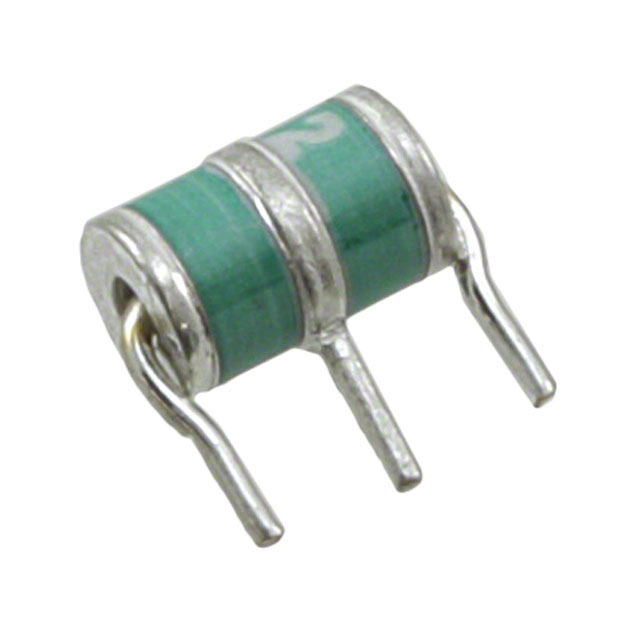
The GTCR38-231M-P10-FS is a 3-pole gas discharge tube (GDT) manufactured by Littelfuse Inc., rated for 230V DC spark-over voltage with 10kA impulse discharge current capacity. This component is classified as obsolete, necessitating identification of active equivalent alternatives for new designs and ongoing production requirements. The part is RoHS3 compliant and REACH unaffected, with unlimited moisture sensitivity rating (MSL 1).
Substiute Parts
Key Parameters
| Parameter | Value |
|---|---|
| Manufacturer Part Number | GTCR38-231M-P10-FS |
| Manufacturer | Littelfuse Inc. |
| Series | GT |
| Voltage - DC Spark Over (Nom) | 230 V |
| Impulse Discharge Current (8/20µs) | 10000A (10kA) |
| Tolerance | ±20% |
| Number of Poles | 3 |
| Fail Short | Yes |
| Mounting Type | Through Hole |
| Package / Case | Radial Cylinder, 3 Lead |
| Product Status | Obsolete |
| RoHS Status | ROHS3 Compliant |
| MSL | 1 (Unlimited) |
Substitute Part Grouping Explanation
Substitution of the GTCR38-231M-P10-FS is determined by the following critical electrical and mechanical parameters:
Electrical Compatibility Criteria:
- Impulse discharge current rating: 10kA (8/20µs waveform)
- Tolerance: ±20%
- Number of poles: 3
- Mounting type: Through hole
- Fail mode: Short circuit capability
Mechanical Compatibility Criteria:
- Package configuration: Radial or axial cylinder with 3-lead through-hole design
- Lead configuration: Compatible with radial bend or radial straight mounting
Regulatory & Compliance Criteria:
- RoHS3 compliance
- REACH unaffected status
- ECCN classification: EAR99
The voltage rating (230V DC spark-over) is the primary differentiator among available substitutes. Alternatives with different voltage ratings may be considered only when circuit design permits voltage derating or when the application tolerance allows operation at alternative voltage thresholds.
Parameter Comparison
| Parameter | GTCR38-231M-P10-FS (Main) | 2036-15-B2LF (Substitute) |
|---|---|---|
| Manufacturer | Littelfuse Inc. | Bourns Inc. |
| Series | GT | Mini-TRIGARD™ 2036 |
| Voltage - DC Spark Over (Nom) | 230 V | 150 V |
| Impulse Discharge Current (8/20µs) | 10000A (10kA) | 10000A (10kA) |
| Tolerance | ±20% | ±20% |
| Number of Poles | 3 | 3 |
| Fail Short | Yes | No |
| Mounting Type | Through Hole | Through Hole |
| Package / Case | Radial Cylinder, 3 Lead | Axial Cylinder, 3 Lead (Radial Bend) |
| Product Status | Obsolete | Active |
| RoHS Status | ROHS3 Compliant | ROHS3 Compliant |
| MSL | 1 (Unlimited) | Not Applicable |
Engineering Selection Recommendations
The 2036-15-B2LF from Bourns Inc. is an active product with RoHS3 compliance and REACH unaffected status, making it suitable for new designs requiring a replacement for the obsolete GTCR38-231M-P10-FS.
Key Considerations:
The primary electrical difference is the voltage rating: the substitute operates at 150V DC spark-over versus 230V for the original part. This 80V reduction in spark-over voltage represents a significant parameter deviation. Selection of this substitute is appropriate only when circuit design specifications permit operation at the lower voltage threshold or when the application environment ensures that transient voltages remain within the 150V spark-over rating.
The fail-short characteristic differs: the original part fails short (Yes), while the substitute does not fail short (No). This distinction affects circuit behavior during component failure and must be evaluated against system protection requirements.
The package configuration differs: the original uses a radial cylinder design, while the substitute uses an axial cylinder with radial bend. Both are through-hole mounted 3-lead configurations, but PCB layout and mechanical fit must be verified for compatibility.
Both parts maintain identical impulse discharge current ratings (10kA), tolerance (±20%), and regulatory compliance status (RoHS3, REACH unaffected, EAR99).
Frequently Asked Questions (FAQ)
Q: Can the 2036-15-B2LF directly replace the GTCR38-231M-P10-FS in existing designs?
A: Direct replacement requires verification of three factors: (1) circuit design must accommodate the 150V spark-over voltage instead of 230V, (2) the fail-short versus fail-open characteristic must be compatible with system protection architecture, and (3) PCB layout must accommodate the axial cylinder package with radial bend configuration.
Q: What is the significance of the voltage rating difference?
A: The voltage rating determines the transient voltage threshold at which the GDT triggers. The 2036-15-B2LF triggers at 150V, compared to 230V for the original part. In circuits designed for 230V protection, the substitute will trigger at lower voltages, potentially causing nuisance activation. Use only when circuit design permits operation at 150V or when application transient voltages are confirmed to remain below this threshold.
Q: Are both parts RoHS3 compliant?
A: Yes, both the GTCR38-231M-P10-FS and 2036-15-B2LF are RoHS3 compliant and REACH unaffected, meeting current regulatory requirements for electronic component manufacturing and distribution.
Q: What is the difference between fail-short and fail-open characteristics?
A: The GTCR38-231M-P10-FS fails short, meaning the component conducts after triggering. The 2036-15-B2LF does not fail short, meaning it may not maintain continuous conduction after discharge. This affects circuit behavior during and after transient events and must be evaluated against system protection requirements.
Q: Are the package configurations mechanically compatible?
A: Both parts use through-hole mounting with 3 leads. The original uses a radial cylinder design, while the substitute uses an axial cylinder with radial bend. Physical dimensions and lead spacing must be verified against PCB footprint requirements before implementation.
Q: What is the impulse discharge current rating, and is it identical between parts?
A: Both parts are rated for 10kA impulse discharge current using the 8/20µs waveform standard. This rating is identical and represents the maximum transient current the component can safely discharge.
Alternative Parts

SJ6012L2TP
Littelfuse Inc.
6 Alternative Parts

JMK107BBJ476MA-RE
Taiyo Yuden
10 Alternative Parts

GMK107BBJ475MA-T
Taiyo Yuden
5 Alternative Parts
SJ6020N2ARP
Littelfuse Inc.
3 Alternative Parts
SJ6025R2ATP
Littelfuse Inc.
4 Alternative Parts

2474-05L
API Delevan Inc.
1 Alternative Parts

4590R-684K
API Delevan Inc.
1 Alternative Parts

CM6560R-334
API Delevan Inc.
1 Alternative Parts

CM6460-104
API Delevan Inc.
1 Alternative Parts

5526-12
API Delevan Inc.
1 Alternative Parts