


Request Quote
(Ships tomorrow)
FJP13007 Equivalent & Substitute Parts
Part Overview
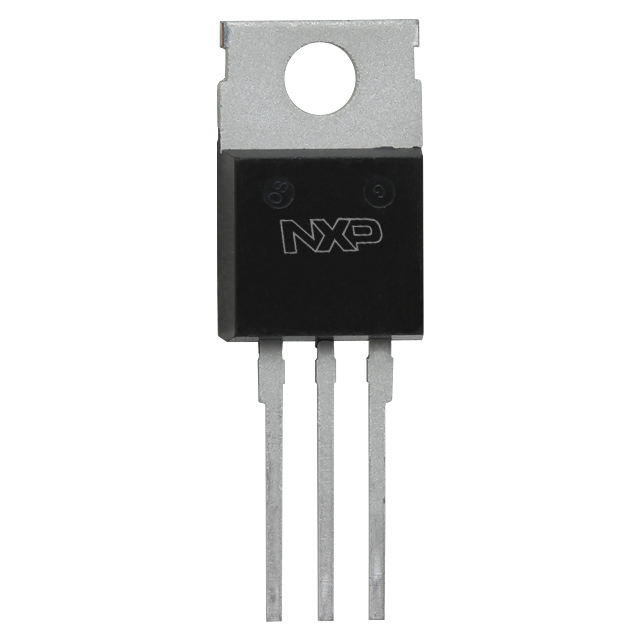
The FJP13007 is an NPN bipolar junction transistor manufactured by onsemi, rated for 400 V collector-emitter breakdown voltage and 8 A maximum collector current in a TO-220-3 through-hole package. This device is classified as obsolete, making equivalent and substitute parts necessary for ongoing design support and procurement continuity. The FJP13007 is suitable for high-voltage switching applications requiring 80 W power dissipation capability.
Substiute Parts
Key Parameters
| Parameter | Value | Unit |
|---|---|---|
| Transistor Type | NPN | — |
| Voltage - Collector Emitter Breakdown (Max) | 400 | V |
| Current - Collector (Ic) (Max) | 8 | A |
| Power - Max | 80 | W |
| Vce Saturation (Max) @ Ib, Ic | 3V @ 2A, 8A | — |
| DC Current Gain (hFE) (Min) @ Ic, Vce | 8 @ 2A, 5V | — |
| Frequency - Transition | 4 | MHz |
| Operating Temperature (Max) | 150 | °C (TJ) |
| Package / Case | TO-220-3 | — |
| Mounting Type | Through Hole | — |
Substitute Part Grouping Explanation
Substitution of the FJP13007 is determined by strict equivalence in the following electrical and mechanical parameters:
Primary Substitution Criteria:
- Transistor Type: NPN
- Voltage - Collector Emitter Breakdown (Max): 400 V
- Current - Collector (Ic) (Max): 8 A
- Power - Max: 80 W
- Package / Case: TO-220-3
- Mounting Type: Through Hole
Secondary Compatibility Factors:
- Vce Saturation characteristics
- DC Current Gain (hFE) specifications
- Operating Temperature range
- Product Status (Active status preferred for new designs)
Parts are classified as Direct Substitutes when all primary criteria are met with identical electrical ratings. Parts are classified as Similar Substitutes when they meet primary electrical criteria but have reduced current ratings (4 A to 5 A) or other parameter variations that require application-level verification.
Parameter Comparison
| Part Number | Manufacturer | Ic (Max) [A] | Vce Breakdown (Max) [V] | Power (Max) [W] | Vce Sat @ Ib, Ic [V] | hFE (Min) @ Ic, Vce | Frequency [MHz] | Product Status | Package |
|---|---|---|---|---|---|---|---|---|---|
| FJP13007 | onsemi | 8 | 400 | 80 | 3 @ 2A, 8A | 8 @ 2A, 5V | 4 | Obsolete | TO-220-3 |
| MJE13007G | onsemi | 8 | 400 | 80 | 3 @ 2A, 8A | 5 @ 5A, 5V | 14 | Active | TO-220-3 |
| ST13007D | STMicroelectronics | 8 | 400 | 80 | 2 @ 2A, 8A | 8 @ 5A, 5V | — | Active | TO-220-3 |
| ST13007 | STMicroelectronics | 8 | 400 | 80 | 3 @ 2A, 8A | 5 @ 5A, 5V | — | Active | TO-220-3 |
| PHE13007,127 | WeEn Semiconductors | 8 | 400 | 80 | 0.35 @ 1A, 5A | 8 @ 2A, 5V | — | Active | TO-220-3 |
| BUJ105A,127 | WeEn Semiconductors | 8 | 400 | 80 | 1 @ 0.8A, 4A | 13 @ 0.5A, 5V | — | Active | TO-220-3 |
| FJP3305H1TU | Fairchild Semiconductor | 4 | 400 | 75 | 1 @ 1A, 4A | 8 @ 2A, 5V | Active | TO-220-3 | |
| FJP5304DTU | onsemi | 4 | 400 | 70 | 1.5 @ 0.5A, 2.5A | 8 @ 2A, 5V | Obsolete | TO-220-3 | |
| BUL138 | STMicroelectronics | 5 | 400 | 80 | 0.7 @ 1A, 5A | 8 @ 2A, 5V | Active | TO-220-3 |
Engineering Selection Recommendations
Direct Substitutes (Full Electrical Equivalence):
The following parts meet all primary substitution criteria and are recommended as direct replacements for the FJP13007:
-
MJE13007G (onsemi): Active product status. Identical current and voltage ratings. Improved transition frequency (14 MHz vs. 4 MHz). ROHS3 compliant. Suitable for new designs and legacy system support.
-
ST13007D (STMicroelectronics): Active product status. Identical current and voltage ratings. Lower Vce saturation (2V vs. 3V). ROHS3 compliant. High inventory availability (680,200 pcs).
-
ST13007 (STMicroelectronics): Active product status. Identical current and voltage ratings. Matches FJP13007 Vce saturation specification. ROHS3 compliant.
-
PHE13007,127 (WeEn Semiconductors): Active product status. Identical current and voltage ratings. Superior Vce saturation performance (0.35V). ROHS3 compliant.
-
BUJ105A,127 (WeEn Semiconductors): Active product status. Identical current and voltage ratings. Enhanced DC current gain (13 vs. 8). RoHS compliant.
Similar Substitutes (Reduced Current Rating):
The following parts provide functional substitution for applications not requiring the full 8 A collector current:
-
BUL138 (STMicroelectronics): Active product status. 5 A maximum collector current (62.5% of FJP13007). 80 W power rating maintained. Lower Vce saturation (0.7V). ROHS3 compliant. Suitable for reduced-current switching applications.
-
FJP3305H1TU (Fairchild Semiconductor): Active product status. 4 A maximum collector current (50% of FJP13007). 75 W power rating. Identical transition frequency (4 MHz). Suitable for lower-current applications.
-
FJP5304DTU (onsemi): Obsolete product status. 4 A maximum collector current. Not recommended for new designs.
Frequently Asked Questions (FAQ)
Q: Can MJE13007G be used as a direct replacement for FJP13007?
A: Yes. MJE13007G meets all primary substitution criteria: 8 A collector current, 400 V breakdown voltage, 80 W power rating, and TO-220-3 package. MJE13007G is an active product with improved transition frequency (14 MHz) and ROHS3 compliance, making it suitable for both legacy system support and new designs.
Q: What is the difference between ST13007 and ST13007D?
A: Both parts are manufactured by STMicroelectronics with identical electrical ratings (8 A, 400 V, 80 W). ST13007D is the tube-packaged variant, while ST13007 is also available in tube packaging. Both are active products with ROHS3 compliance. Selection between them depends on packaging and supplier availability requirements.
Q: Can BUL138 replace FJP13007 in all applications?
A: BUL138 has a reduced maximum collector current rating of 5 A compared to FJP13007's 8 A. BUL138 is suitable only for applications where the circuit design operates at or below 5 A collector current. Applications requiring the full 8 A capability require a direct substitute with identical current rating.
Q: Are all substitute parts RoHS compliant?
A: Most substitute parts listed are ROHS3 compliant. FJP13007 itself is not explicitly marked as RoHS compliant in the provided specifications. MJE13007G, ST13007D, ST13007, PHE13007,127, BUJ105A,127, FJP3305H1TU, and BUL138 all carry RoHS3 or RoHS compliance certifications.
Q: What is the significance of the TO-220-3 package specification?
A: TO-220-3 is the through-hole package format with three leads (collector, base, emitter). All listed substitute parts maintain this package specification, ensuring mechanical and thermal compatibility with existing PCB layouts and heat sink mounting arrangements. Package compatibility is a mandatory substitution criterion.
Q: Why is FJP13007 classified as obsolete?
A: FJP13007 is marked as obsolete by onsemi, indicating it is no longer in active production. Direct substitutes with active product status (MJE13007G, ST13007, ST13007D, PHE13007,127, BUJ105A,127) are available from multiple manufacturers and are recommended for new designs and long-term procurement planning.
Q: Can parts with different Vce saturation values be interchanged?
A: Vce saturation differences affect switching losses and thermal performance. Parts with lower Vce saturation (such as PHE13007,127 at 0.35V or BUJ105A,127 at 1V) generate less heat during saturation. Parts with higher Vce saturation (such as ST13007D at 2V) may require thermal design adjustments. Application-specific circuit analysis determines whether Vce saturation variation is acceptable.
Q: What does the transition frequency specification indicate?
A: Transition frequency (fT) indicates the maximum frequency at which the transistor maintains useful gain. FJP13007 specifies 4 MHz, while MJE13007G specifies 14 MHz. Higher transition frequency allows operation in faster switching applications. For low-frequency switching applications, transition frequency differences are not limiting factors.
Alternative Parts

SJ6012L2TP
Littelfuse Inc.
6 Alternative Parts

JMK107BBJ476MA-RE
Taiyo Yuden
10 Alternative Parts

GMK107BBJ475MA-T
Taiyo Yuden
5 Alternative Parts
SJ6020N2ARP
Littelfuse Inc.
3 Alternative Parts
SJ6025R2ATP
Littelfuse Inc.
4 Alternative Parts

2474-05L
API Delevan Inc.
1 Alternative Parts

4590R-684K
API Delevan Inc.
1 Alternative Parts

CM6560R-334
API Delevan Inc.
1 Alternative Parts

CM6460-104
API Delevan Inc.
1 Alternative Parts

5526-12
API Delevan Inc.
1 Alternative Parts