


Request Quote
(Ships tomorrow)
FIN1532M LVDS Receiver IC - Equivalent & Substitute Parts
Part Overview
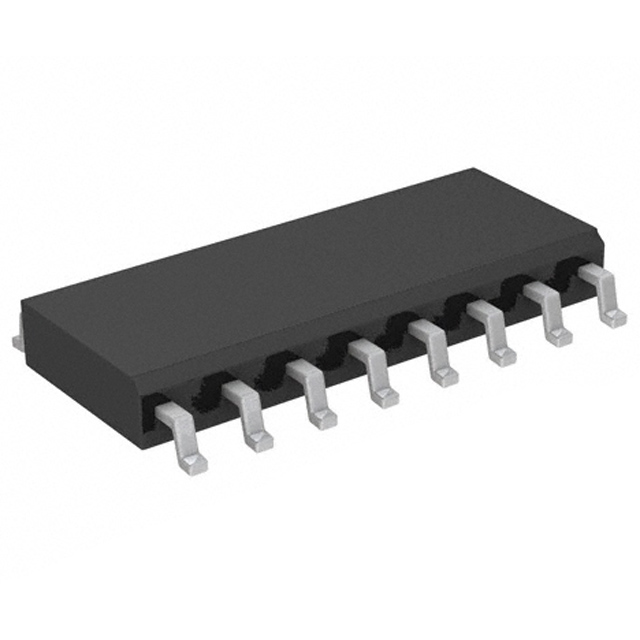
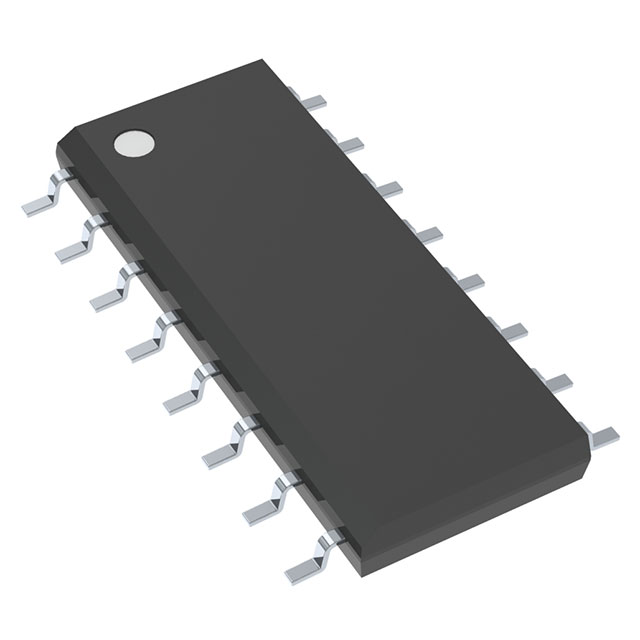
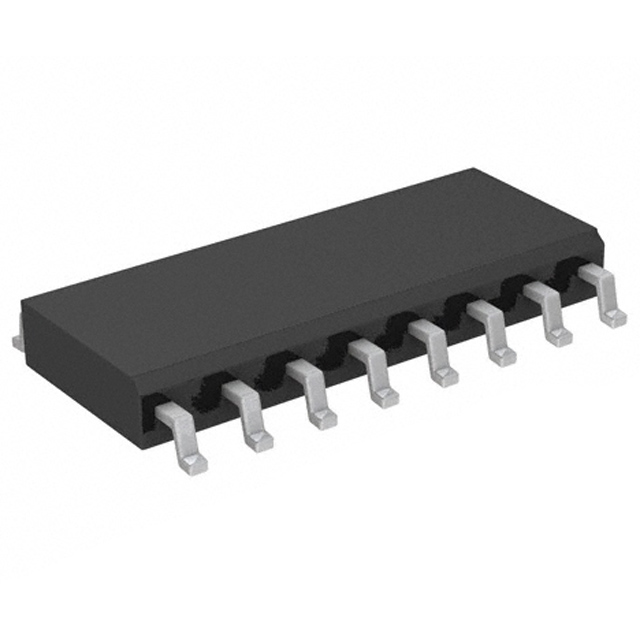
The FIN1532M is a 0/4 LVDS receiver IC manufactured by onsemi in a 16-SOIC surface mount package. This component is classified as obsolete, making equivalent and substitute parts necessary for ongoing system support and new designs. The FIN1532M operates at 400 Mbps data rate with a supply voltage range of 4.5V to 5.5V and temperature range of -40°C to 85°C. Substitute parts must maintain compatibility with these electrical specifications and the 16-SOIC package footprint.
Substiute Parts
Key Parameters
| Parameter | FIN1532M Specification |
|---|---|
| Manufacturer | onsemi |
| Type | Receiver |
| Protocol | LVDS |
| Number of Drivers/Receivers | 0/4 |
| Data Rate | 400 Mbps |
| Voltage - Supply | 4.5V ~ 5.5V |
| Operating Temperature | -40°C ~ 85°C |
| Package / Case | 16-SOIC (0.154", 3.90mm Width) |
| Mounting Type | Surface Mount |
| Product Status | Obsolete |
| Moisture Sensitivity Level (MSL) | 1 (Unlimited) |
Substitute Part Grouping Explanation
Substitute parts for the FIN1532M are grouped based on the following critical parameters that determine functional compatibility:
Protocol Compatibility: The primary substitution criterion is protocol support. The FIN1532M operates on LVDS protocol. Direct LVDS substitutes maintain identical signal interface characteristics. RS422/RS423 protocol parts represent functional alternatives with different electrical signaling but equivalent receiver architecture and pin count.
Electrical Parameters: Supply voltage range and operating temperature range define the operational envelope. Parts with overlapping or extended ranges are suitable substitutes. The FIN1532M's 4.5V to 5.5V supply range and -40°C to 85°C temperature range establish the baseline compatibility window.
Package and Pinout: All substitute parts must use the 16-SOIC package with identical pin configuration to ensure direct PCB compatibility without layout redesign.
Data Rate: The FIN1532M specifies 400 Mbps. Substitute parts with equal or higher data rate capability maintain performance parity.
Product Status and Compliance: Active or Last Time Buy status indicates availability. RoHS3 compliance and REACH unaffected status ensure regulatory alignment.
Parameter Comparison
| Part Number | Manufacturer | Protocol | Data Rate | Supply Voltage | Operating Temperature | Package | Product Status | RoHS Status |
|---|---|---|---|---|---|---|---|---|
| FIN1532M | onsemi | LVDS | 400 Mbps | 4.5V ~ 5.5V | -40°C ~ 85°C | 16-SOIC | Obsolete | Not specified |
| DS90C032BTM/NOPB | Texas Instruments | LVDS | Not specified | 4.5V ~ 5.5V | -40°C ~ 85°C | 16-SOIC | Active | ROHS3 Compliant |
| DS90C032TM/NOPB | Texas Instruments | LVDS | Not specified | 4.5V ~ 5.5V | -40°C ~ 85°C | 16-SOIC | Active | ROHS3 Compliant |
| DS26C32ATM/NOPB | Texas Instruments | RS422, RS423 | Not specified | 4.5V ~ 5.5V | -40°C ~ 85°C | 16-SOIC | Active | ROHS3 Compliant |
| AM26LS32ACD | Texas Instruments | RS422, RS423 | Not specified | 4.75V ~ 5.25V | 0°C ~ 70°C | 16-SOIC | Last Time Buy | ROHS3 Compliant |
| AM26LS32ACDR | Texas Instruments | RS422, RS423 | Not specified | 4.75V ~ 5.25V | 0°C ~ 70°C | 16-SOIC | Active | ROHS3 Compliant |
| SP26LV432CN-L | MaxLinear, Inc. | RS422, RS485 | 50 Mbps | 3.3V | 0°C ~ 70°C | 16-SOIC | Last Time Buy | ROHS3 Compliant |
Engineering Selection Recommendations
Primary Substitutes (LVDS Protocol):
DS90C032BTM/NOPB and DS90C032TM/NOPB are direct protocol equivalents manufactured by Texas Instruments. Both maintain LVDS signaling, identical supply voltage range (4.5V to 5.5V), and extended operating temperature range (-40°C to 85°C). Both are Active status parts with ROHS3 compliance, ensuring long-term availability and regulatory alignment. These are the preferred substitutes for applications requiring LVDS protocol continuity.
Secondary Substitutes (RS422/RS423 Protocol):
DS26C32ATM/NOPB, AM26LS32ACD, and AM26LS32ACDR provide RS422/RS423 receiver functionality in the same 16-SOIC package. DS26C32ATM/NOPB maintains the full supply voltage range (4.5V to 5.5V) and extended temperature range (-40°C to 85°C) of the original part, with Active status. AM26LS32ACDR is Active status but operates within a narrower supply range (4.75V to 5.25V) and reduced temperature range (0°C to 70°C). AM26LS32ACD is Last Time Buy status with the same electrical constraints as the ACDR variant.
Limited Compatibility Substitute:
SP26LV432CN-L operates at 3.3V supply voltage and 50 Mbps data rate, representing a significant departure from the FIN1532M electrical envelope. This part is suitable only for applications where voltage and data rate constraints are not critical. Last Time Buy status indicates limited future availability.
Frequently Asked Questions (FAQ)
Q: Can I directly replace FIN1532M with DS90C032BTM/NOPB or DS90C032TM/NOPB?
A: Yes. Both DS90C032 variants maintain LVDS protocol, identical supply voltage range (4.5V to 5.5V), and extended operating temperature range (-40°C to 85°C). The 16-SOIC package footprint is identical, enabling direct PCB substitution without layout modification.
Q: What is the difference between DS90C032BTM/NOPB and DS90C032TM/NOPB?
A: Both parts are LVDS receivers in 16-SOIC packages with identical electrical specifications. The difference lies in packaging format: BTM/NOPB is supplied in Tube, while TM/NOPB is also supplied in Tube. Consult Texas Instruments datasheets for any minor variant differences not specified in the provided parameters.
Q: Can I use RS422/RS423 parts as substitutes for the LVDS FIN1532M?
A: RS422/RS423 substitutes (DS26C32ATM/NOPB, AM26LS32ACD, AM26LS32ACDR) provide receiver functionality in the same package but use different signaling protocols. These are functional alternatives only if your system design permits protocol substitution. Verify signal interface compatibility with your application before selection.
Q: Why is AM26LS32ACDR preferred over AM26LS32ACD?
A: AM26LS32ACDR is Active status, ensuring ongoing availability and manufacturing support. AM26LS32ACD is Last Time Buy status, indicating limited future supply. For new designs or long-term production, AM26LS32ACDR is the more reliable choice.
Q: What are the supply voltage constraints for each substitute?
A: FIN1532M, DS90C032BTM/NOPB, DS90C032TM/NOPB, and DS26C32ATM/NOPB all operate within 4.5V to 5.5V. AM26LS32ACD and AM26LS32ACDR operate within a narrower range of 4.75V to 5.25V. SP26LV432CN-L requires 3.3V supply. Verify your system power supply specifications before selection.
Q: Are all substitutes RoHS3 compliant?
A: Yes. All substitute parts listed are ROHS3 compliant, ensuring environmental and regulatory alignment with modern manufacturing standards.
Q: What is the operating temperature range for each substitute?
A: FIN1532M, DS90C032BTM/NOPB, DS90C032TM/NOPB, and DS26C32ATM/NOPB operate across -40°C to 85°C. AM26LS32ACD, AM26LS32ACDR, and SP26LV432CN-L operate within 0°C to 70°C. Select based on your application's thermal requirements.
Q: Can I use SP26LV432CN-L in a 5V system?
A: No. SP26LV432CN-L requires 3.3V supply voltage and is not compatible with 5V systems. This part is suitable only for 3.3V applications and represents a significant design change from the FIN1532M.
Alternative Parts

SJ6012L2TP
Littelfuse Inc.
6 Alternative Parts

JMK107BBJ476MA-RE
Taiyo Yuden
10 Alternative Parts

GMK107BBJ475MA-T
Taiyo Yuden
5 Alternative Parts
SJ6020N2ARP
Littelfuse Inc.
3 Alternative Parts
SJ6025R2ATP
Littelfuse Inc.
4 Alternative Parts

2474-05L
API Delevan Inc.
1 Alternative Parts

4590R-684K
API Delevan Inc.
1 Alternative Parts

CM6560R-334
API Delevan Inc.
1 Alternative Parts

CM6460-104
API Delevan Inc.
1 Alternative Parts

5526-12
API Delevan Inc.
1 Alternative Parts