


Request Quote
(Ships tomorrow)
FEP16DTA Equivalent & Substitute Parts
Part Overview
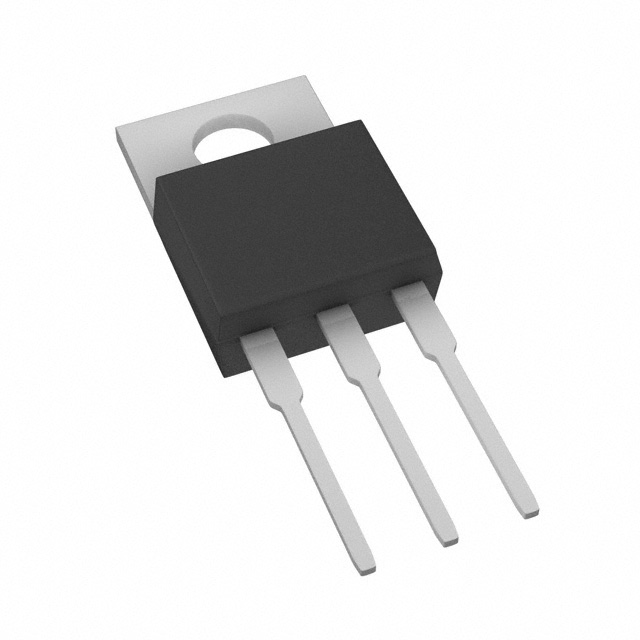
The FEP16DTA is a diode array rectifier manufactured by onsemi, configured as a 1 Pair Common Anode design with a maximum reverse voltage rating of 200 V and average rectified current of 16 A per diode. The device is packaged in a TO-220-3 through-hole configuration and operates across a junction temperature range of -55°C to 150°C.
This part is classified as obsolete. Locating equivalent substitute components is necessary to support ongoing system maintenance, repair, and new design implementations where this diode array configuration is required.
Substiute Parts
Key Parameters
| Parameter | Value |
|---|---|
| Voltage - DC Reverse (Vr) (Max) | 200 V |
| Current - Average Rectified (Io) (per Diode) | 16 A |
| Voltage - Forward (Vf) (Max) @ If | 950 mV @ 8 A |
| Speed Classification | Fast Recovery ≤ 500 ns, > 200 mA (Io) |
| Reverse Recovery Time (trr) | 35 ns |
| Current - Reverse Leakage @ Vr | 10 µA @ 200 V |
| Operating Temperature - Junction | -55°C ~ 150°C |
| Mounting Type | Through Hole |
| Package / Case | TO-220-3 |
| Diode Configuration | 1 Pair Common Anode |
Substitute Part Grouping Explanation
Substitution of the FEP16DTA is determined by electrical and mechanical compatibility across the following critical parameters:
Electrical Compatibility Criteria:
- Voltage - DC Reverse (Vr) (Max): Must equal or exceed 200 V
- Current - Average Rectified (Io) (per Diode): Must equal or exceed 16 A
- Speed Classification: Must support Fast Recovery ≤ 500 ns, > 200 mA (Io)
- Operating Temperature - Junction: Must encompass or exceed -55°C ~ 150°C range
Mechanical Compatibility Criteria:
- Mounting Type: Through Hole
- Package / Case: TO-220-3 form factor
Configuration Consideration: The FEP16DTA employs a 1 Pair Common Anode configuration. Substitute parts may utilize alternative internal configurations (such as Common Cathode) provided all electrical parameters are met and the physical package remains compatible with the TO-220-3 footprint.
Parameter Comparison
| Parameter | FEP16DTA (onsemi) | UF1602CT_T0_00001 (Panjit) |
|---|---|---|
| Voltage - DC Reverse (Vr) (Max) | 200 V | 200 V |
| Current - Average Rectified (Io) (per Diode) | 16 A | 16 A |
| Voltage - Forward (Vf) (Max) @ If | 950 mV @ 8 A | 1 V @ 8 A |
| Speed Classification | Fast Recovery ≤ 500 ns, > 200 mA (Io) | Fast Recovery ≤ 500 ns, > 200 mA (Io) |
| Reverse Recovery Time (trr) | 35 ns | 50 ns |
| Current - Reverse Leakage @ Vr | 10 µA @ 200 V | 1 µA @ 200 V |
| Operating Temperature - Junction | -55°C ~ 150°C | -65°C ~ 150°C |
| Mounting Type | Through Hole | Through Hole |
| Package / Case | TO-220-3 | TO-220-3 |
| Diode Configuration | 1 Pair Common Anode | 1 Pair Common Cathode |
| Product Status | Obsolete | Active |
Engineering Selection Recommendations
The UF1602CT_T0_00001 manufactured by Panjit International Inc. meets all electrical and mechanical substitution criteria for the FEP16DTA. Both devices share identical voltage and current ratings, operate within compatible temperature ranges, and utilize the same TO-220-3 through-hole package.
The UF1602CT_T0_00001 is classified as Active product status, ensuring ongoing availability and supply chain continuity. The substitute part carries ROHS3 compliance certification, whereas the original FEP16DTA is classified as obsolete.
The primary design consideration is the diode configuration difference: the FEP16DTA uses Common Anode configuration while the UF1602CT_T0_00001 uses Common Cathode configuration. Circuit design must account for this internal topology change to ensure proper polarity and signal routing within the application.
Frequently Asked Questions (FAQ)
Q: Can the UF1602CT_T0_00001 directly replace the FEP16DTA in existing designs?
A: The UF1602CT_T0_00001 meets all electrical and mechanical specifications. However, the diode configuration differs (Common Cathode versus Common Anode). Direct physical substitution in the TO-220-3 footprint is possible, but circuit connections must be verified to accommodate the internal topology change.
Q: What is the difference between Common Anode and Common Cathode configurations?
A: Common Anode configuration connects the anode terminal of both diodes to a shared pin, while Common Cathode configuration connects the cathode terminal of both diodes to a shared pin. This affects how the diodes are biased and connected within the circuit. Pin assignments and circuit routing must be reviewed before substitution.
Q: Are the voltage and current ratings identical between these parts?
A: Yes. Both the FEP16DTA and UF1602CT_T0_00001 are rated for 200 V maximum reverse voltage and 16 A average rectified current per diode.
Q: What is the temperature operating range difference?
A: The FEP16DTA operates from -55°C to 150°C junction temperature. The UF1602CT_T0_00001 operates from -65°C to 150°C junction temperature. The substitute part supports a lower minimum temperature by 10°C.
Q: Does the forward voltage difference affect substitution?
A: The FEP16DTA specifies 950 mV maximum forward voltage at 8 A, while the UF1602CT_T0_00001 specifies 1 V maximum at 8 A. This 50 mV difference is within typical engineering tolerance for rectifier applications but should be evaluated in power dissipation and thermal management calculations.
Q: What is the reverse recovery time difference?
A: The FEP16DTA has a reverse recovery time of 35 ns, while the UF1602CT_T0_00001 has 50 ns. Both devices meet the Fast Recovery classification (≤ 500 ns). The 15 ns difference may be relevant in high-frequency switching applications.
Q: Is the TO-220-3 package identical between both parts?
A: Both parts use the TO-220-3 through-hole package form factor. Physical mounting and thermal interface characteristics are compatible. The supplier device package designation differs (TO-220-3 versus TO-220AB), but both refer to the same industry-standard TO-220-3 footprint.
Q: What compliance certifications should be considered?
A: The UF1602CT_T0_00001 carries ROHS3 compliance. Both parts are REACH Unaffected and classified under ECCN EAR99. Compliance requirements for the target application should be verified before final selection.
Alternative Parts

SJ6012L2TP
Littelfuse Inc.
6 Alternative Parts

JMK107BBJ476MA-RE
Taiyo Yuden
10 Alternative Parts

GMK107BBJ475MA-T
Taiyo Yuden
5 Alternative Parts
SJ6020N2ARP
Littelfuse Inc.
3 Alternative Parts
SJ6025R2ATP
Littelfuse Inc.
4 Alternative Parts

2474-05L
API Delevan Inc.
1 Alternative Parts

4590R-684K
API Delevan Inc.
1 Alternative Parts

CM6560R-334
API Delevan Inc.
1 Alternative Parts

CM6460-104
API Delevan Inc.
1 Alternative Parts

5526-12
API Delevan Inc.
1 Alternative Parts