



Request Quote
(Ships tomorrow)
FDS2170N3 Equivalent & Substitute Parts
Part Overview
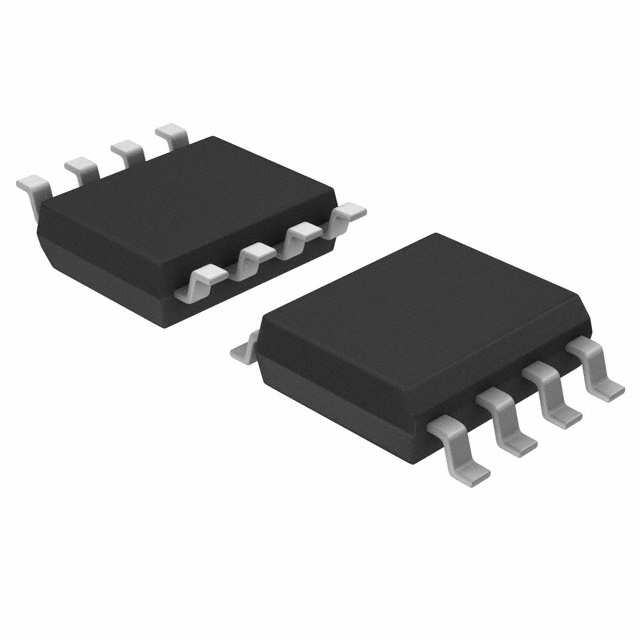
The FDS2170N3 is an N-Channel MOSFET manufactured by onsemi, rated for 200V drain-to-source voltage with 3A continuous drain current at 25°C. This device is housed in an 8-SOIC surface mount package and is part of the PowerTrench® series. The FDS2170N3 is classified as obsolete, making identification of equivalent and substitute parts necessary for ongoing design support and procurement continuity.
Substiute Parts
Key Parameters
| Parameter | Value |
|---|---|
| Drain to Source Voltage (Vdss) | 200 V |
| Continuous Drain Current (Id) @ 25°C | 3 A (Ta) |
| RDS(on) Max @ Id, Vgs | 128 mOhm @ 3A, 10V |
| Gate Threshold Voltage (Vgs(th)) Max @ Id | 4.5 V @ 250µA |
| Gate Charge (Qg) Max @ Vgs | 36 nC @ 10 V |
| Input Capacitance (Ciss) Max @ Vds | 1292 pF @ 100 V |
| Power Dissipation Max | 3 W (Ta) |
| Operating Temperature Range | -55°C to 150°C (TJ) |
| Package Type | 8-SOIC (0.154", 3.90mm Width) Exposed Pad |
| Mounting Type | Surface Mount |
| Product Status | Obsolete |
Substitute Part Grouping Explanation
Substitution of the FDS2170N3 is based on electrical parameter compatibility within the N-Channel MOSFET category. The primary substitution criteria are:
Electrical Compatibility Requirements:
- Drain-to-Source Voltage (Vdss) rating of 200 V or greater
- Continuous drain current capability meeting or exceeding 3 A at 25°C
- Gate threshold voltage (Vgs(th)) within acceptable operating range
- RDS(on) characteristics suitable for the application thermal environment
- Gate charge and input capacitance values compatible with existing gate drive circuitry
- Maximum gate voltage (Vgs) rating of ±20 V
Mechanical Compatibility Requirements:
- Surface mount package configuration
- Pin configuration compatible with PCB layout
- Operating temperature range spanning -55°C to 150°C
The FDMS2672 meets these substitution criteria through equivalent voltage ratings, superior current handling capability, and active product status, while maintaining the same technology platform and thermal operating range.
Parameter Comparison
| Parameter | FDS2170N3 | FDMS2672 | Notes |
|---|---|---|---|
| Manufacturer | onsemi | onsemi | Same manufacturer |
| FET Type | N-Channel | N-Channel | Identical topology |
| Technology | MOSFET (Metal Oxide) | MOSFET (Metal Oxide) | Same technology platform |
| Drain to Source Voltage (Vdss) | 200 V | 200 V | Identical rating |
| Continuous Drain Current (Id) @ 25°C | 3 A (Ta) | 3.7 A (Ta) | FDMS2672 provides higher current capability |
| RDS(on) Max @ Id, Vgs | 128 mOhm @ 3A, 10V | 77 mOhm @ 3.7A, 10V | FDMS2672 has lower on-resistance |
| Gate Threshold Voltage (Vgs(th)) Max @ Id | 4.5 V @ 250µA | 4 V @ 250µA | FDMS2672 has lower threshold voltage |
| Gate Charge (Qg) Max @ Vgs | 36 nC @ 10 V | 42 nC @ 10 V | FDMS2672 has slightly higher gate charge |
| Input Capacitance (Ciss) Max @ Vds | 1292 pF @ 100 V | 2315 pF @ 100 V | FDMS2672 has higher input capacitance |
| Maximum Gate Voltage (Vgs) | ±20 V | ±20 V | Identical rating |
| Power Dissipation Max (Ta) | 3 W (Ta) | 2.5 W (Ta) | FDMS2672 rated lower at Ta; higher at Tc (78W) |
| Operating Temperature Range | -55°C to 150°C (TJ) | -55°C to 150°C (TJ) | Identical range |
| Mounting Type | Surface Mount | Surface Mount | Both surface mount |
| Package Type | 8-SOIC (0.154", 3.90mm Width) Exposed Pad | 8-PowerWDFN (8-MLP 5x6) | Different package footprints; PCB layout modification required |
| Product Status | Obsolete | Active | FDMS2672 is actively manufactured and supported |
| Series | PowerTrench® | UltraFET™ | Different product series within onsemi portfolio |
| RoHS Status | Not specified | ROHS3 Compliant | FDMS2672 meets RoHS3 requirements |
| REACH Status | REACH Unaffected | REACH Unaffected | Both compliant with REACH regulations |
| Moisture Sensitivity Level (MSL) | 1 (Unlimited) | 1 (Unlimited) | Identical MSL rating |
Engineering Selection Recommendations
Primary Substitute: FDMS2672
The FDMS2672 is the recommended substitute for the obsolete FDS2170N3 based on the following engineering criteria:
Electrical Compatibility: The FDMS2672 maintains the same 200 V Vdss rating and exceeds the minimum 3 A continuous drain current requirement with 3.7 A capability at 25°C. The lower RDS(on) value (77 mOhm versus 128 mOhm) provides improved efficiency and reduced power dissipation in the on-state. Gate threshold voltage and maximum gate voltage ratings are compatible with existing gate drive circuits.
Product Status and Availability: The FDMS2672 is classified as active product status, ensuring long-term availability and manufacturing support. Current inventory levels (26,818 pieces) provide procurement security compared to the obsolete FDS2170N3 status.
Compliance and Certifications: The FDMS2672 is RoHS3 compliant and REACH unaffected, meeting current regulatory requirements. Both devices share identical REACH status and MSL ratings.
Design Considerations: The FDMS2672 uses an 8-PowerWDFN (8-MLP 5x6) package, which differs from the FDS2170N3 8-SOIC package. PCB layout modification is required for footprint compatibility. The higher input capacitance (2315 pF versus 1292 pF) and slightly elevated gate charge (42 nC versus 36 nC) require verification of gate drive circuit capability to ensure adequate switching performance.
Frequently Asked Questions (FAQ)
Q: Can the FDMS2672 be used as a direct pin-for-pin replacement for the FDS2170N3?
A: No. While both devices are N-Channel MOSFETs with identical voltage ratings, the FDMS2672 uses an 8-PowerWDFN package whereas the FDS2170N3 uses an 8-SOIC package. The physical footprints and pin layouts differ, requiring PCB redesign. Pin function compatibility must be verified against the specific application schematic.
Q: What are the key electrical differences between these two devices?
A: The FDMS2672 provides superior electrical performance in several areas: continuous drain current is increased from 3 A to 3.7 A, on-resistance is reduced from 128 mOhm to 77 mOhm, and gate threshold voltage is lower (4 V versus 4.5 V). However, input capacitance is higher (2315 pF versus 1292 pF) and gate charge is slightly elevated (42 nC versus 36 nC). These differences affect switching speed and gate drive requirements.
Q: Is the FDMS2672 suitable for applications requiring the exact same thermal characteristics as the FDS2170N3?
A: The FDMS2672 has a lower power dissipation rating at Ta (2.5 W versus 3 W) but significantly higher rating at Tc (78 W versus not specified for FDS2170N3). Both devices operate across the same temperature range (-55°C to 150°C). Thermal performance depends on PCB layout, copper area, and thermal management design. The lower on-resistance of the FDMS2672 typically results in reduced heat generation during operation.
Q: Are there any compliance or regulatory differences between these parts?
A: The FDMS2672 is RoHS3 compliant, whereas RoHS status is not specified for the FDS2170N3. Both devices are REACH unaffected and share identical MSL ratings. For applications requiring RoHS3 compliance, the FDMS2672 is the appropriate choice.
Q: What gate drive circuit modifications are necessary when switching from FDS2170N3 to FDMS2672?
A: The higher input capacitance (2315 pF versus 1292 pF) and gate charge (42 nC versus 36 nC) of the FDMS2672 require verification that the existing gate drive circuit can supply adequate current and voltage to achieve desired switching speeds. Gate drive impedance and timing characteristics should be evaluated to ensure compatibility with the application's switching frequency and thermal requirements.
Q: Why is the FDS2170N3 classified as obsolete?
A: The FDS2170N3 is part of the PowerTrench® series, which has been superseded by newer technology platforms such as the UltraFET™ series represented by the FDMS2672. Obsolescence reflects onsemi's product lifecycle management and transition to advanced MOSFET technologies offering improved performance and efficiency.
Q: Can the FDMS2672 be used in high-frequency switching applications?
A: The FDMS2672 is suitable for high-frequency applications. The lower on-resistance reduces conduction losses, and the gate charge specification (42 nC @ 10 V) supports rapid switching. However, the higher input capacitance requires adequate gate drive current to minimize switching delays. Application-specific evaluation of switching frequency, gate drive capability, and thermal management is necessary.
Alternative Parts

SJ6012L2TP
Littelfuse Inc.
6 Alternative Parts

JMK107BBJ476MA-RE
Taiyo Yuden
10 Alternative Parts

GMK107BBJ475MA-T
Taiyo Yuden
5 Alternative Parts
SJ6020N2ARP
Littelfuse Inc.
3 Alternative Parts
SJ6025R2ATP
Littelfuse Inc.
4 Alternative Parts

2474-05L
API Delevan Inc.
1 Alternative Parts

4590R-684K
API Delevan Inc.
1 Alternative Parts

CM6560R-334
API Delevan Inc.
1 Alternative Parts

CM6460-104
API Delevan Inc.
1 Alternative Parts

5526-12
API Delevan Inc.
1 Alternative Parts