



Request Quote
(Ships tomorrow)
FDP8N50NZ N-Channel 500V 8A MOSFET Equivalent & Substitute Parts
Part Overview
The FDP8N50NZ is an N-Channel 500V 8A MOSFET manufactured by onsemi in the UniFET™ series, housed in a Through Hole TO-220-3 package. This device is rated for 130W power dissipation and operates across a temperature range of -55°C to 150°C. The part is classified as Obsolete, making identification of functionally equivalent alternatives necessary for ongoing design support and procurement continuity.
Substiute Parts
Key Parameters
| Parameter | Value | Unit |
|---|---|---|
| Drain to Source Voltage (Vdss) | 500 | V |
| Continuous Drain Current (Id) @ 25°C | 8 | A |
| Drive Voltage (Max Rds On) | 10 | V |
| Rds On (Max) @ Id, Vgs | 850 mOhm @ 4A, 10V | mOhm |
| Gate Threshold Voltage (Vgs(th)) @ Id | 5 | V @ 250µA |
| Gate Charge (Qg) @ Vgs | 18 | nC @ 10V |
| Input Capacitance (Ciss) @ Vds | 735 | pF @ 25V |
| Power Dissipation (Max) | 130 | W |
| Operating Temperature Range | -55 to 150 | °C |
| Mounting Type | Through Hole | — |
| Package | TO-220-3 | — |
Substitute Part Grouping Explanation
Substitution of the FDP8N50NZ is determined by strict alignment of electrical and mechanical parameters. The following criteria establish functional equivalence:
Primary Matching Criteria:
- Drain to Source Voltage (Vdss): 500V (exact match required)
- Continuous Drain Current (Id): 8A minimum
- Drive Voltage (Max Rds On): 10V (exact match required)
- Rds On (Max) @ Id, Vgs: 850 mOhm @ specified current and voltage
- Operating Temperature Range: -55°C to 150°C (minimum requirement)
- Mounting Type: Through Hole (for direct PCB replacement)
- Package: TO-220-3 or compatible TO-220 variant
Secondary Compatibility Factors:
- Gate Threshold Voltage (Vgs(th)): Tolerance within ±1V acceptable
- Gate Charge (Qg): Higher values acceptable; lower values preferred
- Input Capacitance (Ciss): Variation acceptable within application constraints
- Power Dissipation: Equal or greater rating acceptable
Substitute parts meeting these criteria are classified as direct electrical and mechanical equivalents suitable for replacement in existing designs.
Parameter Comparison
| Parameter | FDP8N50NZ | AOT8N50 | AOT9N50 | IRF840APBF | IRF840LCPBF | IRF840PBF | STP9NK50Z |
|---|---|---|---|---|---|---|---|
| Manufacturer | onsemi | Alpha & Omega | Alpha & Omega | Vishay Siliconix | Vishay Siliconix | Vishay Siliconix | STMicroelectronics |
| Vdss (V) | 500 | 500 | 500 | 500 | 500 | 500 | 500 |
| Id @ 25°C (A) | 8 | 8 | 9 | 8 | 8 | 8 | 7.2 |
| Drive Voltage (V) | 10 | 10 | 10 | 10 | 10 | 10 | 10 |
| Rds On (Max) @ Id, Vgs (mOhm) | 850 @ 4A, 10V | 850 @ 4A, 10V | 850 @ 4.5A, 10V | 850 @ 4.8A, 10V | 850 @ 4.8A, 10V | 850 @ 4.8A, 10V | 850 @ 3.6A, 10V |
| Vgs(th) @ Id (V) | 5 @ 250µA | 4.5 @ 250µA | 4.5 @ 250µA | 4 @ 250µA | 4 @ 250µA | 4 @ 250µA | 4.5 @ 100µA |
| Qg (Max) @ Vgs (nC) | 18 @ 10V | 28 @ 10V | 28 @ 10V | 38 @ 10V | 39 @ 10V | 63 @ 10V | 32 @ 10V |
| Ciss (Max) @ Vds (pF) | 735 @ 25V | 1042 @ 25V | 1042 @ 25V | 1018 @ 25V | 1100 @ 25V | 1300 @ 25V | 910 @ 25V |
| Power Dissipation (Max) (W) | 130 | 192 | 192 | 125 | 125 | 125 | 110 |
| Operating Temperature (°C) | -55 to 150 | -55 to 150 | -55 to 150 | -55 to 150 | -55 to 150 | -55 to 150 | -55 to 150 |
| Mounting Type | Through Hole | Through Hole | Through Hole | Through Hole | Through Hole | Through Hole | Through Hole |
| Package | TO-220-3 | TO-220 | TO-220 | TO-220AB | TO-220AB | TO-220AB | TO-220 |
| Product Status | Obsolete | Not For New Designs | Not For New Designs | Active | Active | Active | Active |
| RoHS Status | ROHS3 Compliant | ROHS3 Compliant | ROHS3 Compliant | ROHS3 Compliant | ROHS3 Compliant | ROHS3 Compliant | ROHS3 Compliant |
Engineering Selection Recommendations
Active Product Status Substitutes (Preferred for New Designs):
The IRF840 series from Vishay Siliconix (IRF840APBF, IRF840LCPBF, IRF840PBF) and STP9NK50Z from STMicroelectronics maintain Active product status. These devices meet all primary electrical matching criteria and are suitable for both replacement and new design applications. All three IRF840 variants are ROHS3 compliant. IRF840LCPBF and IRF840PBF are REACH Unaffected and REACH Affected respectively, requiring verification against specific regulatory requirements.
Discontinued Product Status Substitutes (Replacement Only):
AOT8N50 and AOT9N50 from Alpha & Omega Semiconductor are classified as Not For New Designs. These parts are suitable for direct replacement in existing applications but should not be selected for new circuit designs. Both maintain ROHS3 compliance and REACH Unaffected status.
Package Compatibility Consideration:
All substitute parts are housed in TO-220 or TO-220AB packages, which are mechanically compatible with the original TO-220-3 package for Through Hole mounting. Direct PCB substitution is feasible without layout modification.
Electrical Performance Trade-offs:
IRF840PBF exhibits higher gate charge (63 nC) and input capacitance (1300 pF) compared to the FDP8N50NZ baseline (18 nC, 735 pF), resulting in increased switching losses in high-frequency applications. STP9NK50Z provides lower power dissipation (110W) and reduced input capacitance (910 pF), offering improved efficiency in switching applications but with slightly reduced continuous current rating (7.2A versus 8A).
Frequently Asked Questions (FAQ)
Q: Can IRF840LPBF substitute for FDP8N50NZ in existing designs?
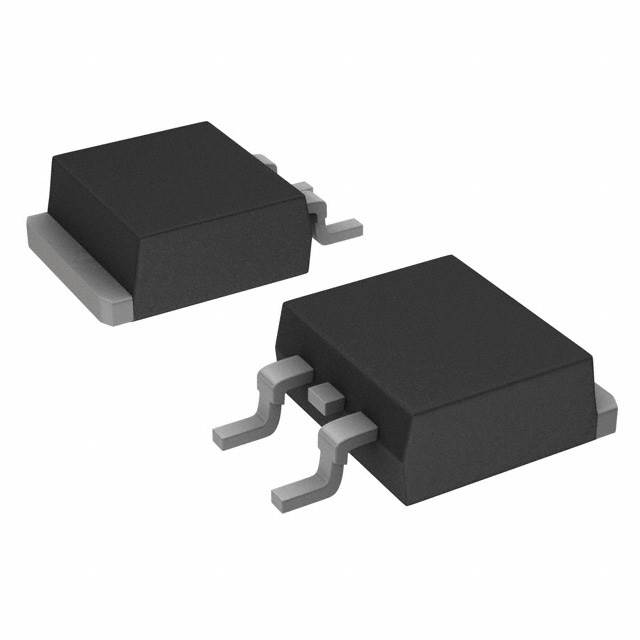
A: IRF840LPBF is not recommended as a direct substitute. This device uses a Surface Mount TO-263 (D2PAK) package, whereas FDP8N50NZ requires Through Hole TO-220-3 mounting. PCB layout modification is necessary. Additionally, IRF840LPBF exhibits significantly higher gate charge (63 nC) and input capacitance (1300 pF), affecting switching performance.
Q: What is the primary difference between IRF840APBF, IRF840LCPBF, and IRF840PBF?
A: All three variants share identical electrical specifications (500V, 8A, 850 mOhm Rds On). The primary differences are gate charge values (38 nC, 39 nC, and 63 nC respectively) and REACH compliance status. IRF840APBF and IRF840LCPBF are preferred for applications sensitive to switching speed, while IRF840PBF offers the highest inventory availability.
Q: Is AOT9N50 suitable for direct replacement of FDP8N50NZ?
A: AOT9N50 meets all primary electrical criteria (500V, 9A continuous current, 850 mOhm Rds On @ 10V). The higher current rating (9A versus 8A) and increased power dissipation (192W versus 130W) provide design margin. However, AOT9N50 is classified as Not For New Designs, limiting its use to replacement applications only.
Q: How does STP9NK50Z compare to FDP8N50NZ in high-frequency switching applications?
A: STP9NK50Z provides lower input capacitance (910 pF versus 735 pF) and reduced gate charge (32 nC versus 18 nC), resulting in faster switching transitions and lower switching losses. The continuous current rating is slightly lower (7.2A versus 8A). STP9NK50Z is suitable for applications where switching efficiency is prioritized over maximum current capacity.
Q: Are all substitute parts ROHS3 compliant?
A: Yes. All substitute parts listed (AOT8N50, AOT9N50, IRF840APBF, IRF840LCPBF, IRF840PBF, STP9NK50Z) are ROHS3 compliant, meeting environmental and hazardous substance restrictions.
Q: What is the impact of higher gate charge on circuit performance?
A: Higher gate charge increases the energy required to switch the MOSFET on and off, resulting in increased driver power consumption and potential switching delays. In low-frequency applications (below 100 kHz), this impact is negligible. In high-frequency switching circuits (above 500 kHz), gate charge becomes a critical parameter affecting overall efficiency and thermal performance.
Q: Can I use multiple substitute parts interchangeably in the same design?
A: Electrical interchangeability is established for all listed substitutes within the specified parameter tolerances. However, practical implementation requires verification of gate charge compatibility with the existing gate driver circuit. Drivers designed for lower gate charge (FDP8N50NZ at 18 nC) may require adjustment when switching to higher gate charge devices (IRF840PBF at 63 nC).
Alternative Parts

SJ6012L2TP
Littelfuse Inc.
6 Alternative Parts

JMK107BBJ476MA-RE
Taiyo Yuden
10 Alternative Parts

GMK107BBJ475MA-T
Taiyo Yuden
5 Alternative Parts
SJ6020N2ARP
Littelfuse Inc.
3 Alternative Parts
SJ6025R2ATP
Littelfuse Inc.
4 Alternative Parts

2474-05L
API Delevan Inc.
1 Alternative Parts

4590R-684K
API Delevan Inc.
1 Alternative Parts

CM6560R-334
API Delevan Inc.
1 Alternative Parts

CM6460-104
API Delevan Inc.
1 Alternative Parts

5526-12
API Delevan Inc.
1 Alternative Parts