



Request Quote
(Ships tomorrow)
FDD3N40TM Equivalent & Substitute Parts
Part Overview
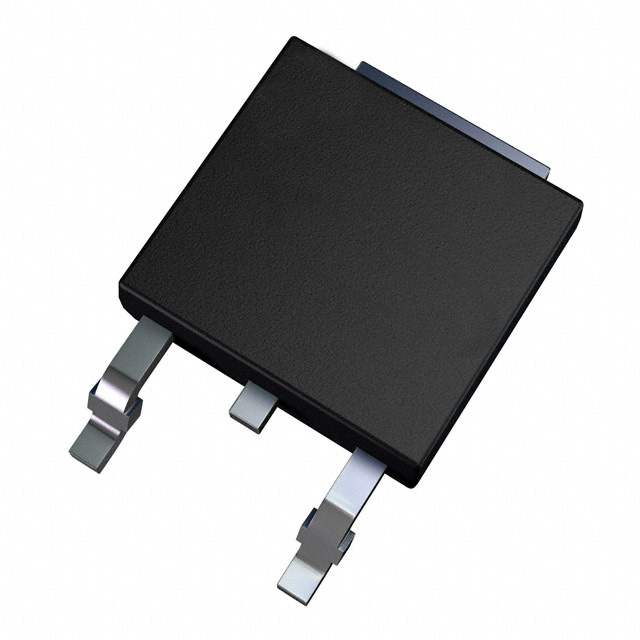
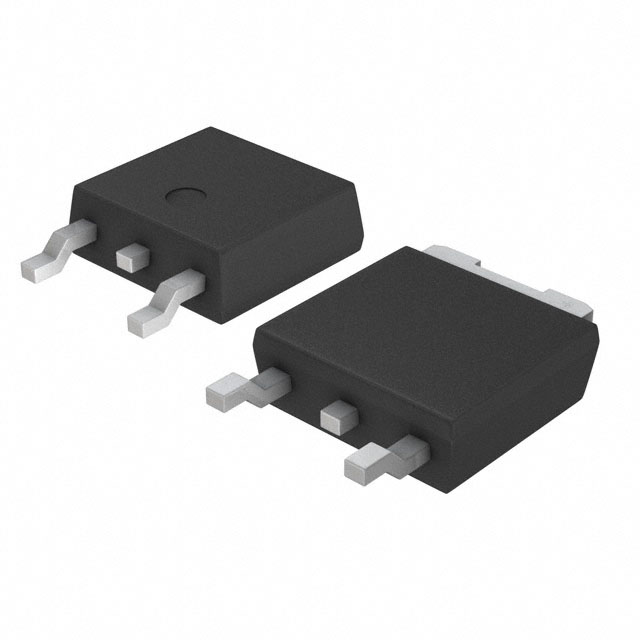
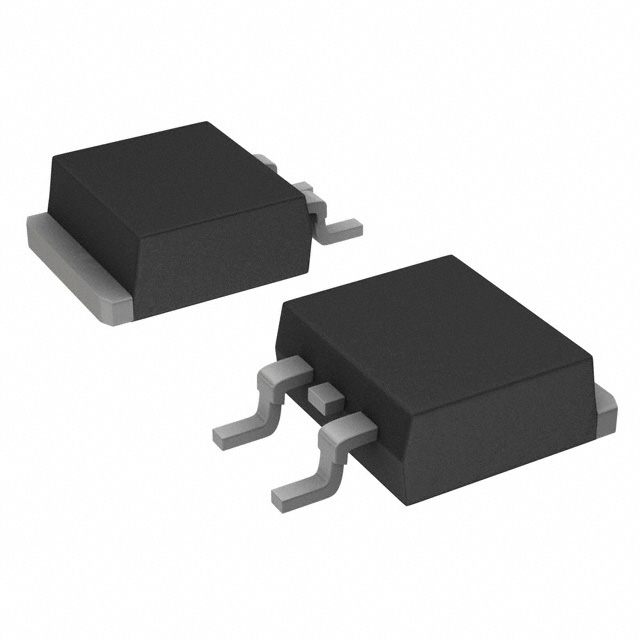
The FDD3N40TM is an N-Channel MOSFET manufactured by onsemi, rated for 400V drain-to-source voltage with 2A continuous drain current at 25°C. This device is housed in a Surface Mount TO-252AA (DPAK) package and is designed for general-purpose switching applications requiring moderate voltage and current handling. The part is currently in Active product status with RoHS3 compliance and unlimited moisture sensitivity level (MSL 1).
Substitute parts become necessary when the primary device experiences supply constraints, obsolescence, or when design flexibility requires alternative sourcing options. The parts listed below provide functional equivalence within specified electrical and mechanical parameters.
Substiute Parts
Key Parameters
| Parameter | Value | Unit |
|---|---|---|
| Drain to Source Voltage (Vdss) | 400 | V |
| Continuous Drain Current (Id) @ 25°C | 2 | A (Tc) |
| On-State Resistance (Rds On Max) @ 1A, 10V | 3.4 | Ohm |
| Gate Threshold Voltage (Vgs th Max) @ 250µA | 5 | V |
| Power Dissipation (Max) | 30 | W (Tc) |
| Operating Temperature Range | -55 to 150 | °C (TJ) |
| Package Type | TO-252-3 DPAK | Surface Mount |
| Gate Charge (Qg Max) @ 10V | 6 | nC |
| Input Capacitance (Ciss Max) @ 25V | 225 | pF |
Substitute Part Grouping Explanation
Substitution eligibility for the FDD3N40TM is determined by the following critical parameters:
Primary Substitution Criteria:
- Drain-to-Source Voltage (Vdss): Must equal or exceed 400V
- Continuous Drain Current (Id): Must equal or exceed 2A at 25°C
- Package Type: Must be TO-252-3 DPAK (Surface Mount)
- On-State Resistance (Rds On): Must not significantly exceed 3.4 Ohm @ 10V drive voltage
- Operating Temperature Range: Must support -55°C to 150°C
- RoHS3 Compliance: Required for regulatory alignment
Secondary Compatibility Parameters:
- Gate Threshold Voltage (Vgs th)
- Gate Charge (Qg)
- Input Capacitance (Ciss)
- Maximum Gate Voltage (Vgs Max)
The substitute parts listed below meet the primary criteria within acceptable engineering tolerances for the DPAK package form factor and electrical specifications.
Parameter Comparison
| Parameter | FDD3N40TM (onsemi) | STD3N40K3 (STMicroelectronics) | IRFR310TRPBF (Vishay) | IRFR420ATRPBF (Vishay) |
|---|---|---|---|---|
| Vdss (V) | 400 | 400 | 400 | 500 |
| Id @ 25°C (A) | 2 | 2 | 1.7 | 3.3 |
| Rds On Max @ 10V (Ohm) | 3.4 @ 1A | 3.4 @ 900mA | 3.6 @ 1A | 3 @ 1.5A |
| Vgs th Max @ Id (V) | 5 @ 250µA | 4.5 @ 50µA | 4 @ 250µA | 4.5 @ 250µA |
| Qg Max @ 10V (nC) | 6 | 11 | 12 | 17 |
| Ciss Max @ 25V (pF) | 225 | 165 | 170 | 340 |
| Power Dissipation Max (W) | 30 (Tc) | 30 (Tc) | 25 (Tc) | 83 (Tc) |
| Vgs Max (V) | ±30 | ±30 | ±20 | ±30 |
| Operating Temperature (°C) | -55 to 150 | -55 to 150 | -55 to 150 | -55 to 150 |
| Package | TO-252-3 DPAK | TO-252-3 DPAK | TO-252-3 DPAK | TO-252-3 DPAK |
| RoHS3 Compliance | Yes | Yes | Yes | Yes |
| Product Status | Active | Obsolete | Active | Active |
Engineering Selection Recommendations
STD3N40K3 (STMicroelectronics): This part provides direct electrical equivalence to the FDD3N40TM with identical Vdss (400V), Id (2A), and Rds On (3.4 Ohm) specifications. Both devices support the full operating temperature range and maintain RoHS3 compliance. However, the STD3N40K3 carries Obsolete product status, indicating discontinued manufacturing. This substitute is suitable only when existing inventory is available and long-term supply is not required. The lower gate threshold voltage (4.5V vs. 5V) and reduced gate charge (11 nC vs. 6 nC) represent minor parameter variations within acceptable engineering tolerances.
IRFR310TRPBF (Vishay Siliconix): This part meets the 400V Vdss requirement and operates within the specified temperature range with Active product status. The continuous drain current rating of 1.7A is 0.3A below the FDD3N40TM specification, representing a 15% reduction in current capacity. The on-state resistance of 3.6 Ohm is marginally higher than the 3.4 Ohm specification. The maximum gate voltage is limited to ±20V compared to ±30V for the primary part. This substitute is applicable in designs where the 1.7A current rating is sufficient and where the reduced gate voltage range does not conflict with circuit requirements. Higher gate charge (12 nC) and lower input capacitance (170 pF) may affect switching characteristics.
IRFR420ATRPBF (Vishay Siliconix): This part exceeds the primary voltage specification with 500V Vdss and provides superior current handling at 3.3A continuous drain current. The on-state resistance of 3 Ohm is lower than the FDD3N40TM specification, and power dissipation capability reaches 83W compared to 30W. This substitute is suitable for applications requiring higher voltage or current margins. The increased gate charge (17 nC) and significantly higher input capacitance (340 pF) will result in slower switching characteristics and higher gate drive requirements. This part is appropriate when design specifications permit the higher voltage and current ratings without introducing thermal or EMI concerns.
All substitute parts maintain RoHS3 compliance, unlimited moisture sensitivity level (MSL 1), and support the full -55°C to 150°C operating temperature range. Selection should be based on specific circuit current requirements, voltage headroom, and switching speed constraints.
Frequently Asked Questions (FAQ)
Q: Can the STD3N40K3 be used as a direct replacement for the FDD3N40TM?
A: The STD3N40K3 provides electrical equivalence with matching Vdss (400V), Id (2A), and Rds On (3.4 Ohm) specifications. Both devices use the TO-252-3 DPAK package and support identical operating temperatures. However, the STD3N40K3 is marked as Obsolete, meaning production has been discontinued. This substitute is viable only when existing inventory is available and future supply is not a concern.
Q: What is the primary limitation of the IRFR310TRPBF as a substitute?
A: The IRFR310TRPBF has a continuous drain current rating of 1.7A, which is 0.3A lower than the FDD3N40TM specification of 2A. This represents a 15% reduction in current capacity. Additionally, the maximum gate voltage is limited to ±20V compared to ±30V for the primary part. This substitute is suitable only for applications where the reduced current rating does not exceed circuit requirements.
Q: When should the IRFR420ATRPBF be selected over the FDD3N40TM?
A: The IRFR420ATRPBF should be selected when the application requires higher voltage margins (500V vs. 400V) or higher current capacity (3.3A vs. 2A). This part also offers superior on-state resistance (3 Ohm vs. 3.4 Ohm) and significantly higher power dissipation capability (83W vs. 30W). However, the increased gate charge (17 nC) and input capacitance (340 pF) will result in slower switching speeds and higher gate drive power requirements.
Q: Are all substitute parts compatible with the same PCB layout?
A: Yes. All listed substitute parts use the TO-252-3 DPAK package with identical pin configuration and mechanical dimensions. PCB footprints designed for the FDD3N40TM will accommodate all substitute parts without modification. However, thermal design considerations may differ due to variations in power dissipation ratings.
Q: Do all substitute parts meet RoHS3 compliance?
A: Yes. The FDD3N40TM, STD3N40K3, IRFR310TRPBF, and IRFR420ATRPBF are all RoHS3 compliant with unlimited moisture sensitivity level (MSL 1). All parts support the operating temperature range of -55°C to 150°C.
Q: How do gate charge differences affect circuit performance?
A: Gate charge (Qg) determines the amount of charge required to switch the MOSFET on or off. The FDD3N40TM has a gate charge of 6 nC, while substitutes range from 11 nC to 17 nC. Higher gate charge requires greater gate drive current or longer switching times, which may increase switching losses and reduce maximum switching frequency. Circuit designs with marginal gate drive capability may experience slower switching with higher gate charge devices.
Q: What is the significance of input capacitance (Ciss) differences?
A: Input capacitance affects the gate drive impedance and switching speed. The FDD3N40TM has Ciss of 225 pF at 25V. The STD3N40K3 and IRFR310TRPBF have lower capacitance (165 pF and 170 pF respectively), while the IRFR420ATRPBF has significantly higher capacitance (340 pF). Higher input capacitance requires greater gate drive current for equivalent switching speed and may increase EMI in high-frequency applications.
Q: Can the IRFR420ATRPBF be used in a circuit designed for 400V operation?
A: Yes. The IRFR420ATRPBF is rated for 500V Vdss, which exceeds the 400V requirement. Operating at 400V provides a 100V safety margin. However, the higher current rating (3.3A vs. 2A) and increased power dissipation capability (83W vs. 30W) may introduce thermal design considerations if the circuit is not optimized for these higher ratings. Thermal management should be evaluated to prevent excessive junction temperature.
Alternative Parts

SJ6012L2TP
Littelfuse Inc.
6 Alternative Parts

JMK107BBJ476MA-RE
Taiyo Yuden
10 Alternative Parts

GMK107BBJ475MA-T
Taiyo Yuden
5 Alternative Parts
SJ6020N2ARP
Littelfuse Inc.
3 Alternative Parts
SJ6025R2ATP
Littelfuse Inc.
4 Alternative Parts

2474-05L
API Delevan Inc.
1 Alternative Parts

4590R-684K
API Delevan Inc.
1 Alternative Parts

CM6560R-334
API Delevan Inc.
1 Alternative Parts

CM6460-104
API Delevan Inc.
1 Alternative Parts

5526-12
API Delevan Inc.
1 Alternative Parts