




Request Quote
(Ships tomorrow)
EPM7064STC100-7 Equivalent & Substitute Parts
Part Overview
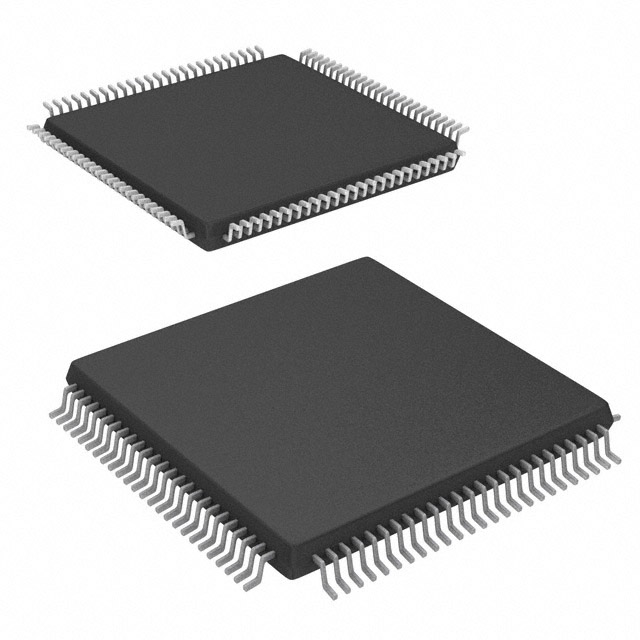
The EPM7064STC100-7 is a Complex Programmable Logic Device (CPLD) from Intel's MAX® 7000S series, housed in a 100-pin TQFP package. This device features 64 macrocells, 1250 gates, and a maximum propagation delay of 7.5 ns, operating within a 4.75V to 5.25V supply range. The product is classified as obsolete, making identification of functionally equivalent alternatives essential for ongoing system support, redesigns, and production continuity.
Substiute Parts
Key Parameters
| Parameter | Value |
|---|---|
| Manufacturer Part Number | EPM7064STC100-7 |
| Manufacturer | Intel |
| Series | MAX® 7000S |
| Product Status | Obsolete |
| Number of Macrocells | 64 |
| Number of Gates | 1250 |
| Number of I/O | 68 |
| Delay Time tpd(1) Max | 7.5 ns |
| Voltage Supply - Internal | 4.75V ~ 5.25V |
| Operating Temperature | 0°C ~ 70°C (TA) |
| Package / Case | 100-TQFP (14x14) |
| Mounting Type | Surface Mount |
| Programmable Type | In System Programmable |
| Moisture Sensitivity Level (MSL) | 3 (168 Hours) |
| RoHS Status | RoHS non-compliant |
Substitute Part Grouping Explanation
Substitution for the EPM7064STC100-7 is determined by the following critical parameters:
- Macrocell Count: Minimum 64 macrocells required for functional equivalence
- Propagation Delay: Maximum 7.5 ns to maintain timing specifications
- Package Type: 100-pin TQFP form factor for PCB compatibility
- Programmable Architecture: In-system programmable capability
- Operating Temperature Range: 0°C to 70°C
- Supply Voltage Compatibility: Devices must operate within or be compatible with 5V logic systems
Two substitute parts meet these criteria with varying degrees of compatibility:
ATF1504AS-7AX100 (Microchip Technology): Matches macrocell count (64), propagation delay (7.5 ns), package (100-TQFP), and operating temperature. Voltage supply range (4.75V ~ 5.25V) is identical. Product status is active, ensuring continued availability.
XC9572XL-7TQG100C (AMD): Exceeds macrocell specification (72 macrocells), maintains 7.5 ns propagation delay, and uses 100-pin TQFP package. Operates at 3V ~ 3.6V supply voltage, requiring voltage level translation for 5V system integration. Product status is Last Time Buy.
Parameter Comparison
| Parameter | EPM7064STC100-7 | ATF1504AS-7AX100 | XC9572XL-7TQG100C |
|---|---|---|---|
| Manufacturer | Intel | Microchip Technology | AMD |
| Product Status | Obsolete | Active | Last Time Buy |
| Number of Macrocells | 64 | 64 | 72 |
| Number of Gates | 1250 | — | 1600 |
| Number of I/O | 68 | 64 | 72 |
| Delay Time tpd(1) Max | 7.5 ns | 7.5 ns | 7.5 ns |
| Voltage Supply - Internal | 4.75V ~ 5.25V | 4.75V ~ 5.25V | 3V ~ 3.6V |
| Operating Temperature | 0°C ~ 70°C (TA) | 0°C ~ 70°C (TA) | 0°C ~ 70°C (TA) |
| Package / Case | 100-TQFP | 100-TQFP | 100-LQFP |
| Programmable Type | In System Programmable | In System Programmable (min 10K cycles) | In System Programmable (min 10K cycles) |
| RoHS Status | RoHS non-compliant | ROHS3 Compliant | ROHS3 Compliant |
| Moisture Sensitivity Level (MSL) | 3 (168 Hours) | 3 (168 Hours) | 3 (168 Hours) |
Engineering Selection Recommendations
ATF1504AS-7AX100 is the primary substitute for direct replacement applications. This device maintains electrical and mechanical compatibility with the EPM7064STC100-7, including identical macrocell count, propagation delay, supply voltage range, and package dimensions. The ATF1504AS-7AX100 holds active product status, ensuring long-term availability and supply chain stability. ROHS3 compliance provides environmental and regulatory advantages over the original non-compliant device.
XC9572XL-7TQG100C serves as an alternative for applications where increased logic capacity is beneficial. The 72-macrocell architecture provides additional design headroom compared to the 64-macrocell requirement. However, the 3V ~ 3.6V supply voltage necessitates level-shifting circuitry for integration into 5V systems. The Last Time Buy status indicates limited future availability. This option is suitable for new designs where voltage translation is already planned or for systems operating at 3.3V logic levels.
Frequently Asked Questions (FAQ)
Q: Can the ATF1504AS-7AX100 be used as a direct pin-for-pin replacement?
A: The ATF1504AS-7AX100 maintains the same 100-TQFP package and pinout compatibility for the 64 I/O signals common to both devices. The EPM7064STC100-7 provides 68 I/O pins while the ATF1504AS-7AX100 provides 64 I/O pins. Designs utilizing all 68 I/O pins require circuit modification.
Q: What is the primary difference between the two substitute options?
A: The ATF1504AS-7AX100 matches the original device specifications exactly in terms of macrocells (64), I/O count (64), and supply voltage (4.75V ~ 5.25V). The XC9572XL-7TQG100C offers higher macrocell density (72) and I/O count (72) but operates at 3V ~ 3.6V, requiring voltage translation for 5V system integration.
Q: Are there timing considerations when substituting these devices?
A: All three devices specify identical maximum propagation delay of 7.5 ns. Timing-critical applications should verify device-specific timing characteristics in manufacturer datasheets, as actual propagation delays may vary within the specified maximum.
Q: What is the impact of RoHS compliance differences?
A: The EPM7064STC100-7 is RoHS non-compliant, while both substitute parts are ROHS3 compliant. For applications subject to RoHS regulations or customer requirements, the compliant substitutes provide regulatory alignment. Existing designs using the non-compliant original device may continue operation without modification.
Q: How does the Last Time Buy status of the XC9572XL-7TQG100C affect selection?
A: Last Time Buy status indicates that AMD will cease production and support for this device. While current inventory may be available, long-term supply cannot be guaranteed. For new designs or systems requiring extended production runs, the active-status ATF1504AS-7AX100 is the more reliable choice.
Q: Are programming algorithms compatible across these devices?
A: All three devices support In-System Programmable architecture. However, programming algorithms, fuse maps, and configuration files are device-specific. Designs must be re-compiled and re-programmed for the target substitute device using appropriate manufacturer tools.
Alternative Parts

SJ6012L2TP
Littelfuse Inc.
6 Alternative Parts

JMK107BBJ476MA-RE
Taiyo Yuden
10 Alternative Parts

GMK107BBJ475MA-T
Taiyo Yuden
5 Alternative Parts
SJ6020N2ARP
Littelfuse Inc.
3 Alternative Parts
SJ6025R2ATP
Littelfuse Inc.
4 Alternative Parts

2474-05L
API Delevan Inc.
1 Alternative Parts

4590R-684K
API Delevan Inc.
1 Alternative Parts

CM6560R-334
API Delevan Inc.
1 Alternative Parts

CM6460-104
API Delevan Inc.
1 Alternative Parts

5526-12
API Delevan Inc.
1 Alternative Parts