


Request Quote
(Ships tomorrow)
ELJ-SC101KF Equivalent & Substitute Parts
Part Overview
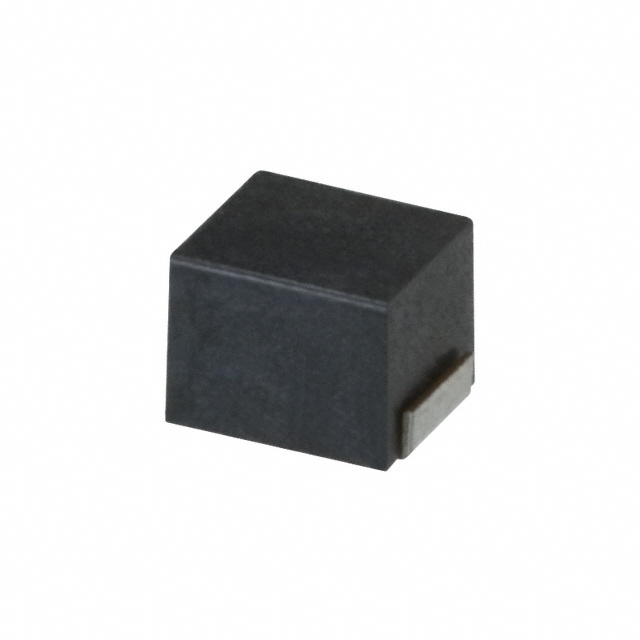
The ELJ-SC101KF is a 100 µH shielded inductor manufactured by Panasonic Electronic Components, rated for 10 mA maximum current with 8.4Ohm maximum DC resistance. This component is classified as obsolete, necessitating identification of functionally equivalent alternatives for ongoing design requirements and production continuity. Substitute parts must maintain the same inductance value, package footprint, and core electrical characteristics while accommodating variations in current rating, DC resistance, and shielding configuration.
Substiute Parts
Key Parameters
| Parameter | Value |
|---|---|
| Inductance | 100 µH |
| Tolerance | ±10% |
| Current Rating | 10 mA |
| DC Resistance (DCR) | 8.4Ohm Max |
| Shielding | Shielded |
| Package / Case | 1008 (2520 Metric) |
| Mounting Type | Surface Mount |
| Frequency - Self Resonant | 12 MHz |
| Product Status | Obsolete |
Substitute Part Grouping Explanation
Substitution eligibility for the ELJ-SC101KF is determined by the following mandatory parameters:
Critical Parameters (Must Match):
- Inductance: 100 µH
- Package / Case: 1008 (2520 Metric)
- Mounting Type: Surface Mount
- Frequency - Self Resonant: 12 MHz
Allowable Variation Parameters:
- Current Rating: Substitute must equal or exceed 10 mA
- DC Resistance (DCR): Substitute may exceed 8.4Ohm if circuit design permits
- Tolerance: Substitute tolerance of ±5% is acceptable for ±10% specification
- Shielding: Unshielded substitutes are permissible if EMI performance is not critical to application
The NLV25T-101J-PF from TDK Corporation qualifies as a substitute based on matching inductance, package, mounting type, and self-resonant frequency. The substitute provides higher current rating (60 mA vs. 10 mA) and tighter tolerance (±5% vs. ±10%), with trade-offs in DC resistance (21Ohm vs. 8.4Ohm) and shielding configuration (unshielded vs. shielded).
Parameter Comparison
| Parameter | ELJ-SC101KF (Panasonic) | NLV25T-101J-PF (TDK) |
|---|---|---|
| Inductance | 100 µH | 100 µH |
| Tolerance | ±10% | ±5% |
| Current Rating (Amps) | 10 mA | 60 mA |
| DC Resistance (DCR) | 8.4Ohm Max | 21Ohm Max |
| Shielding | Shielded | Unshielded |
| Q @ Freq | 25 @ 796kHz | 15 @ 796kHz |
| Frequency - Self Resonant | 12 MHz | 12 MHz |
| Package / Case | 1008 (2520 Metric) | 1008 (2520 Metric) |
| Size / Dimension | 0.098" L x 0.079" W (2.50mm x 2.00mm) | 0.098" L x 0.079" W (2.50mm x 2.00mm) |
| Height - Seated (Max) | 0.071" (1.80mm) | 0.075" (1.90mm) |
| Mounting Type | Surface Mount | Surface Mount |
| Product Status | Obsolete | Not For New Designs |
| RoHS Status | Not specified | ROHS3 Compliant |
| Moisture Sensitivity Level (MSL) | 1 (Unlimited) | 1 (Unlimited) |
Engineering Selection Recommendations
The NLV25T-101J-PF presents a viable substitute for the obsolete ELJ-SC101KF based on matching core electrical specifications and identical package footprint. The substitute offers ROHS3 compliance and REACH compliance status, providing regulatory advantages for new production environments.
Circuit designers must evaluate the following trade-offs:
Advantages of NLV25T-101J-PF:
- Higher current rating (60 mA) provides design margin for the 10 mA requirement
- Tighter inductance tolerance (±5%) improves circuit performance predictability
- ROHS3 and REACH compliance support modern manufacturing standards
- Identical package and mounting footprint enable direct PCB substitution
Disadvantages of NLV25T-101J-PF:
- Unshielded configuration may introduce EMI coupling in sensitive applications
- Higher DC resistance (21Ohm vs. 8.4Ohm) increases power dissipation and voltage drop
- Lower Q factor (15 vs. 25 @ 796kHz) reduces frequency selectivity
- Marginal height increase (1.90mm vs. 1.80mm) requires clearance verification
Substitution is recommended only when circuit design accommodates increased DC resistance and EMI performance is not critical. Applications requiring shielding or low-loss characteristics should pursue alternative sources or design modifications.
Frequently Asked Questions (FAQ)
Q: Can the NLV25T-101J-PF directly replace the ELJ-SC101KF on existing PCBs?
A: Yes, from a mechanical and footprint perspective. Both components use the 1008 (2520 Metric) package with identical length and width dimensions. Height difference is 0.004" (0.10mm), which typically does not affect PCB assembly. Electrical compatibility depends on circuit tolerance for increased DC resistance and unshielded operation.
Q: What is the impact of the 21Ohm DC resistance versus 8.4Ohm on circuit performance?
A: The 2.5x increase in DC resistance directly increases power dissipation (P = I²R) and voltage drop across the inductor. For a 10 mA circuit, voltage drop increases from 84 mV to 210 mV. Applications sensitive to voltage regulation or thermal management must evaluate this impact.
Q: Why is the substitute part marked "Not For New Designs" while the original is "Obsolete"?
A: "Not For New Designs" indicates the manufacturer recommends against using this part in new product development, though existing inventory remains available. "Obsolete" indicates the original part is no longer manufactured. Both statuses necessitate alternative sourcing for production continuity.
Q: Does the unshielded configuration of the NLV25T-101J-PF affect EMI performance?
A: Unshielded inductors exhibit greater magnetic field radiation and susceptibility to external magnetic interference compared to shielded designs. Applications in noise-sensitive circuits, high-frequency switching supplies, or proximity to other magnetic components require EMI analysis before substitution.
Q: Are there compliance differences between the two parts?
A: The NLV25T-101J-PF provides explicit ROHS3 and REACH compliance certification. The ELJ-SC101KF compliance status is not specified in available data. For regulated industries or export markets, the TDK substitute offers documented compliance advantages.
Q: What is the significance of the ±5% tolerance improvement in the substitute?
A: Tighter tolerance reduces inductance variation across production batches, improving circuit performance consistency and reducing design margin requirements. Applications with tight frequency or impedance specifications benefit from this improvement.
Alternative Parts

SJ6012L2TP
Littelfuse Inc.
6 Alternative Parts

JMK107BBJ476MA-RE
Taiyo Yuden
10 Alternative Parts

GMK107BBJ475MA-T
Taiyo Yuden
5 Alternative Parts
SJ6020N2ARP
Littelfuse Inc.
3 Alternative Parts
SJ6025R2ATP
Littelfuse Inc.
4 Alternative Parts

2474-05L
API Delevan Inc.
1 Alternative Parts

4590R-684K
API Delevan Inc.
1 Alternative Parts

CM6560R-334
API Delevan Inc.
1 Alternative Parts

CM6460-104
API Delevan Inc.
1 Alternative Parts

5526-12
API Delevan Inc.
1 Alternative Parts