


Request Quote
(Ships tomorrow)
EL5455IS-T13 Equivalent & Substitute Parts
Part Overview
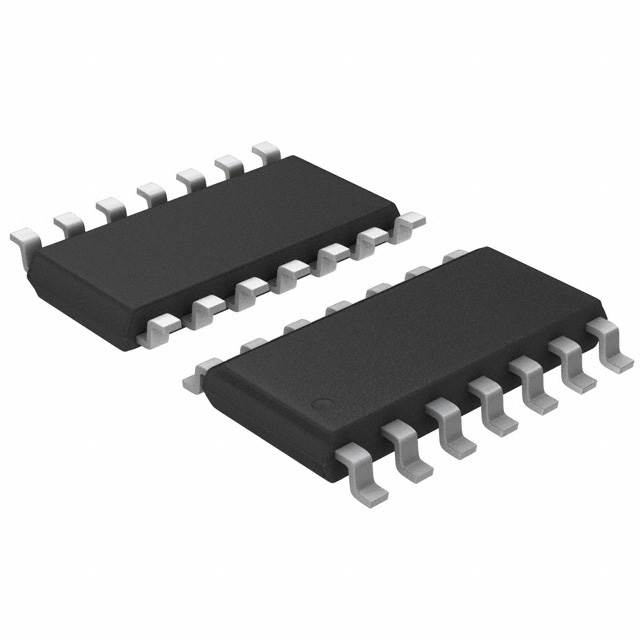
The EL5455IS-T13 is a voltage feedback operational amplifier manufactured by Renesas Electronics Corporation, configured as a 4-circuit integrated circuit in a 14-SOIC surface mount package. This device is classified as obsolete, indicating discontinued production and limited availability for new designs. The EL5455IS-T13 operates across a supply voltage range of 5V to 12V with an operating temperature range of -40°C to 85°C, making it suitable for general-purpose analog signal conditioning applications.
Identification of equivalent and substitute parts is necessary due to the obsolete product status of the EL5455IS-T13. Obsolete components present supply chain risks and may become unavailable for procurement. Active substitute parts with compatible electrical and mechanical specifications ensure design continuity and long-term component availability.
Substiute Parts
Key Parameters
| Parameter | Value | Unit |
|---|---|---|
| Amplifier Type | Voltage Feedback | — |
| Number of Circuits | 4 | — |
| Slew Rate | 180 | V/µs |
| Gain Bandwidth Product | 165 | MHz |
| -3dB Bandwidth | 270 | MHz |
| Current - Input Bias | 120 | nA |
| Voltage - Input Offset | 500 | µV |
| Current - Supply | 3 | mA (x4 Channels) |
| Current - Output / Channel | 105 | mA |
| Voltage - Supply Span (Min) | 5 | V |
| Voltage - Supply Span (Max) | 12 | V |
| Operating Temperature | -40 to 85 | °C |
| Package / Case | 14-SOIC (0.154", 3.90mm Width) | — |
| Mounting Type | Surface Mount | — |
| RoHS Status | RoHS non-compliant | — |
| Moisture Sensitivity Level | 2 (1 Year) | — |
Substitute Part Grouping Explanation
Substitution of the EL5455IS-T13 is determined by the following critical parameters:
Mechanical Compatibility:
- Package type: 14-SOIC surface mount configuration
- Package dimensions: 0.154" width (3.90mm)
- Mounting type: Surface mount
Electrical Compatibility:
- Amplifier topology: Voltage feedback architecture
- Circuit count: 4 independent circuits per package
- Supply voltage range: Minimum 5V, maximum 12V
- Operating temperature range: -40°C to 85°C
- Input bias current: 120 nA specification
- Input offset voltage: 500 µV specification
The OPA4820ID from Texas Instruments meets all mechanical compatibility requirements and operates within the specified supply voltage and temperature ranges. The OPA4820ID maintains the 4-circuit voltage feedback topology in an identical 14-SOIC package, enabling direct substitution at the board level. Additionally, the OPA4820ID is classified as an active product with ROHS3 compliance, addressing the obsolescence and regulatory compliance limitations of the EL5455IS-T13.
Parameter Comparison
| Parameter | EL5455IS-T13 (Renesas) | OPA4820ID (Texas Instruments) | Unit |
|---|---|---|---|
| Amplifier Type | Voltage Feedback | Voltage Feedback | — |
| Number of Circuits | 4 | 4 | — |
| Slew Rate | 180 | 240 | V/µs |
| Gain Bandwidth Product | 165 | 250 | MHz |
| -3dB Bandwidth | 270 | 650 | MHz |
| Current - Input Bias | 120 | 9000 | nA |
| Voltage - Input Offset | 500 | 250 | µV |
| Current - Supply | 3 | 22.6 | mA |
| Current - Output / Channel | 105 | 85 | mA |
| Voltage - Supply Span (Min) | 5 | 4 | V |
| Voltage - Supply Span (Max) | 12 | 12.6 | V |
| Operating Temperature | -40 to 85 | -40 to 85 | °C |
| Package / Case | 14-SOIC (0.154", 3.90mm Width) | 14-SOIC (0.154", 3.90mm Width) | — |
| Mounting Type | Surface Mount | Surface Mount | — |
| Product Status | Obsolete | Active | — |
| RoHS Status | RoHS non-compliant | ROHS3 Compliant | — |
| Moisture Sensitivity Level | 2 (1 Year) | 2 (1 Year) | — |
Engineering Selection Recommendations
Product Status Consideration: The EL5455IS-T13 carries an obsolete designation, indicating that Renesas Electronics Corporation has discontinued production. The OPA4820ID is classified as an active product, ensuring ongoing availability and manufacturer support. For new designs or long-term production requirements, the OPA4820ID provides supply chain continuity.
Regulatory Compliance: The EL5455IS-T13 is RoHS non-compliant, which may present procurement restrictions in regulated markets and applications subject to environmental compliance mandates. The OPA4820ID is ROHS3 compliant, satisfying current regulatory requirements for electronic components in the European Union and equivalent jurisdictions.
Electrical Performance: The OPA4820ID demonstrates superior electrical performance across multiple parameters. The gain bandwidth product increases from 165 MHz to 250 MHz, and the -3dB bandwidth extends from 270 MHz to 650 MHz. The slew rate improves from 180 V/µs to 240 V/µs. Input offset voltage is reduced from 500 µV to 250 µV. These enhancements provide improved signal fidelity and reduced distortion in signal conditioning applications.
Supply Current Trade-off: The OPA4820ID requires 22.6 mA total supply current compared to 3 mA for the EL5455IS-T13. This represents a significant increase in power consumption. Applications with strict power budget constraints must account for this difference during circuit design.
Input Bias Current Difference: The OPA4820ID exhibits input bias current of 9 µA, substantially higher than the EL5455IS-T13 specification of 120 nA. This difference affects input impedance characteristics and may require circuit design adjustments in high-impedance signal sources.
Mechanical and Thermal Compatibility: Both devices share identical package specifications (14-SOIC, 0.154" width, 3.90mm), identical operating temperature ranges (-40°C to 85°C), and identical moisture sensitivity levels (MSL 2, 1 Year). Direct board-level substitution is mechanically feasible without PCB redesign.
Frequently Asked Questions (FAQ)
Q: Can the OPA4820ID be used as a direct replacement for the EL5455IS-T13 without PCB modifications?
A: The OPA4820ID and EL5455IS-T13 share identical 14-SOIC package dimensions and pin configurations, enabling direct substitution at the board level without PCB layout changes. However, circuit design adjustments may be necessary to accommodate differences in input bias current (9 µA versus 120 nA) and supply current requirements (22.6 mA versus 3 mA).
Q: What are the primary electrical differences between these devices?
A: The OPA4820ID provides higher bandwidth performance (650 MHz -3dB bandwidth versus 270 MHz), faster slew rate (240 V/µs versus 180 V/µs), and lower input offset voltage (250 µV versus 500 µV). The OPA4820ID requires significantly higher supply current (22.6 mA versus 3 mA) and exhibits higher input bias current (9 µA versus 120 nA).
Q: Is the OPA4820ID suitable for applications requiring low input bias current?
A: The OPA4820ID input bias current specification of 9 µA is substantially higher than the EL5455IS-T13 specification of 120 nA. Applications requiring input bias currents below 1 µA should evaluate alternative devices specifically designed for low-bias-current operation.
Q: What is the impact of the increased supply current on circuit design?
A: The OPA4820ID supply current of 22.6 mA per package (compared to 3 mA for the EL5455IS-T13) increases power dissipation and thermal load. Power supply design must accommodate this higher current draw. Thermal management and decoupling capacitor sizing may require adjustment.
Q: Are there any regulatory compliance advantages to using the OPA4820ID?
A: The OPA4820ID is ROHS3 compliant, whereas the EL5455IS-T13 is RoHS non-compliant. Applications subject to RoHS directives or equivalent environmental regulations must use the OPA4820ID to satisfy compliance requirements.
Q: What is the product availability status of each device?
A: The EL5455IS-T13 is classified as obsolete with limited inventory (682 pieces reported in stock). The OPA4820ID is an active product with higher inventory availability (1101 pieces reported in stock), ensuring long-term procurement viability.
Q: Do both devices operate across the same temperature range?
A: Both the EL5455IS-T13 and OPA4820ID operate across the identical temperature range of -40°C to 85°C, ensuring thermal compatibility in applications with specified operating temperature requirements.
Q: What packaging options are available for the OPA4820ID?
A: The OPA4820ID is supplied in tube packaging. The EL5455IS-T13 packaging format is not specified in the provided data. Both devices utilize the 14-SOIC package type for the integrated circuit itself.
Alternative Parts

SJ6012L2TP
Littelfuse Inc.
6 Alternative Parts

JMK107BBJ476MA-RE
Taiyo Yuden
10 Alternative Parts

GMK107BBJ475MA-T
Taiyo Yuden
5 Alternative Parts
SJ6020N2ARP
Littelfuse Inc.
3 Alternative Parts
SJ6025R2ATP
Littelfuse Inc.
4 Alternative Parts

2474-05L
API Delevan Inc.
1 Alternative Parts

4590R-684K
API Delevan Inc.
1 Alternative Parts

CM6560R-334
API Delevan Inc.
1 Alternative Parts

CM6460-104
API Delevan Inc.
1 Alternative Parts

5526-12
API Delevan Inc.
1 Alternative Parts