



Request Quote
(Ships tomorrow)
DSC1001DI5-033.3333 MEMS Oscillator Equivalent & Substitute Parts
Part Overview
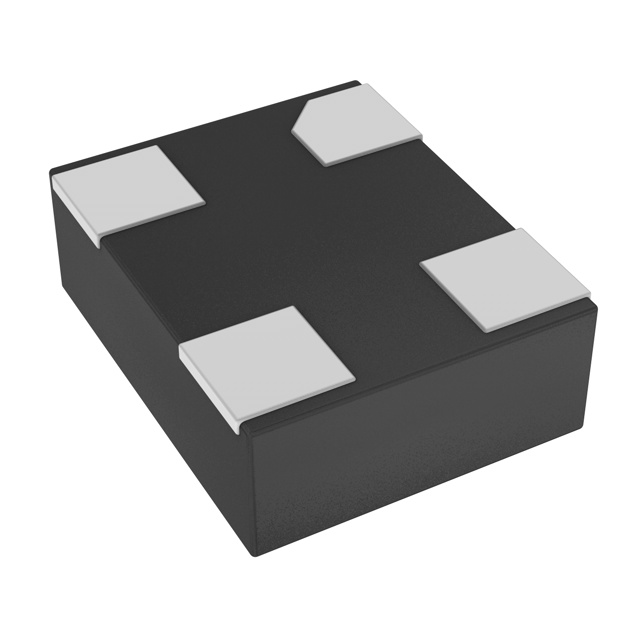
The DSC1001DI5-033.3333 is a 33.3333 MHz MEMS-based XO (Standard) oscillator manufactured by Microchip Technology. This component operates across a 1.8V to 3.3V supply range with CMOS output, designed for applications requiring low-power standby functionality. The part is currently in active production status with AEC-Q100 automotive-grade qualification and ROHS3 compliance. Substitute parts may be required due to inventory constraints, supply chain optimization, or application-specific performance requirements within compatible electrical and mechanical parameters.
Substiute Parts
Key Parameters
| Parameter | Value |
|---|---|
| Frequency | 33.3333 MHz |
| Output Type | CMOS |
| Supply Voltage Range | 1.8V ~ 3.3V |
| Operating Temperature | -40°C ~ 85°C |
| Package / Case | 4-VDFN |
| Size / Dimension | 0.098" L x 0.079" W (2.50mm x 2.00mm) |
| Height - Seated (Max) | 0.035" (0.90mm) |
| Standby Function | Power Down |
| RoHS Status | ROHS3 Compliant |
| Moisture Sensitivity Level | 1 (Unlimited) |
Substitute Part Grouping Explanation
Substitution eligibility for the DSC1001DI5-033.3333 is determined by the following critical parameters:
- Frequency Match: 33.3333 MHz (exact match required)
- Output Configuration: CMOS output
- Supply Voltage Compatibility: Substitute must operate within or encompass the 1.8V ~ 3.3V range
- Operating Temperature Range: -40°C ~ 85°C minimum requirement
- Package Compatibility: 4-lead surface mount package with equivalent footprint (2.50mm x 2.00mm)
- Standby Capability: Power Down function support
- Compliance Standards: ROHS3 compliance and MSL Level 1
The SG-210STF 33.3333ML from EPSON meets these substitution criteria. While the base resonator differs (Crystal vs. MEMS), the electrical performance envelope and mechanical compatibility align with the allowed parameters for this oscillator category.
Parameter Comparison
| Parameter | DSC1001DI5-033.3333 (Main) | SG-210STF 33.3333ML (Substitute) |
|---|---|---|
| Manufacturer | Microchip Technology | EPSON |
| Frequency | 33.3333 MHz | 33.3333 MHz |
| Output Type | CMOS | CMOS |
| Supply Voltage Range | 1.8V ~ 3.3V | 1.6V ~ 3.6V |
| Frequency Stability | ±10ppm | ±50ppm |
| Operating Temperature | -40°C ~ 85°C | -40°C ~ 85°C |
| Current - Supply (Max) | 7.2mA | 2.2mA |
| Current - Supply (Disable) (Max) | 15µA | 2.7µA |
| Package / Case | 4-VDFN | 4-SMD, No Lead |
| Size / Dimension | 0.098" L x 0.079" W (2.50mm x 2.00mm) | 0.098" L x 0.079" W (2.50mm x 2.00mm) |
| Height - Seated (Max) | 0.035" (0.90mm) | 0.035" (0.90mm) |
| RoHS Status | ROHS3 Compliant | ROHS3 Compliant |
| Moisture Sensitivity Level | 1 (Unlimited) | 1 (Unlimited) |
| REACH Status | REACH Unaffected | REACH Unaffected |
Engineering Selection Recommendations
Both the DSC1001DI5-033.3333 and SG-210STF 33.3333ML are active production components with ROHS3 compliance and REACH unaffected status, suitable for current design implementations. The DSC1001DI5-033.3333 carries AEC-Q100 automotive-grade qualification. The SG-210STF 33.3333ML demonstrates lower supply current consumption (2.2mA vs. 7.2mA) and reduced standby current (2.7µA vs. 15µA), with a wider supply voltage tolerance (1.6V ~ 3.6V vs. 1.8V ~ 3.3V). Frequency stability differs at ±10ppm versus ±50ppm respectively. Component selection should be based on specific application requirements regarding power consumption, frequency stability tolerance, and automotive qualification necessity.
Frequently Asked Questions (FAQ)
Q: Can the SG-210STF 33.3333ML directly replace the DSC1001DI5-033.3333 in existing designs?
A: Mechanical and electrical compatibility exists for the specified parameters. Both components share identical frequency (33.3333 MHz), CMOS output, operating temperature range (-40°C ~ 85°C), and footprint dimensions (2.50mm x 2.00mm). The supply voltage range of the substitute encompasses the main part's range. PCB layout compatibility requires verification due to package type differences (4-VDFN vs. 4-SMD, No Lead).
Q: What is the significance of the frequency stability difference (±10ppm vs. ±50ppm)?
A: Frequency stability defines the oscillator's frequency deviation over temperature and time. The DSC1001DI5-033.3333 maintains tighter tolerance at ±10ppm, while the SG-210STF 33.3333ML operates at ±50ppm. Applications with stringent frequency accuracy requirements should account for this parameter difference in system design.
Q: Why does the substitute have lower current consumption?
A: The SG-210STF 33.3333ML achieves lower supply current (2.2mA vs. 7.2mA) and standby current (2.7µA vs. 15µA) through different oscillator architecture (Crystal-based vs. MEMS-based). This characteristic may provide power efficiency benefits in battery-operated or low-power applications.
Q: Are both parts suitable for automotive applications?
A: The DSC1001DI5-033.3333 carries AEC-Q100 automotive-grade qualification. The SG-210STF 33.3333ML does not list AEC-Q100 certification in the provided specifications. Automotive application requirements should be evaluated against specific qualification standards needed for the end application.
Q: What packaging considerations apply to these components?
A: Both components use 4-lead surface mount packages with identical footprint dimensions (2.50mm x 2.00mm, 0.035" max height). The DSC1001DI5-033.3333 uses 4-VDFN packaging, while the SG-210STF 33.3333ML uses 4-SMD, No Lead packaging. Reflow profile and solder paste application may differ slightly between package types; consult manufacturer datasheets for specific assembly requirements.
Alternative Parts

SJ6012L2TP
Littelfuse Inc.
6 Alternative Parts

JMK107BBJ476MA-RE
Taiyo Yuden
10 Alternative Parts

GMK107BBJ475MA-T
Taiyo Yuden
5 Alternative Parts
SJ6020N2ARP
Littelfuse Inc.
3 Alternative Parts
SJ6025R2ATP
Littelfuse Inc.
4 Alternative Parts

2474-05L
API Delevan Inc.
1 Alternative Parts

4590R-684K
API Delevan Inc.
1 Alternative Parts

CM6560R-334
API Delevan Inc.
1 Alternative Parts

CM6460-104
API Delevan Inc.
1 Alternative Parts

5526-12
API Delevan Inc.
1 Alternative Parts