



Request Quote
(Ships tomorrow)
DM368ZCEZ Equivalent & Substitute Parts
Part Overview
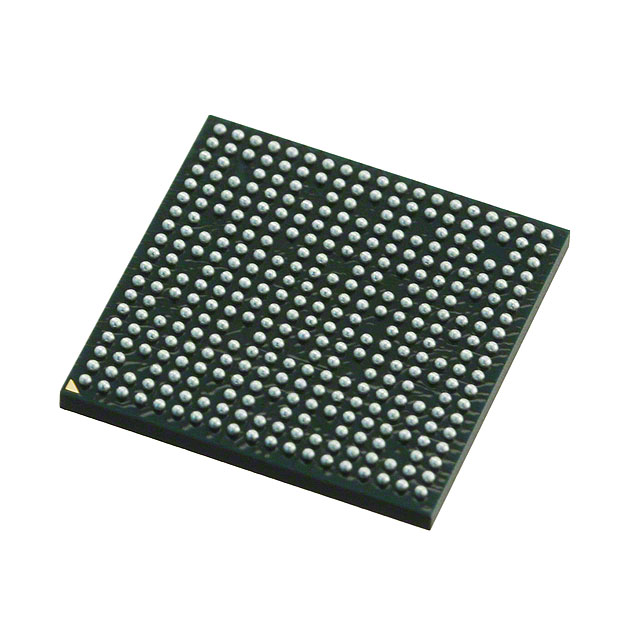
The DM368ZCEZ is a Digital Media System-on-Chip (DMSoC) from Texas Instruments' TMS320DM3x DaVinci™ series, designed for embedded multimedia processing applications. This component integrates a 432MHz processor with comprehensive multimedia interfaces including Ethernet, USB, SPI, I2C, McBSP, and EBI/EMI connectivity. The part is currently in Last Time Buy status, indicating end-of-life transition. Identifying qualified substitute components is essential for design continuity and long-term product support.
Substiute Parts
Key Parameters
| Parameter | Value |
|---|---|
| Manufacturer Part Number | DM368ZCEZ |
| Manufacturer | Texas Instruments |
| Series | TMS320DM3x, DaVinci™ |
| Type | Digital Media System-on-Chip (DMSoC) |
| Clock Rate | 432MHz |
| Package / Case | 338-LFBGA (13x13) |
| Voltage - Core | 1.20V |
| Voltage - I/O | 1.8V, 3.3V |
| On-Chip RAM | 56kB |
| Non-Volatile Memory | ROM (16kB) |
| Operating Temperature | 0°C ~ 85°C (TC) |
| RoHS Status | ROHS3 Compliant |
| Moisture Sensitivity Level | 3 (168 Hours) |
Substitute Part Grouping Explanation
Substitution eligibility for the DM368ZCEZ is determined by the following critical parameters:
Mechanical Compatibility: Package type (338-LFBGA), footprint dimensions (13x13), and mounting type (Surface Mount) must be identical to ensure PCB compatibility without redesign.
Electrical Compatibility: Core voltage (1.20V), I/O voltage levels (1.8V, 3.3V), and operating temperature range (0°C ~ 85°C) must match or exceed the original specification to maintain system reliability.
Functional Compatibility: Interface support (EBI/EMI, Ethernet, I2C, McBSP, SPI, UART, USB), on-chip RAM (56kB), and ROM (16kB) must be present to ensure firmware and hardware integration compatibility.
Regulatory Compliance: RoHS3 compliance and REACH unaffected status must be maintained for supply chain and regulatory requirements.
The TMS320DM365ZCE21 meets all mechanical, electrical, and regulatory criteria for substitution. The primary design consideration is the reduced clock rate (216MHz versus 432MHz), which affects processing performance but maintains full interface and memory architecture compatibility.
Parameter Comparison
| Parameter | DM368ZCEZ (Main Part) | TMS320DM365ZCE21 (Substitute) |
|---|---|---|
| Manufacturer | Texas Instruments | Texas Instruments |
| Series | TMS320DM3x, DaVinci™ | TMS320DM3x, DaVinci™ |
| Type | Digital Media System-on-Chip (DMSoC) | Digital Media System-on-Chip (DMSoC) |
| Clock Rate | 432MHz | 216MHz |
| Package / Case | 338-LFBGA (13x13) | 338-LFBGA (13x13) |
| Voltage - Core | 1.20V | 1.20V |
| Voltage - I/O | 1.8V, 3.3V | 1.8V, 3.3V |
| On-Chip RAM | 56kB | 56kB |
| Non-Volatile Memory | ROM (16kB) | ROM (16kB) |
| Operating Temperature | 0°C ~ 85°C (TC) | 0°C ~ 85°C (TC) |
| Mounting Type | Surface Mount | Surface Mount |
| RoHS Status | ROHS3 Compliant | ROHS3 Compliant |
| Moisture Sensitivity Level | 3 (168 Hours) | 3 (168 Hours) |
| Product Status | Last Time Buy | Active |
Engineering Selection Recommendations
The TMS320DM365ZCE21 is qualified as a direct substitute for the DM368ZCEZ based on identical mechanical packaging, matching electrical specifications, and equivalent regulatory compliance status. Both components maintain ROHS3 compliance and REACH unaffected designation, ensuring supply chain continuity.
The substitute part is in Active product status, providing extended availability and supply security compared to the Last Time Buy status of the main part. This transition is appropriate for new designs or redesigns requiring long-term component sourcing.
The primary design parameter difference is the clock rate reduction from 432MHz to 216MHz. This affects maximum processing throughput and must be evaluated against application performance requirements. All interface protocols, memory architecture, and voltage specifications remain functionally equivalent.
Frequently Asked Questions (FAQ)
Q: Can the TMS320DM365ZCE21 be used as a direct drop-in replacement for the DM368ZCEZ?
A: Yes, from a mechanical and electrical standpoint. Both components use identical 338-LFBGA packaging with 13x13 footprint dimensions, matching core and I/O voltage specifications, and equivalent memory configurations. PCB layout and power delivery designs require no modification. However, the reduced clock rate (216MHz versus 432MHz) may impact application performance and must be evaluated against system throughput requirements.
Q: What are the key compatibility criteria for substitution?
A: Mechanical compatibility (package type and footprint), electrical compatibility (voltage levels and temperature range), functional compatibility (interface support and memory), and regulatory compliance (RoHS3 and REACH status) are the determining factors. The substitute part meets all these criteria.
Q: Why is the clock rate different between these parts?
A: The TMS320DM365ZCE21 operates at 216MHz compared to the DM368ZCEZ at 432MHz. This represents a different product variant within the TMS320DM3x series, optimized for different performance and power consumption profiles. The reduced clock rate does not affect interface compatibility or memory architecture.
Q: Are there any supply chain advantages to using the substitute part?
A: Yes. The TMS320DM365ZCE21 is in Active product status with higher inventory availability (2200 units in stock versus 757 units), whereas the DM368ZCEZ is in Last Time Buy status. This provides extended procurement windows and improved long-term supply security.
Q: Do both parts require identical PCB design considerations?
A: Yes. Identical package specifications, voltage requirements, and interface pin configurations mean existing PCB designs require no modification. Power delivery, decoupling, and signal integrity designs remain unchanged.
Q: What is the Moisture Sensitivity Level (MSL) for both parts?
A: Both components have MSL 3 rating with 168-hour floor life. Identical handling, storage, and reflow procedures apply to both parts.
Alternative Parts

SJ6012L2TP
Littelfuse Inc.
6 Alternative Parts

JMK107BBJ476MA-RE
Taiyo Yuden
10 Alternative Parts

GMK107BBJ475MA-T
Taiyo Yuden
5 Alternative Parts
SJ6020N2ARP
Littelfuse Inc.
3 Alternative Parts
SJ6025R2ATP
Littelfuse Inc.
4 Alternative Parts

2474-05L
API Delevan Inc.
1 Alternative Parts

4590R-684K
API Delevan Inc.
1 Alternative Parts

CM6560R-334
API Delevan Inc.
1 Alternative Parts

CM6460-104
API Delevan Inc.
1 Alternative Parts

5526-12
API Delevan Inc.
1 Alternative Parts