


Request Quote
(Ships tomorrow)
DF1760U Equivalent & Substitute Parts
Part Overview
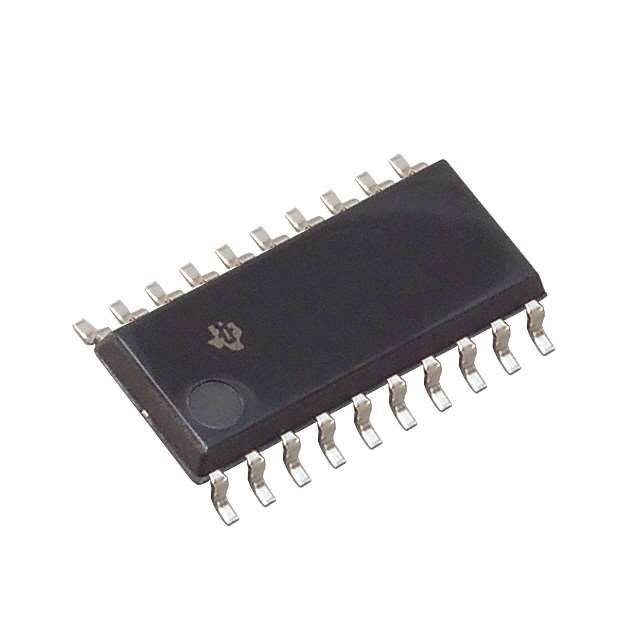
The DF1760U is a 20-bit Sigma-Delta analog-to-digital converter manufactured by Texas Instruments, designed for dual-channel single-ended data acquisition applications. The device features a 48 kHz sampling rate and SPI digital interface, operating from 5V supply rails in a 20-SOIC surface mount package. The DF1760U is classified as obsolete, making identification of functionally compatible alternatives essential for ongoing system support and new design implementations.
Substiute Parts
Key Parameters
| Parameter | DF1760U |
|---|---|
| Manufacturer | Texas Instruments |
| Category | Data Acquisition |
| Number of Bits | 20 |
| Sampling Rate (Per Second) | 48k |
| Number of Inputs | 2 |
| Input Type | Single Ended |
| Data Interface | SPI |
| Architecture | Sigma-Delta |
| Voltage - Supply, Analog | 5V |
| Voltage - Supply, Digital | 5V |
| Operating Temperature | 0°C ~ 70°C |
| Package / Case | 20-SOIC (0.209", 5.30mm Width) |
| Mounting Type | Surface Mount |
| Product Status | Obsolete |
| RoHS Status | ROHS3 Compliant |
| Moisture Sensitivity Level (MSL) | 3 (168 Hours) |
Substitute Part Grouping Explanation
Substitution of the DF1760U requires evaluation against the following critical parameters that define functional compatibility:
Resolution & Sampling Performance: The DF1760U operates at 20-bit resolution with a 48 kHz sampling rate. Substitute devices must maintain or exceed these specifications to preserve signal fidelity and data acquisition bandwidth.
Channel Configuration & Input Type: The DF1760U provides 2 single-ended inputs. Substitute devices with reduced input channels or differential-only input architectures require circuit redesign to maintain dual-channel acquisition capability.
Digital Interface & Protocol: The DF1760U uses SPI for serial data communication. Substitute devices must support SPI to ensure compatibility with existing microcontroller interfaces and firmware implementations.
Supply Voltage Requirements: The DF1760U requires 5V for both analog and digital supply rails. Substitute devices with different supply voltage specifications necessitate power distribution modifications.
Package & Thermal Characteristics: The DF1760U uses a 20-SOIC package with MSL 3 rating. Substitute devices in different packages require PCB layout redesign and may have different moisture handling requirements.
Product Status & Compliance: The DF1760U is obsolete. Active substitute devices must maintain ROHS3 compliance and REACH unaffected status to meet current regulatory requirements.
Parameter Comparison
| Parameter | DF1760U | ADS1271IPW |
|---|---|---|
| Manufacturer | Texas Instruments | Texas Instruments |
| Number of Bits | 20 | 24 |
| Sampling Rate (Per Second) | 48k | 105k |
| Number of Inputs | 2 | 1 |
| Input Type | Single Ended | Differential |
| Data Interface | SPI | SPI |
| Architecture | Sigma-Delta | Sigma-Delta |
| Voltage - Supply, Analog | 5V | 5V |
| Voltage - Supply, Digital | 5V | 1.65V ~ 3.6V |
| Operating Temperature | 0°C ~ 70°C | -40°C ~ 105°C |
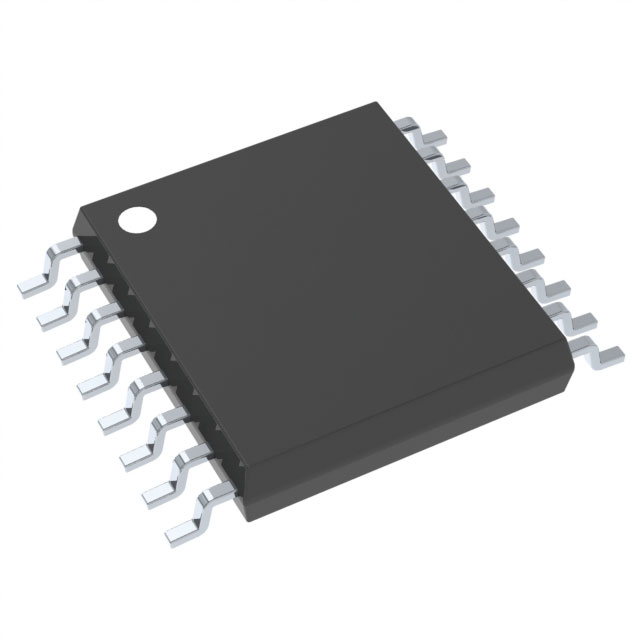
| Package / Case | 20-SOIC (0.209", 5.30mm Width) | 16-TSSOP (0.173", 4.40mm Width) |
| Product Status | Obsolete | Active |
| RoHS Status | ROHS3 Compliant | ROHS3 Compliant |
| Moisture Sensitivity Level (MSL) | 3 (168 Hours) | 2 (1 Year) |
Engineering Selection Recommendations
The ADS1271IPW is the manufacturer-recommended substitute for the DF1760U. Both devices are manufactured by Texas Instruments, employ Sigma-Delta architecture, and support SPI digital communication. Both maintain ROHS3 compliance and REACH unaffected status, meeting current regulatory requirements.
The ADS1271IPW offers enhanced specifications: 24-bit resolution (versus 20-bit), 105 kHz sampling rate (versus 48 kHz), and extended operating temperature range (-40°C to 105°C versus 0°C to 70°C). The device features improved moisture sensitivity (MSL 2 versus MSL 3), reducing handling and storage constraints.
Critical design considerations exist: The ADS1271IPW provides a single differential input channel, whereas the DF1760U provides two single-ended channels. Systems requiring dual-channel acquisition must implement external multiplexing or employ multiple ADS1271IPW devices. The ADS1271IPW digital supply operates at 1.65V to 3.6V, requiring separate low-voltage regulation compared to the DF1760U's 5V digital supply. The ADS1271IPW uses a 16-TSSOP package, necessitating PCB layout redesign from the original 20-SOIC footprint.
Frequently Asked Questions (FAQ)
Q: Can the ADS1271IPW directly replace the DF1760U in existing designs?
A: Direct pin-for-pin replacement is not possible. The ADS1271IPW uses a different package (16-TSSOP versus 20-SOIC), has a single differential input versus dual single-ended inputs, and requires a separate 1.65V to 3.6V digital supply. PCB redesign and firmware modification are required.
Q: What is the impact of the single-channel input on the ADS1271IPW?
A: The DF1760U acquires two independent single-ended signals simultaneously. The ADS1271IPW acquires one differential signal. Dual-channel systems must either implement external analog multiplexing to time-share a single ADS1271IPW or use multiple devices with separate SPI interfaces.
Q: Does the higher resolution of the ADS1271IPW (24-bit versus 20-bit) affect compatibility?
A: Higher resolution is a performance enhancement, not a compatibility issue. Firmware must be updated to handle 24-bit data words instead of 20-bit words. The increased sampling rate (105 kHz versus 48 kHz) also requires firmware adjustment to match the new data rate.
Q: What are the implications of the different digital supply voltage?
A: The DF1760U operates the digital interface at 5V. The ADS1271IPW operates at 1.65V to 3.6V. A separate low-voltage regulator must be added to the power distribution network. Level shifting may be required if the microcontroller SPI interface operates at 5V logic levels.
Q: How do the package differences affect PCB design?
A: The DF1760U uses a 20-SOIC package (0.209" width). The ADS1271IPW uses a 16-TSSOP package (0.173" width). The footprint is smaller but requires PCB layout redesign. Via placement, trace routing, and decoupling capacitor positioning must be re-evaluated for the new package geometry.
Q: Are there any handling or storage differences between these devices?
A: The DF1760U has MSL 3 rating (168 hours floor life). The ADS1271IPW has MSL 2 rating (1 year floor life). The ADS1271IPW has less stringent moisture handling requirements, reducing bake-out procedures and storage constraints during manufacturing.
Alternative Parts

SJ6012L2TP
Littelfuse Inc.
6 Alternative Parts

JMK107BBJ476MA-RE
Taiyo Yuden
10 Alternative Parts

GMK107BBJ475MA-T
Taiyo Yuden
5 Alternative Parts
SJ6020N2ARP
Littelfuse Inc.
3 Alternative Parts
SJ6025R2ATP
Littelfuse Inc.
4 Alternative Parts

2474-05L
API Delevan Inc.
1 Alternative Parts

4590R-684K
API Delevan Inc.
1 Alternative Parts

CM6560R-334
API Delevan Inc.
1 Alternative Parts

CM6460-104
API Delevan Inc.
1 Alternative Parts

5526-12
API Delevan Inc.
1 Alternative Parts