




Request Quote
(Ships tomorrow)
DDC114TH-7 Equivalent & Substitute Parts
Part Overview
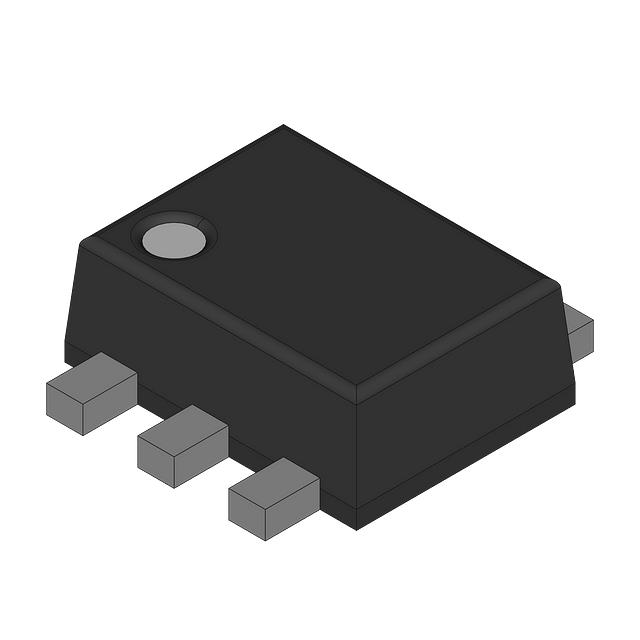
The DDC114TH-7 is a pre-biased dual NPN bipolar junction transistor (BJT) manufactured by Diodes Incorporated in SOT-563 surface mount packaging. This component integrates two NPN transistors with internal biasing resistors, designed for applications requiring compact switching and amplification circuits. The part is currently in active product status with 24,200 units in stock. Equivalent and substitute parts are necessary to address supply chain flexibility, alternative sourcing options, and design optimization across different manufacturing platforms while maintaining electrical and mechanical compatibility.
Substiute Parts
Key Parameters
| Parameter | Value | Unit |
|---|---|---|
| Transistor Type | 2 NPN - Pre-Biased (Dual) | — |
| Maximum Collector Current (Ic) | 100 | mA |
| Collector-Emitter Breakdown Voltage (Max) | 50 | V |
| Base Resistor (R1) | 10 | kOhms |
| DC Current Gain (hFE Min) | 100 | @ 1mA, 5V |
| Vce Saturation (Max) | 300 | mV @ 100µA, 1mA |
| Transition Frequency | 250 | MHz |
| Maximum Power Dissipation | 150 | mW |
| Package Type | SOT-563 | — |
| Mounting Type | Surface Mount | — |
| RoHS Status | ROHS3 Compliant | — |
| Moisture Sensitivity Level | 1 (Unlimited) | — |
Substitute Part Grouping Explanation
Substitution of the DDC114TH-7 is determined by strict equivalence across the following critical parameters:
Primary Substitution Criteria:
- Transistor configuration: 2 NPN - Pre-Biased (Dual)
- Maximum collector current: 100 mA
- Collector-emitter breakdown voltage: 50 V
- Base resistor value: 10 kOhms
- Surface mount packaging: SOT-563 or SOT-666 compatible
- RoHS3 compliance and MSL 1 rating
Secondary Compatibility Factors:
- DC current gain (hFE) minimum specification
- Vce saturation voltage
- Transition frequency (where specified)
- Maximum power dissipation rating
- Emitter-base resistor configuration
Parts are grouped into three categories based on substitution relationship:
- Direct Substitutes – Functionally equivalent parts with identical or superior electrical specifications and active product status
- Upgrade Options – Parts with enhanced performance characteristics or alternative packaging
- Manufacturer-Recommended Alternatives – Parts recommended by manufacturers for specific design requirements
Parameter Comparison
| Part Number | Manufacturer | Ic (Max) mA | Vce(br) V | R1 kOhms | R2 kOhms | hFE Min @ Ic, Vce | Vce Sat (Max) mV | Freq MHz | Power mW | Package | Status |
|---|---|---|---|---|---|---|---|---|---|---|---|
| DDC114TH-7 | Diodes Inc. | 100 | 50 | 10 | — | 100 @ 1mA, 5V | 300 @ 100µA, 1mA | 250 | 150 | SOT-563 | Active |
| EMH4T2R | Rohm Semi. | 100 | 50 | 10 | — | 100 @ 1mA, 5V | 300 @ 1mA, 10mA | 250 | 150 | EMT6 | Active |
| EMH11T2R | Rohm Semi. | 100 | 50 | 10 | 10 | 30 @ 5mA, 5V | 300 @ 500µA, 10mA | 250 | 150 | EMT6 | Active |
| NSBC114EDXV6T1G | onsemi | 100 | 50 | 10 | 10 | 35 @ 5mA, 10V | 250 @ 300µA, 10mA | — | 500 | SOT-563 | Active |
| NSBC114TDXV6T1G | onsemi | 100 | 50 | 10 | — | 160 @ 5mA, 10V | 250 @ 1mA, 10mA | — | 500 | SOT-563 | Active |
| NSBC114TDXV6T5G | onsemi | 100 | 50 | 10 | — | 160 @ 5mA, 10V | 250 @ 1mA, 10mA | — | 500 | SOT-563 | Obsolete |
| NSBC114YDXV6T1G | Fairchild Semi. | 100 | 50 | 10 | 47 | 80 @ 5mA, 10V | 250 @ 300µA, 10mA | — | 500 | SOT-563 | Active |
| NSBC114YDXV6T5G | onsemi | 100 | 50 | 10 | 47 | 80 @ 5mA, 10V | 250 @ 300µA, 10mA | — | 500 | SOT-563 | Obsolete |
| PEMH11,115 | Nexperia USA | 100 | 50 | 10 | 10 | 30 @ 5mA, 5V | 150 @ 500µA, 10mA | — | 300 | SOT-666 | Not For New Designs |
| EMD4DXV6T1G | onsemi | 100 | 50 | 10, 47 | 47 | 80 @ 5mA, 10V | 250 @ 300µA, 10mA | — | 500 | SOT-563 | Active |
| EMD4DXV6T5G | onsemi | 100 | 50 | 10, 47 | 47 | 80 @ 5mA, 10V | 250 @ 300µA, 10mA | — | 500 | SOT-563 | Obsolete |
Engineering Selection Recommendations
Active Product Status Substitutes (Recommended for New Designs):
The following parts maintain active product status and are suitable for new design implementations:
-
EMH4T2R (Rohm Semiconductor): Direct electrical equivalent with identical transition frequency (250 MHz) and power rating (150 mW). Packaging differs (EMT6 vs. SOT-563) but maintains SOT-563/SOT-666 compatibility. Suitable for applications requiring exact frequency and power specifications.
-
EMH11T2R (Rohm Semiconductor): Active status with enhanced emitter-base resistor configuration (10 kOhms). Maintains 250 MHz transition frequency and 150 mW power rating. Lower hFE minimum (30 vs. 100) requires circuit validation for gain-dependent applications.
-
NSBC114EDXV6T1G (onsemi): Active status with superior power dissipation (500 mW vs. 150 mW). Includes emitter-base resistor (10 kOhms). Lower hFE minimum (35 vs. 100) and improved Vce saturation (250 mV vs. 300 mV). Suitable for higher power applications.
-
NSBC114TDXV6T1G (onsemi): Active status with 500 mW power rating and higher hFE minimum (160 vs. 100). Improved Vce saturation (250 mV). No emitter-base resistor specified. Suitable for gain-critical applications.
-
NSBC114YDXV6T1G (Fairchild Semiconductor): Active status with 500 mW power rating and 47 kOhms emitter-base resistor. hFE minimum of 80. Suitable for applications requiring specific biasing network configuration.
-
EMD4DXV6T1G (onsemi): Manufacturer-recommended alternative with mixed NPN/PNP configuration (1 NPN, 1 PNP). Active status with 500 mW power rating. Suitable for complementary switching applications requiring both transistor types in single package.
Obsolete Product Status (Not Recommended for New Designs):
NSBC114TDXV6T5G and NSBC114YDXV6T5G carry obsolete product status and should not be selected for new design implementations. These parts are available in existing inventory but lack manufacturer support for ongoing production.
Not For New Designs Status:
PEMH11,115 (Nexperia USA) carries "Not For New Designs" status. While functionally compatible with superior Vce saturation performance (150 mV vs. 300 mV), this part should be avoided in new circuit designs due to manufacturer lifecycle restrictions.
Compliance Verification:
All recommended active-status substitutes maintain ROHS3 compliance and MSL 1 (Unlimited) moisture sensitivity rating, matching the original DDC114TH-7 specifications. REACH status is unaffected across all substitute options.
Frequently Asked Questions (FAQ)
Q: Can EMH4T2R replace DDC114TH-7 in existing designs?
A: EMH4T2R is electrically equivalent with identical maximum collector current (100 mA), breakdown voltage (50 V), base resistor (10 kOhms), transition frequency (250 MHz), and power rating (150 mW). The primary difference is packaging designation (EMT6 vs. SOT-563), though both are compatible with SOT-563/SOT-666 footprints. Verification of PCB footprint compatibility is required before substitution.
Q: What is the difference between parts with and without emitter-base resistor (R2)?
A: The DDC114TH-7 does not specify an emitter-base resistor (R2 = —), while alternatives such as EMH11T2R and NSBC114EDXV6T1G include 10 kOhms emitter-base resistors. This affects biasing network behavior and switching characteristics. Parts without specified R2 values provide greater circuit design flexibility but require external biasing resistor implementation if needed.
Q: Why do some substitutes have higher power ratings (500 mW vs. 150 mW)?
A: Higher power ratings indicate enhanced thermal dissipation capability and greater maximum power handling. Parts such as NSBC114TDXV6T1G and EMD4DXV6T1G with 500 mW ratings are suitable for applications requiring higher current or longer duty cycles. The original DDC114TH-7 specification of 150 mW is maintained in EMH4T2R and EMH11T2R for direct power-equivalent substitution.
Q: Are there differences in DC current gain (hFE) specifications between substitutes?
A: Yes. The DDC114TH-7 specifies hFE minimum of 100 @ 1mA, 5V. Substitutes vary: EMH4T2R matches this specification, while EMH11T2R and NSBC114EDXV6T1G specify lower minimums (30 and 35 respectively). NSBC114TDXV6T1G specifies higher hFE minimum (160). Applications dependent on specific gain characteristics require validation against substitute specifications.
Q: What is the significance of transition frequency (250 MHz) in the DDC114TH-7?
A: Transition frequency (fT) indicates the maximum frequency at which the transistor maintains unity current gain. The DDC114TH-7 specifies 250 MHz. EMH4T2R and EMH11T2R maintain this specification. Other substitutes (onsemi NSBC114 series, EMD4DXV6 series) do not specify transition frequency, indicating they may be optimized for lower-frequency switching applications. High-frequency circuit designs require parts with specified transition frequency.
Q: Can EMD4DXV6T1G be used as a direct replacement for DDC114TH-7?
A: EMD4DXV6T1G is a manufacturer-recommended alternative but not a direct replacement. It contains 1 NPN and 1 PNP transistor (complementary pair) versus the dual NPN configuration of DDC114TH-7. This part is suitable for applications requiring both NPN and PNP transistors in a single package but requires circuit redesign for direct substitution.
Q: Should obsolete parts (NSBC114TDXV6T5G, NSBC114YDXV6T5G) be used in new designs?
A: No. Parts with obsolete product status should not be selected for new design implementations. While inventory may be available, manufacturer support for ongoing production and technical documentation is discontinued. Active-status alternatives should be prioritized for all new circuit designs.
Q: What packaging considerations apply when substituting DDC114TH-7?
A: The DDC114TH-7 uses SOT-563 packaging. Most substitutes (NSBC114 series, EMD4DXV6 series) maintain SOT-563 compatibility. EMH4T2R and EMH11T2R use EMT6 packaging but are specified as compatible with SOT-563/SOT-666 footprints. PEMH11,115 uses SOT-666 packaging. PCB footprint verification is required before substitution to ensure mechanical compatibility with existing designs.
Q: How do Vce saturation voltage differences affect circuit performance?
A: Vce saturation voltage determines the minimum voltage drop across the transistor in saturation state. The DDC114TH-7 specifies 300 mV maximum @ 100µA, 1mA. Lower saturation voltages (250 mV in NSBC114 series, 150 mV in PEMH11,115) reduce power dissipation and improve switching efficiency. Higher saturation voltages increase power loss. Application-specific requirements determine whether saturation voltage differences are acceptable.
Alternative Parts

SJ6012L2TP
Littelfuse Inc.
6 Alternative Parts

JMK107BBJ476MA-RE
Taiyo Yuden
10 Alternative Parts

GMK107BBJ475MA-T
Taiyo Yuden
5 Alternative Parts
SJ6020N2ARP
Littelfuse Inc.
3 Alternative Parts
SJ6025R2ATP
Littelfuse Inc.
4 Alternative Parts

2474-05L
API Delevan Inc.
1 Alternative Parts

4590R-684K
API Delevan Inc.
1 Alternative Parts

CM6560R-334
API Delevan Inc.
1 Alternative Parts

CM6460-104
API Delevan Inc.
1 Alternative Parts

5526-12
API Delevan Inc.
1 Alternative Parts