


Request Quote
(Ships tomorrow)
DB3 DIAC Thyristor Equivalent & Substitute Parts
Part Overview
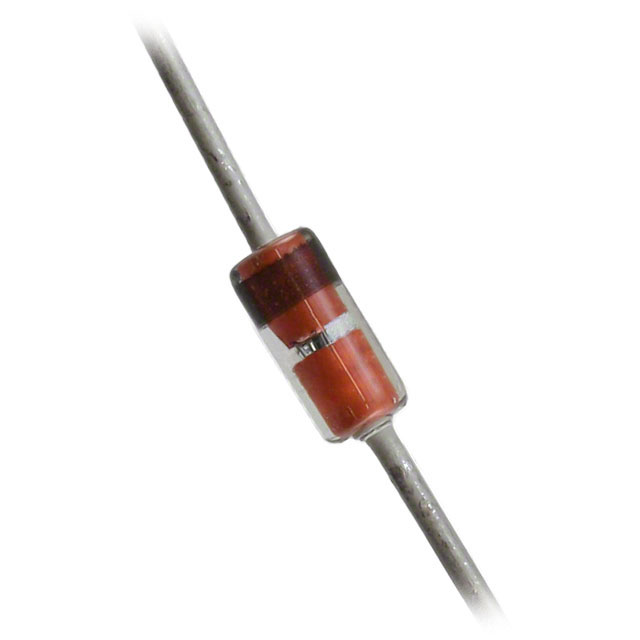
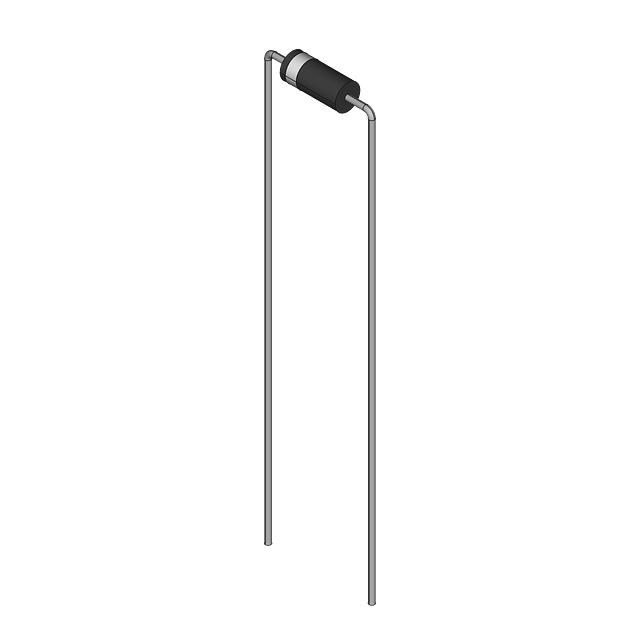
The DB3 is a DIAC (Bidirectional Trigger Diode) thyristor in DO-35 axial package, rated for 28–36V breakover voltage and 2A peak output current. Designed for triggering applications in AC circuits, the DB3 is classified as obsolete by the original manufacturer (onsemi). Due to its obsolete status, identifying equivalent and substitute parts is essential for design continuity, production support, and long-term component availability in legacy and new applications.
Substiute Parts
Key Parameters
| Parameter | Value |
|---|---|
| Voltage - Breakover | 28–36V |
| Current - Breakover | 100 µA |
| Current - Peak Output | 2 A |
| Operating Temperature Range | –40°C to 125°C (TJ) |
| Package / Case | DO-204AH, DO-35, Axial |
| Power Dissipation | 0.15W |
| Moisture Sensitivity Level (MSL) | 1 (Unlimited) |
Substitute Part Grouping Explanation
Substitution of the DB3 DIAC is determined by three critical parameters: breakover voltage range, peak output current rating, and physical package compatibility. All substitute parts must maintain the DO-35 axial package format and support 2A peak output current. Breakover voltage tolerance is the primary differentiator; substitutes are grouped by voltage classification to ensure circuit performance within specified operating ranges.
Key substitution criteria:
- Breakover voltage range overlap or equivalence with 28–36V specification
- Peak output current rating of 2A or higher
- DO-35 axial package format
- Operating temperature range of –40°C to 125°C or wider
Parameter Comparison
| Parameter | DB3 (onsemi) | DB3 (Fairchild) | DB3TG (STMicroelectronics) | DB4 (STMicroelectronics) |
|---|---|---|---|---|
| Voltage - Breakover | 28–36V | 28–36V | 30–34V | 35–45V |
| Current - Breakover | 100 µA | 50 µA | 15 µA | 50 µA |
| Current - Peak Output | 2 A | 2 A | 2 A | 2 A |
| Operating Temperature | –40°C to 125°C | –40°C to 125°C | –40°C to 125°C | –40°C to 125°C |
| Package / Case | DO-204AH, DO-35 | DO-204AH, DO-35 | DO-204AH, DO-35 | DO-204AH, DO-35 |
| Product Status | Obsolete | Obsolete | Active | Active |
| RoHS Status | Not specified | ROHS3 Compliant | ROHS3 Compliant | ROHS3 Compliant |
Engineering Selection Recommendations
DB3 (Fairchild Semiconductor): Direct equivalent to the onsemi DB3 with identical 28–36V breakover voltage and 2A peak output current. Both parts are obsolete; however, Fairchild inventory (770,958 pcs) exceeds onsemi availability (1,087 pcs). This part is ROHS3 compliant and suitable for applications requiring exact voltage matching.
DB3TG (STMicroelectronics): Active product with 30–34V breakover voltage, representing a narrower voltage window within the DB3 specification. Lower breakover current (15 µA vs. 100 µA) provides improved trigger sensitivity. Recommended for new designs and applications where the 30–34V range is acceptable. ROHS3 compliant with unlimited MSL rating.
DB4 (STMicroelectronics): Active product rated for 35–45V breakover voltage, positioned above the DB3 specification. Suitable only for applications requiring higher breakover voltage thresholds. Peak output current remains 2A. ROHS3 compliant with high inventory availability (20,830 pcs).
Frequently Asked Questions (FAQ)
Q: Can the DB3TG replace the DB3 in all applications? A: The DB3TG is compatible with applications where the circuit operates within the 30–34V breakover range. The DB3 specification extends to 28V minimum; circuits designed for 28–29V operation require the DB3 or Fairchild equivalent.
Q: What is the difference between breakover voltage and breakover current? A: Breakover voltage is the threshold voltage at which the DIAC triggers. Breakover current is the minimum current required to sustain conduction after triggering. Lower breakover current (DB3TG at 15 µA) indicates higher trigger sensitivity.
Q: Is the DB4 a suitable substitute for the DB3? A: The DB4 is not a direct substitute due to its 35–45V breakover range, which exceeds the DB3 specification. Use the DB4 only in applications specifically designed for higher voltage triggering.
Q: Are all substitute parts available in the same package? A: Yes. All listed substitutes use the DO-204AH, DO-35 axial package format, ensuring mechanical and electrical compatibility with existing PCB layouts.
Q: Which substitute is recommended for new designs? A: The DB3TG (STMicroelectronics) is recommended for new designs due to its active product status, ROHS3 compliance, and high availability. The DB3 and Fairchild DB3 are obsolete and should be reserved for legacy system support.
Q: What is the significance of ROHS3 compliance? A: ROHS3 compliance indicates the part meets Restriction of Hazardous Substances Directive requirements, restricting lead, cadmium, mercury, and other hazardous materials. This is mandatory for many industrial and consumer applications.
Alternative Parts

SJ6012L2TP
Littelfuse Inc.
6 Alternative Parts

JMK107BBJ476MA-RE
Taiyo Yuden
10 Alternative Parts

GMK107BBJ475MA-T
Taiyo Yuden
5 Alternative Parts
SJ6020N2ARP
Littelfuse Inc.
3 Alternative Parts
SJ6025R2ATP
Littelfuse Inc.
4 Alternative Parts

2474-05L
API Delevan Inc.
1 Alternative Parts

4590R-684K
API Delevan Inc.
1 Alternative Parts

CM6560R-334
API Delevan Inc.
1 Alternative Parts

CM6460-104
API Delevan Inc.
1 Alternative Parts

5526-12
API Delevan Inc.
1 Alternative Parts