



Request Quote
(Ships tomorrow)
CY-27 Equivalent & Substitute Parts Reference
Part Overview
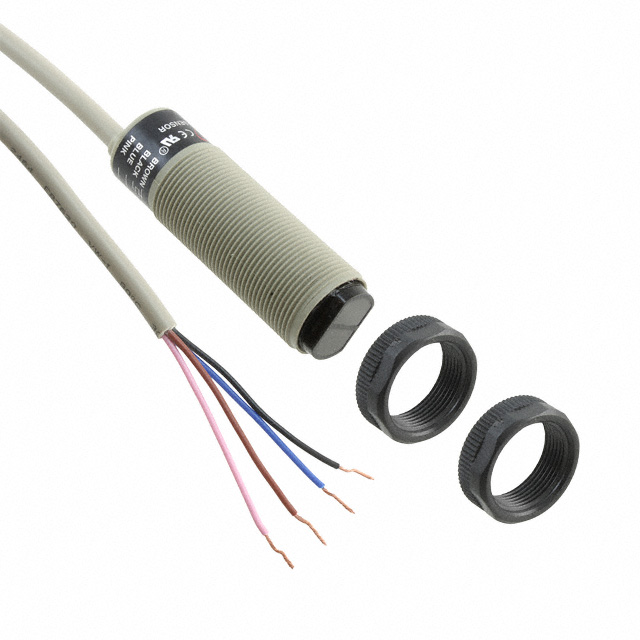
The CY-27 is a through-beam optical sensor manufactured by Panasonic Industrial Automation Sales, designed for applications requiring reliable object detection across a 3-meter sensing distance. This sensor features NPN open-collector output, infrared light source, and IP67 ingress protection suitable for industrial environments. The product is currently obsolete, making equivalent substitute parts necessary for system maintenance, repair, and new installations where through-beam sensing functionality is required.
Substiute Parts
Key Parameters
| Parameter | CY-27 Specification |
|---|---|
| Sensing Method | Through-Beam |
| Sensing Distance | 118.1" (3m) |
| Voltage - Supply | 10V ~ 30V |
| Response Time | 2ms |
| Output Configuration | NPN - Open Collector |
| Light Source | Infrared |
| Connection Method | Cable |
| Ingress Protection | IP67 |
| Cable Length | 78.74" (2m) |
| Operating Temperature | -25°C ~ 55°C |
| RoHS Status | RoHS Compliant |
Substitute Part Grouping Explanation
Substitution of the CY-27 requires evaluation based on core functional parameters that determine sensor compatibility within an optical detection system. The primary substitution criteria are:
Critical Parameters for Substitution:
- Sensing distance capability (minimum 3m required)
- Output configuration (NPN logic level compatibility)
- Supply voltage range overlap (system voltage compatibility)
- Ingress protection rating (environmental sealing requirement)
- Operating temperature range (thermal environment compatibility)
- RoHS compliance status (regulatory requirement)
The E3Z-R61K-M3J 0.3M from Omron Automation and Safety is identified as a substitute part. However, this part operates on a retroreflective sensing method rather than through-beam. While both sensors achieve the 3-meter sensing distance and share compatible voltage ranges, output configurations, temperature ratings, and RoHS compliance, the fundamental difference in sensing method (retroreflective vs. through-beam) represents a functional distinction that must be evaluated against specific application requirements.
Parameter Comparison
| Parameter | CY-27 (Panasonic) | E3Z-R61K-M3J 0.3M (Omron) | Compatibility Notes |
|---|---|---|---|
| Sensing Method | Through-Beam | Retroreflective | Different detection principle |
| Sensing Distance | 118.1" (3m) | 118.110" (3m) | Equivalent |
| Voltage - Supply | 10V ~ 30V | 12V ~ 24V | Overlapping range (12V ~ 24V compatible) |
| Response Time | 2ms | 1ms | Substitute faster |
| Output Configuration | NPN - Open Collector | NPN - Dark-ON/Light-ON - Selectable | Compatible with configuration selection |
| Light Source | Infrared | Red (660nm) | Different wavelength |
| Connection Method | Cable | Connector | Different interface type |
| Ingress Protection | IP67 | IEC IP67, IP69K | Substitute meets or exceeds |
| Operating Temperature | -25°C ~ 55°C | -25°C ~ 55°C | Equivalent |
| RoHS Status | RoHS Compliant | RoHS Compliant | Equivalent |
Engineering Selection Recommendations
Selection of the E3Z-R61K-M3J 0.3M as a substitute for the CY-27 is based on the following engineering factors:
Compliance and Status: Both parts maintain RoHS compliance and operate within identical temperature ranges (-25°C ~ 55°C), ensuring regulatory and thermal compatibility.
Electrical Compatibility: The E3Z-R61K-M3J 0.3M supply voltage range (12V ~ 24V) is fully contained within the CY-27 range (10V ~ 30V), ensuring power supply compatibility for systems operating within the 12V to 24V window. The NPN output configuration with selectable Dark-ON/Light-ON operation provides functional equivalence to the open-collector output.
Performance Characteristics: The substitute part delivers faster response time (1ms vs. 2ms) and equivalent sensing distance (3m), with enhanced ingress protection (IP67/IP69K vs. IP67).
Application Considerations: The transition from through-beam to retroreflective sensing method and from infrared to red light source (660nm) requires evaluation against specific application requirements. The change from cable connection to connector-based connection also necessitates interface adaptation.
Frequently Asked Questions (FAQ)
Q: Can the E3Z-R61K-M3J 0.3M directly replace the CY-27 in all applications?
A: Direct replacement depends on application-specific requirements. Both sensors share compatible electrical parameters (voltage, output type, temperature range) and sensing distance. However, the shift from through-beam to retroreflective sensing method and from infrared to red light source may affect performance in specific optical environments. Through-beam sensors require a separate transmitter and receiver; retroreflective sensors use a reflector. Application geometry and optical conditions must be evaluated.
Q: What are the key electrical compatibility factors?
A: The substitute part operates within a 12V ~ 24V supply range, which overlaps with the CY-27 range of 10V ~ 30V. Both parts feature NPN output configuration. Systems operating below 12V or above 24V would require additional voltage regulation or alternative parts.
Q: How do the connection methods differ?
A: The CY-27 uses a 2-meter cable connection, while the E3Z-R61K-M3J 0.3M uses a connector-based interface. Integration into existing systems may require connector adapters or cable modifications.
Q: Are there environmental performance differences?
A: Both sensors operate across -25°C ~ 55°C. The substitute part provides enhanced ingress protection (IP69K in addition to IP67), offering superior sealing in high-pressure wash environments.
Q: What is the significance of the different light sources?
A: The CY-27 uses infrared (invisible), while the E3Z-R61K-M3J 0.3M uses red light (660nm, visible). Red light may be more susceptible to ambient light interference in certain environments but offers visual alignment advantages during installation and maintenance.
Alternative Parts

SJ6012L2TP
Littelfuse Inc.
6 Alternative Parts

JMK107BBJ476MA-RE
Taiyo Yuden
10 Alternative Parts

GMK107BBJ475MA-T
Taiyo Yuden
5 Alternative Parts
SJ6020N2ARP
Littelfuse Inc.
3 Alternative Parts
SJ6025R2ATP
Littelfuse Inc.
4 Alternative Parts

2474-05L
API Delevan Inc.
1 Alternative Parts

4590R-684K
API Delevan Inc.
1 Alternative Parts

CM6560R-334
API Delevan Inc.
1 Alternative Parts

CM6460-104
API Delevan Inc.
1 Alternative Parts

5526-12
API Delevan Inc.
1 Alternative Parts