


Request Quote
(Ships tomorrow)
CT-6EW200 Trimmer Potentiometer Equivalent & Substitute Parts
Part Overview
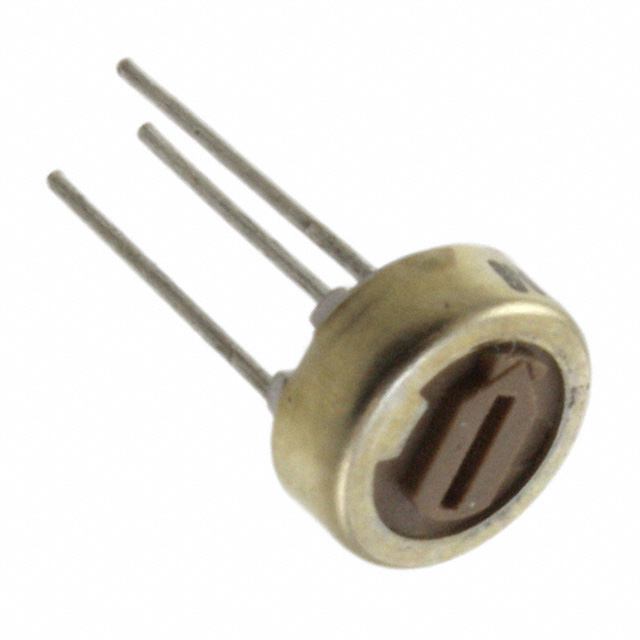
The CT-6EW200 is a 20 Ohm, 0.5W trimmer potentiometer manufactured by Nidec Components Corporation. This through-hole component features PC pin termination, cermet resistive material, and top adjustment capability with a single turn design. The part is Active status and ROHS3 compliant, making it suitable for applications requiring precision resistance adjustment in compact form factors. Substitute parts may be required due to inventory constraints, design revisions, or regional availability considerations.
Substiute Parts
Key Parameters
| Parameter | Specification |
|---|---|
| Resistance Value | 20 Ohms |
| Power Rating | 0.5W (1/2W) |
| Tolerance | ±10% |
| Temperature Coefficient | ±250ppm/°C |
| Number of Turns | 1 Turn |
| Adjustment Type | Top Adjustment |
| Resistive Material | Cermet |
| Mounting Type | Through Hole |
| Termination Style | PC Pins |
| Size | Square - 0.276" x 0.276" (7.00mm x 7.00mm) |
| RoHS Status | ROHS3 Compliant |
| MSL Rating | 1 (Unlimited) |
Substitute Part Grouping Explanation
Substitution eligibility for the CT-6EW200 is determined by the following critical parameters:
- Mounting Type: Must be Through Hole
- Termination Style: Must be PC Pins
- Adjustment Type: Must be Top Adjustment
- Resistive Material: Must be Cermet
- Number of Turns: Must be 1 Turn
- Power Rating: Must be 0.5W (1/2W)
- Tolerance: Must be ±10%
- RoHS Compliance: Must be ROHS3 Compliant
The 82PR200LF from TT Electronics / BI Technologies meets these core substitution criteria. However, the resistance value differs (200 Ohms vs. 20 Ohms), which restricts its application to circuits designed for 200 Ohm trimmer potentiometers only. Physical dimensions also vary between the two parts.
Parameter Comparison
| Parameter | CT-6EW200 (Nidec) | 82PR200LF (TT Electronics) |
|---|---|---|
| Resistance Value | 20 Ohms | 200 Ohms |
| Power Rating | 0.5W (1/2W) | 0.5W (1/2W) |
| Tolerance | ±10% | ±10% |
| Temperature Coefficient | ±250ppm/°C | ±100ppm/°C |
| Number of Turns | 1 Turn | 1 Turn |
| Adjustment Type | Top Adjustment | Top Adjustment |
| Resistive Material | Cermet | Cermet |
| Mounting Type | Through Hole | Through Hole |
| Termination Style | PC Pins | PC Pins |
| Size | Square - 0.276" x 0.276" (7.00mm x 7.00mm) | Round - 0.250" Dia (6.35mm) |
| RoHS Status | ROHS3 Compliant | ROHS3 Compliant |
Engineering Selection Recommendations
Both the CT-6EW200 and 82PR200LF maintain Active product status and ROHS3 compliance. The CT-6EW200 is the primary component for 20 Ohm applications. The 82PR200LF serves as a substitute only for circuits specifically designed for 200 Ohm trimmer potentiometers and can accommodate the smaller round form factor (0.250" diameter vs. 0.276" square).
The 82PR200LF exhibits superior temperature stability (±100ppm/°C vs. ±250ppm/°C), which may provide performance advantages in temperature-sensitive applications. Physical footprint differences require PCB layout verification before substitution.
Frequently Asked Questions (FAQ)
Q: Can the 82PR200LF replace the CT-6EW200 in any application?
A: No. The 82PR200LF has a resistance value of 200 Ohms, while the CT-6EW200 is 20 Ohms. Substitution is only valid for circuits designed for 200 Ohm trimmer potentiometers. Resistance mismatch will cause circuit malfunction.
Q: What are the physical differences between these parts?
A: The CT-6EW200 has a square footprint (0.276" x 0.276"), while the 82PR200LF has a round footprint (0.250" diameter). PCB layout compatibility must be verified before substitution.
Q: Are both parts RoHS compliant?
A: Yes. Both the CT-6EW200 and 82PR200LF are ROHS3 compliant and suitable for applications requiring environmental compliance.
Q: What is the temperature coefficient difference, and does it matter?
A: The CT-6EW200 has a temperature coefficient of ±250ppm/°C, while the 82PR200LF is ±100ppm/°C. The 82PR200LF provides better temperature stability. This difference is relevant only for applications operating across wide temperature ranges where resistance drift is a concern.
Q: Can these parts be used interchangeably on the same PCB?
A: No. Beyond the resistance value difference, the physical dimensions differ significantly. PCB footprints designed for one part may not accommodate the other without layout modifications.
Alternative Parts

SJ6012L2TP
Littelfuse Inc.
6 Alternative Parts

JMK107BBJ476MA-RE
Taiyo Yuden
10 Alternative Parts

GMK107BBJ475MA-T
Taiyo Yuden
5 Alternative Parts
SJ6020N2ARP
Littelfuse Inc.
3 Alternative Parts
SJ6025R2ATP
Littelfuse Inc.
4 Alternative Parts

2474-05L
API Delevan Inc.
1 Alternative Parts

4590R-684K
API Delevan Inc.
1 Alternative Parts

CM6560R-334
API Delevan Inc.
1 Alternative Parts

CM6460-104
API Delevan Inc.
1 Alternative Parts

5526-12
API Delevan Inc.
1 Alternative Parts