



Request Quote
(Ships tomorrow)
CSS4J-4026R-L200F Equivalent & Substitute Parts
Part Overview
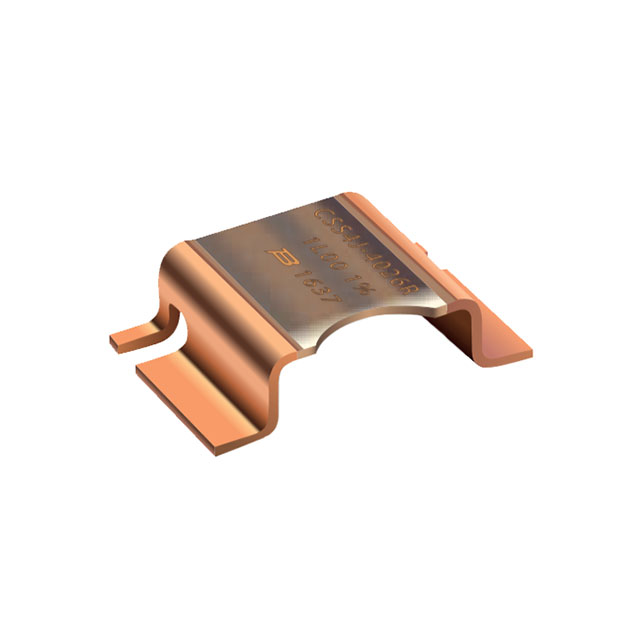
The CSS4J-4026R-L200F is a 0.2 mOhms ±1% 5W current sense shunt resistor manufactured by Bourns Inc. This nonstandard automotive-grade component features a metal element composition and meets AEC-Q200 qualification standards. The part is designed for precision current sensing applications in automotive environments with operating temperatures ranging from -55°C to 170°C.
This part is discontinued at DiGi Electronics. Identifying equivalent substitute components ensures design continuity and supply chain reliability for applications requiring current sense shunt resistors with identical electrical specifications and automotive compliance ratings.
Substiute Parts
Key Parameters
| Parameter | Value |
|---|---|
| Resistance | 0.2 mOhms |
| Tolerance | ±1% |
| Power Rating | 5W |
| Composition | Metal Element |
| Automotive Rating | AEC-Q200 |
| Operating Temperature Range | -55°C to 170°C |
| Temperature Coefficient | ±150ppm/°C |
| RoHS Status | ROHS3 Compliant |
| Moisture Sensitivity Level | 1 (Unlimited) |
| Number of Terminations | 4 |
Substitute Part Grouping Explanation
Substitution of the CSS4J-4026R-L200F is determined by strict equivalence across the following critical parameters:
Electrical Equivalence Requirements:
- Resistance value: 0.2 mOhms
- Tolerance: ±1%
- Power rating: 5W
- Composition: Metal Element
Compliance & Environmental Requirements:
- Automotive qualification: AEC-Q200
- RoHS3 compliance
- Moisture Sensitivity Level: 1 (Unlimited)
- Operating temperature range: minimum -55°C to 170°C
Functional Requirements:
- Current sense shunt application capability
- Metal element construction for precision current sensing
The substitute part PU3921FKNP50U2L meets all electrical and compliance criteria. Mechanical package differences (termination count and physical dimensions) are secondary considerations when electrical and functional specifications are identical.
Parameter Comparison
| Parameter | CSS4J-4026R-L200F (Bourns) | PU3921FKNP50U2L (YAGEO) | Match Status |
|---|---|---|---|
| Resistance | 0.2 mOhms | 0.2 mOhms | Equivalent |
| Tolerance | ±1% | ±1% | Equivalent |
| Power Rating | 5W | 5W | Equivalent |
| Composition | Metal Element | Metal Element | Equivalent |
| AEC-Q200 Rating | Yes | Yes | Equivalent |
| Operating Temperature Range | -55°C to 170°C | -65°C to 170°C | Substitute Exceeds |
| Temperature Coefficient | ±150ppm/°C | ±175ppm/°C | Substitute Within Tolerance |
| RoHS3 Compliance | Yes | Yes | Equivalent |
| Moisture Sensitivity Level | 1 (Unlimited) | 1 (Unlimited) | Equivalent |
| Current Sense Capability | Yes | Yes | Equivalent |
| Packaging | Tape & Reel (TR) | Tape & Reel (TR) | Equivalent |
| Number of Terminations | 4 | 2 | Different |
| Physical Dimensions (L x W) | 10.06mm x 6.60mm | 10.00mm x 5.20mm | Similar |
| Height - Seated (Max) | 2.73mm | 2.11mm | Similar |
Engineering Selection Recommendations
Primary Substitute: PU3921FKNP50U2L (YAGEO)
The PU3921FKNP50U2L is a direct electrical equivalent to the CSS4J-4026R-L200F. Both components share identical resistance (0.2 mOhms), tolerance (±1%), power rating (5W), and metal element composition. Both are AEC-Q200 qualified, ROHS3 compliant, and rated for unlimited moisture sensitivity.
The substitute part offers an extended lower operating temperature limit (-65°C versus -55°C), providing enhanced performance in cold-temperature environments. The temperature coefficient of ±175ppm/°C is marginally higher than the original part's ±150ppm/°C but remains within acceptable precision tolerances for current sense applications.
Product Status Consideration:
The original CSS4J-4026R-L200F is discontinued at DiGi Electronics. The PU3921FKNP50U2L maintains active product status with significantly higher inventory availability (14,347 pieces in stock versus 943 pieces for the original part), ensuring supply chain continuity.
Package Consideration:
The substitute part features 2 terminations compared to the original part's 4 terminations. This difference reflects different package architectures but does not affect electrical performance in standard current sense applications. PCB layout modifications may be required to accommodate the different termination configuration and slightly reduced physical dimensions.
Frequently Asked Questions (FAQ)
Q: Can PU3921FKNP50U2L replace CSS4J-4026R-L200F in automotive applications?
A: Yes. Both components are AEC-Q200 qualified and meet automotive compliance requirements. Electrical specifications are identical, including resistance, tolerance, power rating, and metal element composition. PCB layout adjustments are necessary due to different termination counts and physical dimensions.
Q: What is the significance of the temperature coefficient difference (±150ppm/°C vs ±175ppm/°C)?
A: The substitute part's ±175ppm/°C temperature coefficient is marginally higher but remains within acceptable precision ranges for current sense shunt applications. This difference represents a 1.67% relative increase and does not compromise functional performance in standard automotive current sensing circuits.
Q: Why does the substitute part have 2 terminations instead of 4?
A: The termination count difference reflects distinct package architectures between manufacturers. The 2-termination configuration of the PU3921FKNP50U2L is standard for YAGEO's metal shunt resistor design and is functionally equivalent for current sense applications. PCB design modifications are required to accommodate this difference.
Q: Are both parts RoHS3 compliant?
A: Yes. Both CSS4J-4026R-L200F and PU3921FKNP50U2L are ROHS3 compliant with unlimited moisture sensitivity (MSL 1), meeting environmental and regulatory requirements for automotive applications.
Q: What is the physical size difference between these parts?
A: The CSS4J-4026R-L200F measures 10.06mm L x 6.60mm W x 2.73mm H (seated). The PU3921FKNP50U2L measures 10.00mm L x 5.20mm W x 2.11mm H (seated). Dimensions are similar but not identical, requiring PCB footprint verification during design transition.
Q: Is the extended temperature range of the substitute part (-65°C to 170°C) beneficial?
A: The substitute part's extended lower temperature limit provides enhanced performance margin in cold-temperature automotive environments. If the original design operates within -55°C to 170°C, the substitute part's -65°C capability offers additional thermal headroom without performance degradation.
Alternative Parts

SJ6012L2TP
Littelfuse Inc.
6 Alternative Parts

JMK107BBJ476MA-RE
Taiyo Yuden
10 Alternative Parts

GMK107BBJ475MA-T
Taiyo Yuden
5 Alternative Parts
SJ6020N2ARP
Littelfuse Inc.
3 Alternative Parts
SJ6025R2ATP
Littelfuse Inc.
4 Alternative Parts

2474-05L
API Delevan Inc.
1 Alternative Parts

4590R-684K
API Delevan Inc.
1 Alternative Parts

CM6560R-334
API Delevan Inc.
1 Alternative Parts

CM6460-104
API Delevan Inc.
1 Alternative Parts

5526-12
API Delevan Inc.
1 Alternative Parts