





Request Quote
(Ships tomorrow)
CS1680-FZZ LED Driver IC Equivalent & Substitute Parts
Part Overview
The CS1680-FZZ is an LED Driver IC manufactured by Cirrus Logic Inc., designed for offline AC/DC switching applications with triac dimming capability. This component operates as a step-down (buck) and step-up (boost) converter in the 11V to 17V supply range, delivering 15V output at 1.3kHz to 3.3kHz switching frequency.
The CS1680-FZZ is classified as obsolete. Identifying equivalent and substitute parts is essential for design continuity, production planning, and long-term product support where original components are no longer available from primary sources.
Substiute Parts
Key Parameters
| Parameter | CS1680-FZZ |
|---|---|
| Manufacturer | Cirrus Logic Inc. |
| Category | Power Management (PMIC) |
| Type | AC DC Offline Switcher |
| Topology | Step-Down (Buck), Step-Up (Boost) |
| Dimming | Triac |
| Voltage - Supply (Min) | 11V |
| Voltage - Supply (Max) | 17V |
| Voltage - Output | 15V |
| Frequency | 1.3kHz ~ 3.3kHz |
| Operating Temperature | -40°C ~ 125°C (TJ) |
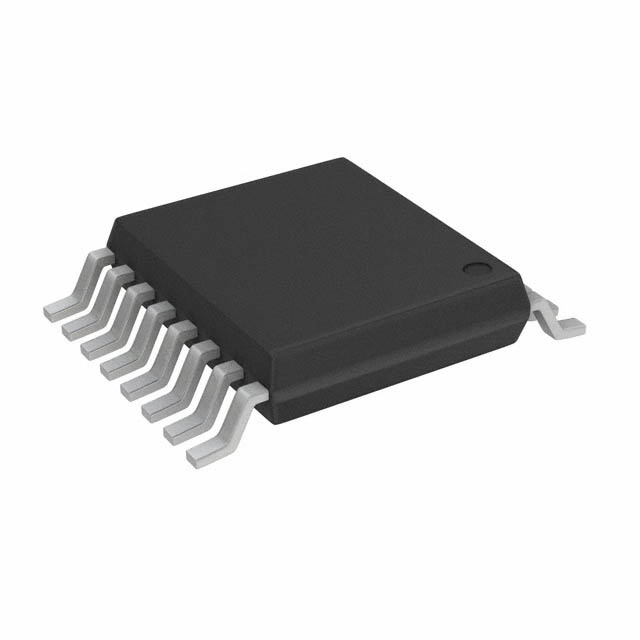
| Package / Case | 16-TSSOP (0.173", 4.40mm Width) |
| Mounting Type | Surface Mount |
| Product Status | Obsolete |
| Moisture Sensitivity Level (MSL) | 3 (168 Hours) |
Substitute Part Grouping Explanation
Substitution of the CS1680-FZZ is determined by the following critical parameters:
- AC/DC Offline Switcher Type: All substitute parts must function as offline AC/DC switcher ICs for LED driver applications
- Triac Dimming Capability: Triac dimming is a mandatory functional requirement for direct substitution
- Supply Voltage Range: Substitute parts must accommodate the 11V to 17V input range or provide compatible operating conditions
- Output Configuration: Single output LED driver topology
- Switching Frequency: Operating frequency range must be compatible with existing circuit design
- Package Compatibility: Surface mount packages with pin-compatible or functionally equivalent layouts
- Operating Temperature Range: Must support -40°C to 125°C minimum junction temperature range
- Product Status & Compliance: Active or available product status with current RoHS compliance preferred for new designs
The substitute parts identified below meet these criteria through equivalent functional specifications and compatible electrical parameters.
Parameter Comparison
| Parameter | CS1680-FZZ | LNK409EG | LT3799EMSE-1#TRPBF | MP4000DS-LF | MP4088GJ-Z | TPS92001DR |
|---|---|---|---|---|---|---|
| Manufacturer | Cirrus Logic Inc. | Power Integrations | Analog Devices Inc. | Monolithic Power Systems Inc. | Monolithic Power Systems Inc. | Texas Instruments |
| Type | AC DC Offline Switcher | AC DC Offline Switcher | AC DC Offline Switcher | AC DC Offline Switcher | AC DC Offline Switcher | AC DC Offline Switcher |
| Topology | Step-Down (Buck), Step-Up (Boost) | Flyback | Flyback | Step-Down (Buck) | Buck, Boost | Flyback, Step-Down (Buck) |
| Dimming | Triac | Triac | Triac | Analog, PWM | Triac | Triac |
| Voltage - Supply (Min) | 11V | 36V | - | 8V | 4.5V | - |
| Voltage - Supply (Max) | 17V | 725V | - | 10.5V | 5V | 21V |
| Voltage - Output | 15V | - | - | - | - | 5V |
| Frequency | 1.3kHz ~ 3.3kHz | 66kHz | 25kHz ~ 300kHz | 110kHz | 22kHz | 100kHz |
| Operating Temperature | -40°C ~ 125°C (TJ) | -40°C ~ 150°C (TJ) | -40°C ~ 125°C (TJ) | -40°C ~ 85°C (TA) | -40°C ~ 125°C (TJ) | -40°C ~ 105°C (TJ) |
| Mounting Type | Surface Mount | Through Hole | Surface Mount | Surface Mount | Surface Mount | Surface Mount |
| Package / Case | 16-TSSOP | 7-SSIP, 6 Leads, Exposed Pad, Formed Leads | 16-TFSOP Exposed Pad | 8-SOIC | SOT-23-5 | 8-SOIC |
| Product Status | Obsolete | Active | Active | Active | Active | Last Time Buy |
| RoHS Status | - | RoHS Compliant | ROHS3 Compliant | ROHS3 Compliant | ROHS3 Compliant | ROHS3 Compliant |
| Moisture Sensitivity Level (MSL) | 3 (168 Hours) | 1 (Unlimited) | 1 (Unlimited) | 2 (1 Year) | 1 (Unlimited) | 1 (Unlimited) |
Engineering Selection Recommendations
LNK409EG (Power Integrations): Active product status with RoHS compliance and unlimited MSL. Supports triac dimming and operates across a wide supply voltage range (36V to 725V). Topology is flyback rather than buck/boost. Through-hole package requires PCB layout modification. Suitable for new designs requiring long-term component availability.
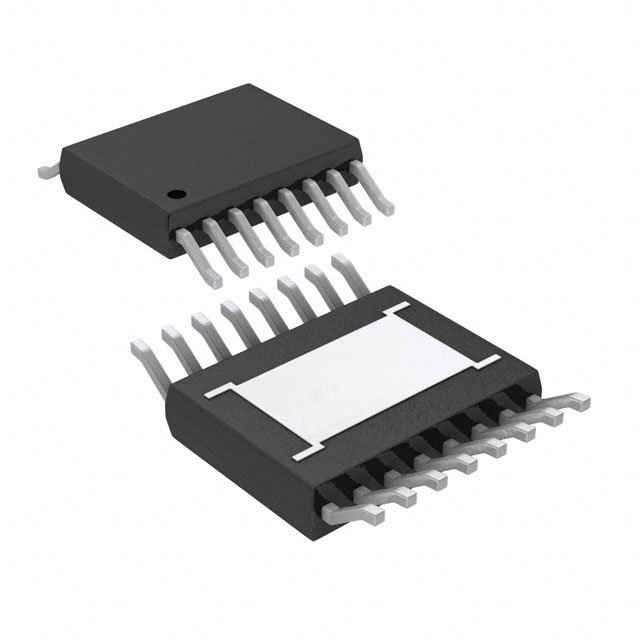
LT3799EMSE-1#TRPBF (Analog Devices Inc.): Active product with ROHS3 compliance and unlimited MSL. Surface mount 16-TFSOP package maintains similar form factor to original. Supports triac dimming with adjustable frequency range (25kHz to 300kHz). Flyback topology. Recommended for designs prioritizing package compatibility and long-term support.
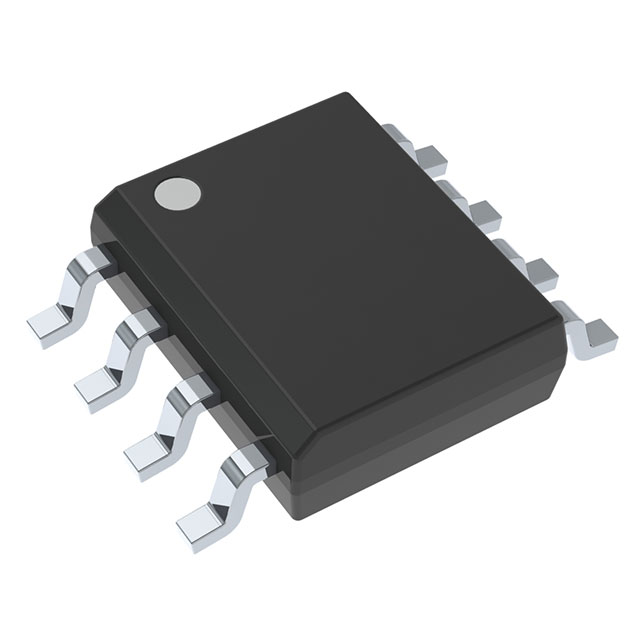
MP4000DS-LF (Monolithic Power Systems Inc.): Active product with ROHS3 compliance. Step-down (buck) topology matches original. Supports analog and PWM dimming rather than triac-only. Supply voltage range (8V to 10.5V) overlaps with original specification. 8-SOIC package requires layout modification. Automotive-grade component. Suitable for applications where PWM dimming is acceptable.
MP4088GJ-Z (Monolithic Power Systems Inc.): Active product with ROHS3 compliance and unlimited MSL. Buck/boost topology matches original functionality. Supports triac dimming. Supply voltage range (4.5V to 5V) is narrower than original. SOT-23-5 package is significantly smaller, requiring PCB redesign. Suitable for space-constrained applications.
TPS92001DR (Texas Instruments): Last Time Buy status with ROHS3 compliance and unlimited MSL. Supports triac dimming with flyback and buck topologies. Supply voltage maximum (21V) accommodates original range. 8-SOIC package requires layout modification. Limited future availability due to product status.
Frequently Asked Questions (FAQ)
Q: Can the LNK409EG directly replace the CS1680-FZZ without circuit modification?
A: No. The LNK409EG uses through-hole mounting (7-SSIP package) versus the original surface mount 16-TSSOP package. PCB layout and footprint redesign is required. Additionally, the flyback topology differs from the original buck/boost topology, requiring circuit topology evaluation.
Q: Which substitute part maintains the closest package compatibility?
A: The LT3799EMSE-1#TRPBF offers the closest package compatibility with a 16-pin surface mount configuration (16-TFSOP) similar to the original 16-TSSOP. This minimizes PCB layout modifications.
Q: Are all substitute parts RoHS compliant?
A: Yes. All identified substitute parts carry RoHS or ROHS3 compliance status. The original CS1680-FZZ does not specify RoHS status.
Q: What is the significance of the MSL (Moisture Sensitivity Level) difference?
A: The original CS1680-FZZ has MSL 3 (168-hour limit), requiring controlled storage conditions. All substitute parts have MSL 1 or 2, providing superior moisture tolerance and longer shelf life without special handling.
Q: Can the MP4000DS-LF substitute if the application uses PWM dimming instead of triac dimming?
A: Yes. The MP4000DS-LF supports both analog and PWM dimming modes. However, if the original design specifically requires triac dimming, this part requires circuit and firmware modification to implement PWM dimming control.
Q: Which substitute part has the longest guaranteed product availability?
A: The LT3799EMSE-1#TRPBF and MP4088GJ-Z both carry Active product status with unlimited MSL, indicating ongoing manufacturing and support. The TPS92001DR is Last Time Buy, indicating limited future availability.
Q: Does supply voltage range affect substitution suitability?
A: Yes. The original CS1680-FZZ operates at 11V to 17V. Substitute parts with narrower ranges (such as MP4088GJ-Z at 4.5V to 5V) require circuit redesign to accommodate different input voltage specifications. Parts with wider ranges (such as LNK409EG at 36V to 725V) may require additional design considerations for the original 11V to 17V application.
Q: What is the impact of switching frequency differences?
A: The original operates at 1.3kHz to 3.3kHz. Substitute parts operate at significantly higher frequencies (22kHz to 300kHz). Higher switching frequencies reduce component size but may require filter and EMI design adjustments. Circuit simulation and testing are necessary to confirm compatibility.
Alternative Parts

SJ6012L2TP
Littelfuse Inc.
6 Alternative Parts

JMK107BBJ476MA-RE
Taiyo Yuden
10 Alternative Parts

GMK107BBJ475MA-T
Taiyo Yuden
5 Alternative Parts
SJ6020N2ARP
Littelfuse Inc.
3 Alternative Parts
SJ6025R2ATP
Littelfuse Inc.
4 Alternative Parts

2474-05L
API Delevan Inc.
1 Alternative Parts

4590R-684K
API Delevan Inc.
1 Alternative Parts

CM6560R-334
API Delevan Inc.
1 Alternative Parts

CM6460-104
API Delevan Inc.
1 Alternative Parts

5526-12
API Delevan Inc.
1 Alternative Parts