




Request Quote
(Ships tomorrow)
CS1612-FSZR LED Driver IC Equivalent & Substitute Parts
Part Overview
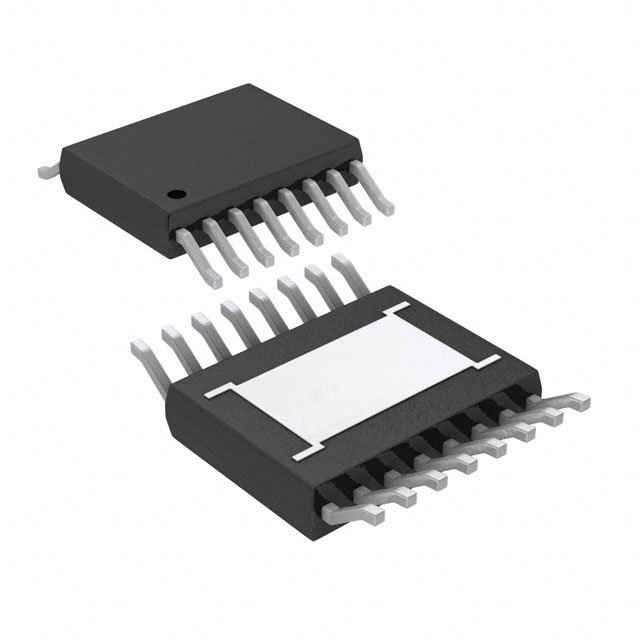
The CS1612-FSZR is an LED driver IC manufactured by Cirrus Logic Inc., designed for AC/DC offline switching applications with triac dimming capability. This component operates as a step-down/step-up (buck/boost) converter in a 16-SOIC package, supporting lighting applications across an operating temperature range of -40°C to 125°C.
The CS1612-FSZR is classified as obsolete. Equivalent and substitute parts are necessary to maintain design continuity and ensure component availability for new production runs and legacy system support.
Substiute Parts
Key Parameters
| Parameter | CS1612-FSZR |
|---|---|
| Manufacturer | Cirrus Logic Inc. |
| Category | Power Management (PMIC) |
| Type | AC DC Offline Switcher |
| Topology | Step-Down (Buck), Step-Up (Boost) |
| Number of Outputs | 1 |
| Voltage Supply Range | 11V to 17V |
| Dimming | Triac |
| Package | 16-SOIC (0.154", 3.90mm Width) Exposed Pad |
| Operating Temperature | -40°C to 125°C (TJ) |
| Mounting Type | Surface Mount |
| Product Status | Obsolete |
| Moisture Sensitivity Level | MSL 3 (168 Hours) |
Substitute Part Grouping Explanation
Substitution of the CS1612-FSZR is determined by the following critical parameters:
- Type: AC DC Offline Switcher (all substitutes must match)
- Dimming Capability: Triac dimming support (required for lighting control compatibility)
- Number of Outputs: Single output configuration (required)
- Voltage Supply Range: Minimum 11V operation (all substitutes must support this threshold)
- Mounting Type: Surface mount technology (all substitutes must match)
- Operating Temperature Range: -40°C to 125°C junction temperature (all substitutes must support or exceed this range)
- Package Compatibility: Physical footprint and pin configuration must be compatible with PCB layout
Substitute parts are grouped based on topology variations (Flyback vs. Buck/Boost) and package form factors, which affect circuit design implementation but maintain functional equivalence for LED driver applications.
Parameter Comparison
| Parameter | CS1612-FSZR | LT3799IMSE#PBF | MP4026GJ-P | TPS92075DR/NOPB | TS19320CS RLG |
|---|---|---|---|---|---|
| Manufacturer | Cirrus Logic Inc. | Analog Devices Inc. | Monolithic Power Systems | Texas Instruments | Taiwan Semiconductor Corporation |
| Type | AC DC Offline Switcher | AC DC Offline Switcher | AC DC Offline Switcher | AC DC Offline Switcher | AC DC Offline Switcher |
| Topology | Step-Down (Buck), Step-Up (Boost) | Flyback | Flyback | Step-Down (Buck), Step-Up (Boost) | Flyback, Step-Down (Buck), Step-Up (Boost) |
| Number of Outputs | 1 | 1 | 1 | 1 | 1 |
| Voltage Supply (Min) | 11V | — | 9.8V | 11V | 7.8V |
| Voltage Supply (Max) | 17V | — | 27V | 18V | 40V |
| Dimming | Triac | Triac | — | Triac | Triac |
| Operating Temperature | -40°C to 125°C (TJ) | -40°C to 125°C (TJ) | 125°C (TJ) | -40°C to 125°C (TJ) | -40°C to 85°C (TA) |
| Mounting Type | Surface Mount | Surface Mount | Surface Mount | Surface Mount | Surface Mount |
| Package / Case | 16-SOIC (0.154", 3.90mm Width) Exposed Pad | 16-TFSOP (0.118", 3.00mm Width) Exposed Pad | SOT-23-6 Thin, TSOT-23-6 | 8-SOIC (0.154", 3.90mm Width) | 8-SOIC (0.154", 3.90mm Width) |
| Product Status | Obsolete | Active | Active | Active | Active |
| RoHS Status | — | ROHS3 Compliant | ROHS3 Compliant | ROHS3 Compliant | ROHS3 Compliant |
| Moisture Sensitivity Level | MSL 3 (168 Hours) | MSL 1 (Unlimited) | MSL 1 (Unlimited) | MSL 1 (Unlimited) | MSL 3 (168 Hours) |
Engineering Selection Recommendations
LT3799IMSE#PBF (Analog Devices Inc.): Active product status with ROHS3 compliance and MSL 1 rating. Supports triac dimming and operates across the required -40°C to 125°C temperature range. Flyback topology requires circuit redesign compared to the original buck/boost configuration. Package footprint differs (16-TFSOP vs. 16-SOIC), necessitating PCB layout modification.
MP4026GJ-P (Monolithic Power Systems): Active product with ROHS3 compliance and MSL 1 rating. Operates within extended voltage range (9.8V to 27V), exceeding the CS1612-FSZR minimum requirement. Flyback topology implementation differs from the original design. Significant package change to SOT-23-6 requires substantial PCB redesign. Dimming capability not specified in available parameters.
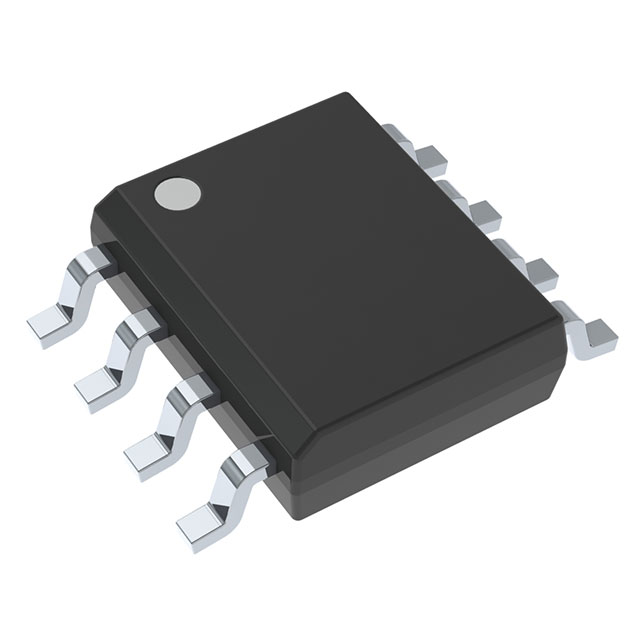
TPS92075DR/NOPB (Texas Instruments): Active product with ROHS3 compliance and MSL 1 rating. Maintains buck/boost topology matching the original CS1612-FSZR architecture. Supports triac dimming and operates across -40°C to 125°C temperature range. Voltage supply range (11V to 18V) closely aligns with the original specification. Package reduction to 8-SOIC requires PCB layout adjustment but maintains SOIC form factor compatibility.
TS19320CS RLG (Taiwan Semiconductor Corporation): Active product with ROHS3 compliance. Supports flexible topology options (Flyback, Buck/Boost) and triac dimming. Extended voltage range (7.8V to 40V) provides design margin. Operating temperature limited to -40°C to 85°C (TA), below the original -40°C to 125°C (TJ) specification. MSL 3 rating matches the original component. Package maintains 8-SOIC form factor.
Frequently Asked Questions (FAQ)
Q: Can the LT3799IMSE#PBF directly replace the CS1612-FSZR without circuit modification?
A: No. While both are AC/DC offline switchers with triac dimming support, the LT3799IMSE#PBF uses flyback topology versus the CS1612-FSZR's buck/boost topology. This requires transformer and feedback network redesign. Additionally, the package changes from 16-SOIC to 16-TFSOP, necessitating PCB layout modification.
Q: Which substitute offers the closest functional match to the CS1612-FSZR?
A: The TPS92075DR/NOPB maintains the buck/boost topology of the original part and supports identical triac dimming and temperature range specifications. The primary design change involves package reduction from 16-SOIC to 8-SOIC, which may reduce PCB footprint but requires layout adjustment.
Q: Does the MP4026GJ-P support triac dimming?
A: Triac dimming capability is not specified in the available technical parameters for the MP4026GJ-P. Verification with the manufacturer datasheet is necessary before selection for dimming-dependent applications.
Q: What is the impact of MSL rating differences between the CS1612-FSZR and substitute parts?
A: The CS1612-FSZR and TS19320CS RLG both carry MSL 3 (168 Hours) ratings, requiring controlled moisture exposure during storage and handling. The LT3799IMSE#PBF, MP4026GJ-P, and TPS92075DR/NOPB carry MSL 1 (Unlimited) ratings, allowing extended shelf life without moisture control. MSL 1 components provide manufacturing flexibility and reduced storage constraints.
Q: Is the TS19320CS RLG suitable for applications requiring -40°C to 125°C operation?
A: The TS19320CS RLG specifies -40°C to 85°C (TA) ambient temperature operation, which does not meet the CS1612-FSZR's -40°C to 125°C (TJ) junction temperature requirement. This part is suitable only for applications with maximum ambient temperatures below 85°C.
Q: What are the voltage supply compatibility considerations for substitution?
A: The CS1612-FSZR operates from 11V to 17V. The TPS92075DR/NOPB (11V to 18V) and TS19320CS RLG (7.8V to 40V) both support this range. The MP4026GJ-P (9.8V to 27V) operates below the 11V minimum but provides extended upper range. Circuit design must account for actual supply voltage distribution in the target application.
Q: Are all substitute parts ROHS3 compliant?
A: Yes. The LT3799IMSE#PBF, MP4026GJ-P, and TPS92075DR/NOPB are all ROHS3 compliant. The TS19320CS RLG is also ROHS3 compliant. All parts meet current environmental and regulatory requirements.
Alternative Parts

SJ6012L2TP
Littelfuse Inc.
6 Alternative Parts

JMK107BBJ476MA-RE
Taiyo Yuden
10 Alternative Parts

GMK107BBJ475MA-T
Taiyo Yuden
5 Alternative Parts
SJ6020N2ARP
Littelfuse Inc.
3 Alternative Parts
SJ6025R2ATP
Littelfuse Inc.
4 Alternative Parts

2474-05L
API Delevan Inc.
1 Alternative Parts

4590R-684K
API Delevan Inc.
1 Alternative Parts

CM6560R-334
API Delevan Inc.
1 Alternative Parts

CM6460-104
API Delevan Inc.
1 Alternative Parts

5526-12
API Delevan Inc.
1 Alternative Parts