


Request Quote
(Ships tomorrow)
CS1612-FSZ LED Driver IC Equivalent & Substitute Parts
Part Overview
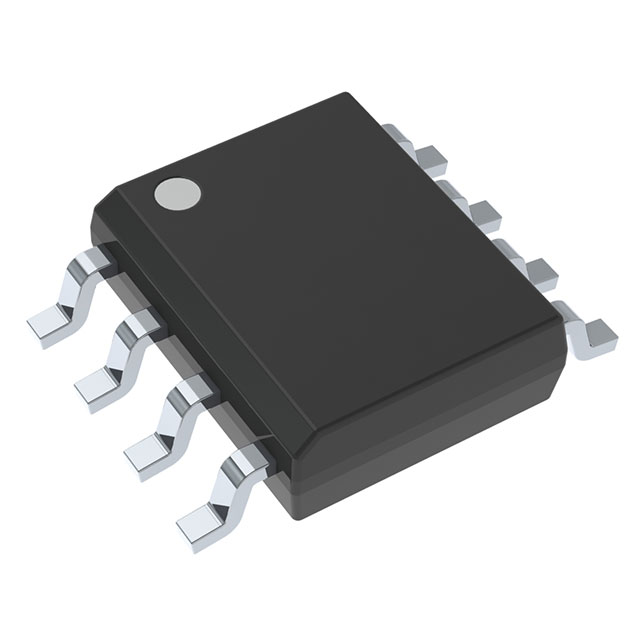
The CS1612-FSZ is an LED Driver IC manufactured by Cirrus Logic Inc., designed for offline AC/DC switching applications with Triac dimming capability. This component operates as a Step-Down (Buck) and Step-Up (Boost) topology switcher without internal switches, housed in a 16-SOIC package. The part is currently classified as obsolete, making identification of functionally equivalent alternatives essential for ongoing design support and production continuity.
Substiute Parts
Key Parameters
| Parameter | CS1612-FSZ |
|---|---|
| Manufacturer | Cirrus Logic Inc. |
| Category | Power Management (PMIC) |
| Type | AC DC Offline Switcher |
| Topology | Step-Down (Buck), Step-Up (Boost) |
| Number of Outputs | 1 |
| Voltage Supply Range | 11V – 17V |
| Dimming Method | Triac |
| Applications | Lighting |
| Operating Temperature | -40°C ~ 125°C (TJ) |
| Package Type | 16-SOIC (0.154", 3.90mm Width) Exposed Pad |
| Mounting Type | Surface Mount |
| Product Status | Obsolete |
| Moisture Sensitivity Level | MSL 3 (168 Hours) |
Substitute Part Grouping Explanation
Substitution of the CS1612-FSZ requires matching on the following critical parameters:
- Application Domain: LED driver for offline AC/DC lighting applications
- Dimming Capability: Triac dimming support (mandatory for compatibility with existing dimmer circuits)
- Topology Classification: AC/DC offline switcher architecture
- Voltage Supply Range: Input voltage window must accommodate the 11V–17V operating range
- Output Configuration: Single output channel
- Mounting and Package: Surface mount or through-hole options with electrical equivalence
Three substitute parts meet these criteria with varying topology implementations and active product status.
Parameter Comparison
| Parameter | CS1612-FSZ | LNK405EG | LNK418LG | TPS92075D/NOPB |
|---|---|---|---|---|
| Manufacturer | Cirrus Logic Inc. | Power Integrations | Power Integrations | Texas Instruments |
| Type | AC DC Offline Switcher | AC DC Offline Switcher | AC DC Offline Switcher | AC DC Offline Switcher |
| Topology | Step-Down (Buck), Step-Up (Boost) | Flyback | Flyback | Step-Down (Buck), Step-Up (Boost) |
| Number of Outputs | 1 | 1 | 1 | 1 |
| Voltage Supply (Min) | 11V | 36V | 36V | 11V |
| Voltage Supply (Max) | 17V | 725V | 725V | 18V |
| Current Output / Channel | — | 1.24A | 2.39A | — |
| Frequency | — | 66kHz | 66kHz | — |
| Dimming Method | Triac | Triac | PWM | Triac |
| Applications | Lighting | Lighting | Lighting | Lighting |
| Operating Temperature | -40°C ~ 125°C (TJ) | -40°C ~ 150°C (TJ) | -40°C ~ 150°C (TJ) | -40°C ~ 125°C (TJ) |
| Package / Case | 16-SOIC (0.154", 3.90mm Width) Exposed Pad | 7-SSIP, 6 Leads, Exposed Pad, Formed Leads | 7-SSIP, 6 Leads, Exposed Pad, Formed Leads | 8-SOIC (0.154", 3.90mm Width) |
| Mounting Type | Surface Mount | Through Hole | Through Hole | Surface Mount |
| Product Status | Obsolete | Active | Active | Active |
| RoHS Status | — | RoHS Compliant | RoHS Compliant | ROHS3 Compliant |
| Moisture Sensitivity Level | MSL 3 (168 Hours) | MSL 1 (Unlimited) | MSL 1 (Unlimited) | MSL 1 (Unlimited) |
Engineering Selection Recommendations
TPS92075D/NOPB (Texas Instruments) is the closest functional equivalent to the CS1612-FSZ. Both devices employ identical topology (Step-Down/Step-Up Buck-Boost), operate within overlapping voltage supply ranges (11V–18V), support Triac dimming, and maintain equivalent operating temperature specifications (-40°C ~ 125°C). The TPS92075D/NOPB is housed in an 8-SOIC surface-mount package, requiring PCB layout modifications from the original 16-SOIC design but eliminating package conversion complexity. This part carries active product status and ROHS3 compliance certification.
LNK405EG (Power Integrations) provides an alternative with Triac dimming support and active product status. This device implements Flyback topology with internal switching capability, operates across a wider voltage range (36V–725V), and includes higher current output capacity (1.24A). The through-hole eSIP-7C package requires significant PCB redesign. This substitute is suitable for applications where the wider input voltage range and higher current capacity provide design advantages.
LNK418LG (Power Integrations) offers the highest current output (2.39A) and active product status but implements PWM dimming rather than Triac dimming. This topology change may require circuit modifications to existing dimmer interfaces. The through-hole eSIP-7F package necessitates PCB redesign. This part is appropriate only when PWM dimming compatibility is confirmed in the target application.
All three substitutes carry superior moisture sensitivity ratings (MSL 1 vs. MSL 3) and RoHS compliance, reducing long-term supply chain and environmental compliance risk compared to the obsolete CS1612-FSZ.
Frequently Asked Questions (FAQ)
Q: Can the LNK418LG directly replace the CS1612-FSZ in existing designs?
A: Direct replacement is not recommended without circuit validation. The LNK418LG implements PWM dimming instead of Triac dimming. If the existing design uses a Triac dimmer circuit, the PWM control interface will not function correctly. Circuit redesign is required to accommodate PWM dimming control.
Q: What are the package conversion implications for each substitute?
A: The TPS92075D/NOPB uses an 8-SOIC surface-mount package (vs. 16-SOIC original), requiring PCB footprint modification but maintaining surface-mount assembly compatibility. The LNK405EG and LNK418LG both use through-hole eSIP packages, requiring complete PCB redesign including trace routing and component placement changes. Surface-mount assembly equipment cannot process through-hole packages without manual insertion.
Q: Why do the LNK405EG and LNK418LG specify much higher voltage supply ranges (36V–725V)?
A: These devices implement Flyback topology with integrated high-voltage switching, enabling direct rectification from AC mains without intermediate step-down conversion. The CS1612-FSZ operates at lower voltages (11V–17V) and requires external voltage conditioning. The higher voltage rating reflects the topology difference, not a design advantage for low-voltage applications.
Q: Are all three substitutes suitable for new production designs?
A: Yes. All three substitutes carry active product status and current RoHS compliance certifications. The TPS92075D/NOPB is recommended for minimal design changes. The LNK405EG and LNK418LG are suitable for new designs where PCB redesign is acceptable and topology-specific requirements (Triac vs. PWM dimming) are confirmed.
Q: What is the significance of MSL rating differences?
A: The CS1612-FSZ carries MSL 3 (168-hour moisture absorption limit), requiring controlled storage and shorter shelf life management. All three substitutes carry MSL 1 (unlimited moisture absorption), eliminating moisture sensitivity constraints and reducing inventory management complexity for long-term storage.
Q: Can the TPS92075D/NOPB operate at the full 11V–17V range of the CS1612-FSZ?
A: Yes. The TPS92075D/NOPB specifies 11V–18V supply range, fully encompassing the CS1612-FSZ operating window. No voltage margin reduction occurs with this substitution.
Alternative Parts

SJ6012L2TP
Littelfuse Inc.
6 Alternative Parts

JMK107BBJ476MA-RE
Taiyo Yuden
10 Alternative Parts

GMK107BBJ475MA-T
Taiyo Yuden
5 Alternative Parts
SJ6020N2ARP
Littelfuse Inc.
3 Alternative Parts
SJ6025R2ATP
Littelfuse Inc.
4 Alternative Parts

2474-05L
API Delevan Inc.
1 Alternative Parts

4590R-684K
API Delevan Inc.
1 Alternative Parts

CM6560R-334
API Delevan Inc.
1 Alternative Parts

CM6460-104
API Delevan Inc.
1 Alternative Parts

5526-12
API Delevan Inc.
1 Alternative Parts