



Request Quote
(Ships tomorrow)
CS1611A-FSZ LED Driver IC Equivalent & Substitute Parts
Part Overview
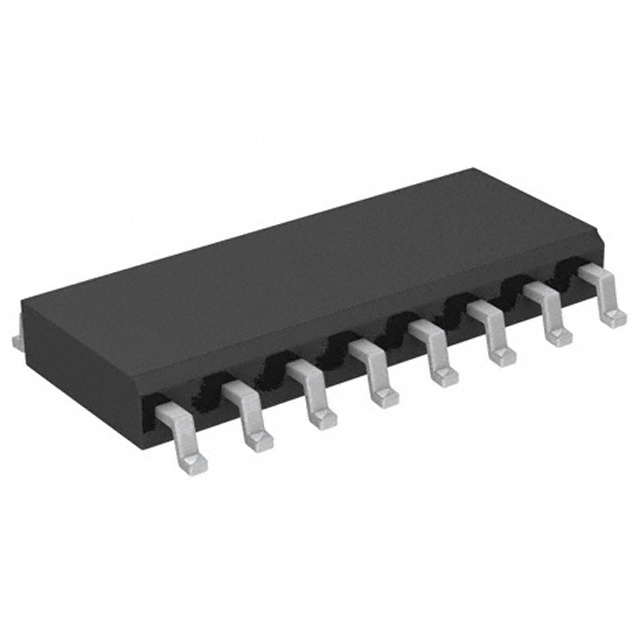
The CS1611A-FSZ is an AC DC offline switcher LED driver IC manufactured by Cirrus Logic Inc., designed for lighting applications with Triac dimming capability. This component operates with a supply voltage range of 11V to 17V and features a Flyback topology in a 16-SOIC package. The part is currently classified as obsolete, making identification of functionally equivalent alternatives essential for ongoing design support and production continuity.
Substiute Parts
Key Parameters
| Parameter | CS1611A-FSZ |
|---|---|
| Manufacturer | Cirrus Logic Inc. |
| Category | Power Management (PMIC) |
| Type | AC DC Offline Switcher |
| Topology | Flyback |
| Number of Outputs | 1 |
| Voltage - Supply (Min) | 11V |
| Voltage - Supply (Max) | 17V |
| Dimming | Triac |
| Applications | Lighting |
| Operating Temperature | -40°C ~ 125°C (TJ) |
| Package / Case | 16-SOIC (0.154", 3.90mm Width) |
| Product Status | Obsolete |
| Moisture Sensitivity Level (MSL) | 3 (168 Hours) |
Substitute Part Grouping Explanation
Substitution of the CS1611A-FSZ is determined by the following critical parameters: AC DC offline switcher topology, single output configuration, supply voltage compatibility within the 11V–17V range, lighting application suitability, and surface mount packaging. The CS1611A-FSZ employs Flyback topology with Triac dimming. Substitute parts must maintain compatibility with these core functional requirements while accommodating variations in internal topology (Step-Down, Step-Up, or hybrid configurations) and dimming methods (Triac, Analog, or PWM), provided the supply voltage range and single-output architecture are preserved.
The three qualified substitutes—LM3444MAX/NOPB, TPS92074D, and TS19450CS RLG—each satisfy the primary substitution criteria of AC DC offline switching for LED lighting with single-output architecture and surface mount packaging. However, each presents distinct trade-offs in topology, voltage range, dimming capability, and product status that must be evaluated for specific application requirements.
Parameter Comparison
| Parameter | CS1611A-FSZ | LM3444MAX/NOPB | TPS92074D | TS19450CS RLG |
|---|---|---|---|---|
| Manufacturer | Cirrus Logic Inc. | Texas Instruments | Texas Instruments | Taiwan Semiconductor Corporation |
| Type | AC DC Offline Switcher | AC DC Offline Switcher | AC DC Offline Switcher | AC DC Offline Switcher |
| Topology | Flyback | Step-Down (Buck) | Step-Down (Buck), Step-Up (Boost) | Step-Down (Buck) |
| Number of Outputs | 1 | 1 | 1 | 1 |
| Voltage - Supply (Min) | 11V | 8V | 11V | 8V |
| Voltage - Supply (Max) | 17V | 13V | 18V | 450V |
| Dimming | Triac | Analog | — | Analog, PWM |
| Applications | Lighting | Lighting | — | Backlight, Lighting, Signage |
| Operating Temperature | -40°C ~ 125°C (TJ) | -40°C ~ 125°C (TJ) | -40°C ~ 125°C (TJ) | -40°C ~ 150°C (TJ) |
| Package / Case | 16-SOIC | 8-SOIC | 8-SOIC | 8-SOIC |
| Product Status | Obsolete | Active | Active | Obsolete |
| RoHS Status | — | ROHS3 Compliant | ROHS3 Compliant | ROHS3 Compliant |
| Moisture Sensitivity Level (MSL) | 3 (168 Hours) | 1 (Unlimited) | 1 (Unlimited) | 3 (168 Hours) |
Engineering Selection Recommendations
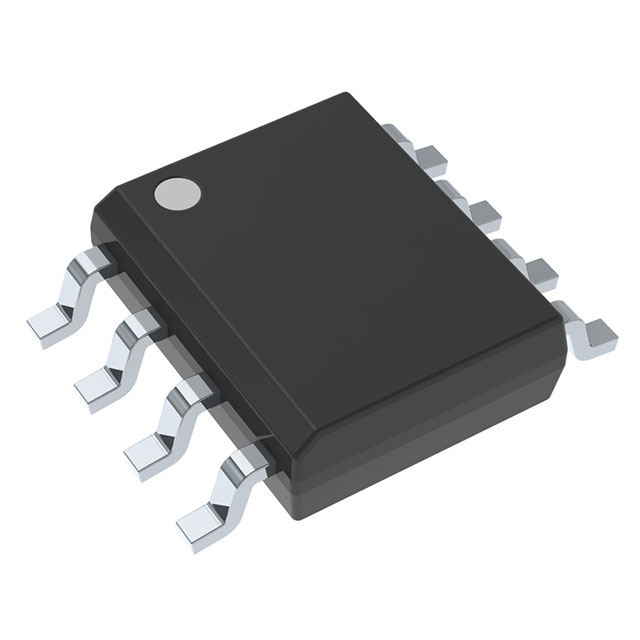
LM3444MAX/NOPB is the preferred substitute for new designs and production transitions. This Texas Instruments component is in active product status with ROHS3 compliance and MSL Level 1 (unlimited moisture sensitivity), providing superior long-term availability and supply chain stability. The supply voltage range of 8V–13V overlaps the CS1611A-FSZ minimum requirement of 11V, ensuring compatibility within the 11V–13V window. The Step-Down topology and Analog dimming capability support standard LED driver applications. The 8-SOIC package reduces board footprint compared to the original 16-SOIC, requiring PCB layout revision.
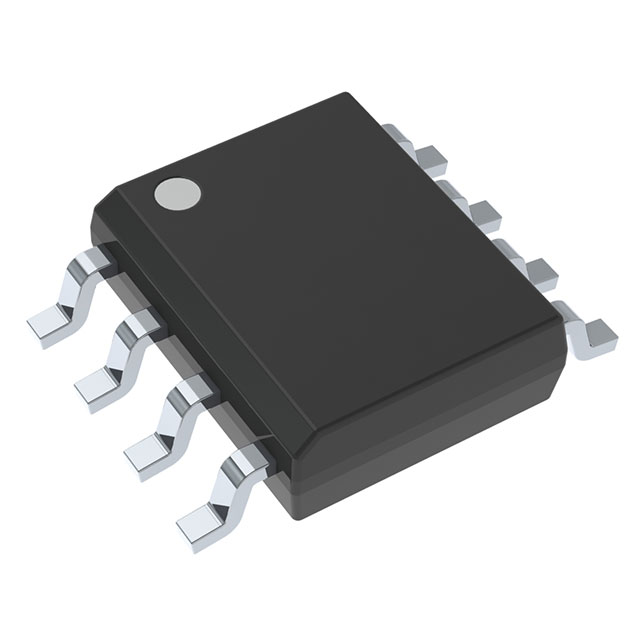
TPS92074D offers extended supply voltage range (11V–18V) that fully encompasses the CS1611A-FSZ operating window and provides dual topology flexibility (Step-Down and Step-Up). Active product status and ROHS3 compliance ensure regulatory compliance and availability. However, dimming capability is not specified in the provided parameters, requiring application-specific evaluation. The 8-SOIC package also necessitates PCB redesign.
TS19450CS RLG is classified as obsolete, similar to the CS1611A-FSZ, and is not recommended for new production. While this Taiwan Semiconductor Corporation part offers the widest supply voltage range (8V–450V) and dual dimming modes (Analog and PWM), its obsolete status provides no long-term supply assurance. The higher operating temperature range (-40°C–150°C) may benefit specific thermal environments, but this advantage does not offset the product lifecycle disadvantage.
Frequently Asked Questions (FAQ)
Q: Can the LM3444MAX/NOPB directly replace the CS1611A-FSZ without PCB modification?
A: No. The LM3444MAX/NOPB uses an 8-SOIC package versus the CS1611A-FSZ 16-SOIC package. PCB layout revision is required to accommodate the smaller footprint and different pin configuration. Pin-to-pin compatibility must be verified against detailed datasheets before implementation.
Q: What is the significance of the supply voltage range difference between CS1611A-FSZ (11V–17V) and LM3444MAX/NOPB (8V–13V)?
A: The LM3444MAX/NOPB operates within the 11V–13V overlap window, making it suitable for applications where the CS1611A-FSZ supply voltage does not exceed 13V. Applications requiring operation above 13V must use TPS92074D (11V–18V) or TS19450CS RLG (8V–450V).
Q: Why is Triac dimming on the CS1611A-FSZ not matched by all substitutes?
A: Dimming method selection depends on the LED driver control architecture. The CS1611A-FSZ uses Triac dimming for phase-cut dimming compatibility. LM3444MAX/NOPB provides Analog dimming, and TS19450CS RLG offers both Analog and PWM dimming. TPS92074D dimming capability is not specified. Application circuits must be designed to support the available dimming method of the selected substitute.
Q: What does MSL Level 1 (Unlimited) versus MSL Level 3 (168 Hours) mean for component handling?
A: MSL Level 1 components have unlimited shelf life under standard storage conditions. MSL Level 3 components must be used within 168 hours of package opening or require baking to restore moisture absorption capacity. LM3444MAX/NOPB and TPS92074D offer superior handling flexibility with MSL Level 1 rating.
Q: Is the TS19450CS RLG a viable substitute despite obsolete status?
A: The TS19450CS RLG is not recommended for new production due to obsolete classification. While it meets functional requirements, obsolete parts present supply chain risk and lack manufacturer support. Use only for legacy system maintenance where no alternative exists.
Q: How do topology differences (Flyback versus Step-Down/Step-Up) affect substitution?
A: Topology differences require transformer and output filter redesign. The CS1611A-FSZ Flyback topology differs fundamentally from the Step-Down (Buck) and Step-Up (Boost) topologies of the substitutes. Functional equivalence is maintained for LED driver output characteristics, but circuit design must be adapted to the selected topology. Detailed datasheet review and circuit simulation are necessary before implementation.
Alternative Parts

SJ6012L2TP
Littelfuse Inc.
6 Alternative Parts

JMK107BBJ476MA-RE
Taiyo Yuden
10 Alternative Parts

GMK107BBJ475MA-T
Taiyo Yuden
5 Alternative Parts
SJ6020N2ARP
Littelfuse Inc.
3 Alternative Parts
SJ6025R2ATP
Littelfuse Inc.
4 Alternative Parts

2474-05L
API Delevan Inc.
1 Alternative Parts

4590R-684K
API Delevan Inc.
1 Alternative Parts

CM6560R-334
API Delevan Inc.
1 Alternative Parts

CM6460-104
API Delevan Inc.
1 Alternative Parts

5526-12
API Delevan Inc.
1 Alternative Parts