



Request Quote
(Ships tomorrow)
CPH3106-TL-E Equivalent & Substitute Parts
Part Overview
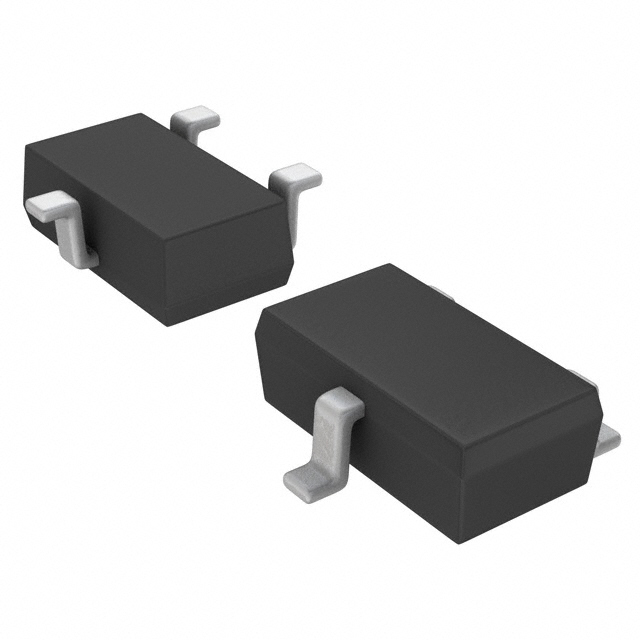
The CPH3106-TL-E is a PNP Bipolar Junction Transistor (BJT) manufactured by onsemi, rated for 12V collector-emitter breakdown voltage and 3A maximum collector current. This device is designed for surface mount applications in the SC-96 package (3-CPH supplier package) and operates at frequencies up to 280MHz with a maximum power dissipation of 900mW.
The CPH3106-TL-E is classified as an obsolete product. Identifying equivalent and substitute parts is necessary to maintain design continuity, ensure supply chain availability, and support ongoing production requirements for applications currently utilizing this transistor.
Substiute Parts
Key Parameters
| Parameter | Value | Unit |
|---|---|---|
| Transistor Type | PNP | — |
| Collector Current (Max) | 3 | A |
| Collector-Emitter Breakdown Voltage (Max) | 12 | V |
| Power Dissipation (Max) | 900 | mW |
| Transition Frequency | 280 | MHz |
| DC Current Gain (hFE Min) | 200 | @ 500mA, 2V |
| Vce Saturation (Max) | 165 | mV @ 30mA, 1.5A |
| Operating Temperature (Max) | 150 | °C |
| Mounting Type | Surface Mount | — |
| RoHS Status | ROHS3 Compliant | — |
Substitute Part Grouping Explanation
Substitution of the CPH3106-TL-E is determined by the following critical electrical and mechanical parameters:
Primary Substitution Criteria:
- Transistor type must be PNP
- Collector-emitter breakdown voltage must be greater than or equal to 12V
- Maximum collector current must be greater than or equal to 3A
- Maximum power dissipation must be greater than or equal to 900mW
- Transition frequency must be greater than or equal to 280MHz
- DC current gain (hFE) must be greater than or equal to 200
- Mounting type must be surface mount
- RoHS3 compliance required
Secondary Considerations:
- Package compatibility (SC-96 or equivalent surface mount packages)
- Vce saturation characteristics
- Operating temperature range
- Moisture sensitivity level
The substitute parts identified below meet the primary electrical criteria while accommodating variations in package form factor and secondary performance characteristics.
Parameter Comparison
| Parameter | CPH3106-TL-E | NSS20200LT1G | 2SB1705TL | FMMT717TA | ZXTP25015DFHTA |
|---|---|---|---|---|---|
| Manufacturer | onsemi | onsemi | Rohm Semiconductor | Diodes Incorporated | Diodes Incorporated |
| Transistor Type | PNP | PNP | PNP | PNP | PNP |
| Ic (Max) | 3 A | 2 A | 3 A | 2.5 A | 4 A |
| Vce Breakdown (Max) | 12 V | 20 V | 12 V | 12 V | 15 V |
| Power (Max) | 900 mW | 460 mW | 500 mW | 625 mW | 1.25 W |
| Frequency - Transition | 280 MHz | 100 MHz | 280 MHz | 110 MHz | 295 MHz |
| DC Current Gain (hFE Min) | 200 @ 500mA, 2V | 250 @ 500mA, 2V | 270 @ 500mA, 2V | 300 @ 100mA, 2V | 300 @ 10mA, 2V |
| Vce Saturation (Max) | 165 mV @ 30mA, 1.5A | 180 mV @ 200mA, 2A | 250 mV @ 30mA, 1.5A | 220 mV @ 50mA, 2.5A | 220 mV @ 500mA, 5A |
| Operating Temperature (Max) | 150°C | 150°C | 150°C | 150°C | 150°C |
| Package / Case | SC-96 (3-CPH) | TO-236-3, SC-59, SOT-23-3 | SC-96 (TSMT3) | TO-236-3, SC-59, SOT-23-3 | TO-236-3, SC-59, SOT-23-3 |
| Mounting Type | Surface Mount | Surface Mount | Surface Mount | Surface Mount | Surface Mount |
| Product Status | Obsolete | Active | Active | Active | Active |
| RoHS Status | ROHS3 Compliant | ROHS3 Compliant | ROHS3 Compliant | ROHS3 Compliant | ROHS3 Compliant |
Engineering Selection Recommendations
2SB1705TL (Rohm Semiconductor)
The 2SB1705TL provides the closest electrical match to the CPH3106-TL-E. Both devices share identical maximum collector current (3A), collector-emitter breakdown voltage (12V), and transition frequency (280MHz). The 2SB1705TL is available in active product status with ROHS3 compliance and unlimited moisture sensitivity rating. The primary difference is package form factor (TSMT3 versus 3-CPH), both of which are SC-96 surface mount variants. This part is suitable for direct substitution in applications where the SC-96 package footprint is maintained.
ZXTP25015DFHTA (Diodes Incorporated)
The ZXTP25015DFHTA exceeds the electrical specifications of the CPH3106-TL-E across multiple parameters: 4A collector current (versus 3A), 15V breakdown voltage (versus 12V), 1.25W power dissipation (versus 900mW), and 295MHz transition frequency (versus 280MHz). This device is active and ROHS3 compliant. The package is SOT-23-3 (TO-236-3), which differs from the original SC-96 form factor and requires PCB layout modification. This part is suitable for applications requiring enhanced performance margins and where package redesign is acceptable.
FMMT717TA (Diodes Incorporated)
The FMMT717TA operates at 12V breakdown voltage matching the original specification, with 2.5A collector current and 625mW power dissipation. Transition frequency is 110MHz, which is below the original 280MHz specification. This device is active and ROHS3 compliant. The package is SOT-23-3 (TO-236-3), requiring PCB layout modification. This part is suitable for applications where transition frequency is not a critical design parameter and where package redesign is feasible.
NSS20200LT1G (onsemi)
The NSS20200LT1G is manufactured by the same supplier as the original part (onsemi) and is active in product status. However, it exhibits reduced electrical performance: 2A collector current (versus 3A), 460mW power dissipation (versus 900mW), and 100MHz transition frequency (versus 280MHz). The 20V breakdown voltage exceeds the original specification. The package is SOT-23-3 (TO-236-3), requiring PCB layout modification. This part is suitable only for applications where reduced current and frequency requirements are acceptable.
Frequently Asked Questions (FAQ)
Q: Can the 2SB1705TL directly replace the CPH3106-TL-E without PCB modification?
A: The 2SB1705TL shares the SC-96 package family with the CPH3106-TL-E (TSMT3 versus 3-CPH variants). Both are surface mount packages in the SC-96 classification. Verification of specific pin-to-pad compatibility with your PCB layout is required, as minor dimensional variations may exist between TSMT3 and 3-CPH package variants.
Q: Why does the ZXTP25015DFHTA have higher power dissipation than the original part?
A: The ZXTP25015DFHTA is rated for 1.25W maximum power dissipation, compared to 900mW for the CPH3106-TL-E. This reflects the device's capability to handle higher power levels and does not require the device to dissipate more power in your application. The actual power dissipation is determined by circuit design and operating conditions.
Q: Is the FMMT717TA suitable for high-frequency applications?
A: The FMMT717TA has a transition frequency of 110MHz, which is significantly lower than the CPH3106-TL-E (280MHz) and the 2SB1705TL (280MHz). For applications requiring operation at or above 280MHz, the FMMT717TA is not suitable. For applications operating below 110MHz, this device is acceptable.
Q: What is the impact of switching from SC-96 to SOT-23-3 package?
A: The SOT-23-3 package (used by NSS20200LT1G, FMMT717TA, and ZXTP25015DFHTA) has a smaller footprint than the SC-96 package. PCB layout redesign is required, including trace routing, thermal management considerations, and component placement. Electrical performance is not affected by package change; only physical implementation differs.
Q: Are all substitute parts RoHS3 compliant?
A: Yes. All substitute parts listed (NSS20200LT1G, 2SB1705TL, FMMT717TA, and ZXTP25015DFHTA) are ROHS3 compliant, matching the compliance status of the original CPH3106-TL-E.
Q: Which substitute part has the best current handling capability?
A: The ZXTP25015DFHTA is rated for 4A maximum collector current, exceeding all other options including the original CPH3106-TL-E (3A). The 2SB1705TL matches the original 3A specification. The FMMT717TA and NSS20200LT1G are rated for 2.5A and 2A respectively.
Q: Can I use NSS20200LT1G as a direct replacement?
A: The NSS20200LT1G has reduced electrical performance in three critical areas: collector current (2A versus 3A), power dissipation (460mW versus 900mW), and transition frequency (100MHz versus 280MHz). This part is suitable only if your application operates within these reduced specifications. Package change from SC-96 to SOT-23-3 also requires PCB modification.
Alternative Parts

SJ6012L2TP
Littelfuse Inc.
6 Alternative Parts

JMK107BBJ476MA-RE
Taiyo Yuden
10 Alternative Parts

GMK107BBJ475MA-T
Taiyo Yuden
5 Alternative Parts
SJ6020N2ARP
Littelfuse Inc.
3 Alternative Parts
SJ6025R2ATP
Littelfuse Inc.
4 Alternative Parts

2474-05L
API Delevan Inc.
1 Alternative Parts

4590R-684K
API Delevan Inc.
1 Alternative Parts

CM6560R-334
API Delevan Inc.
1 Alternative Parts

CM6460-104
API Delevan Inc.
1 Alternative Parts

5526-12
API Delevan Inc.
1 Alternative Parts