




Request Quote
(Ships tomorrow)
CMPD4150 TR Equivalent & Substitute Parts
Part Overview
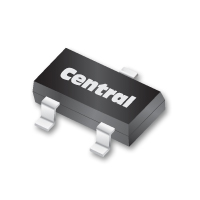
The CMPD4150 TR is a general-purpose rectifier diode rated for 50 V DC reverse voltage and 250 mA average rectified current in a surface mount SOT-23 package. Manufactured by Central Semiconductor Corp, this component is classified as obsolete. Due to its obsolete status and limited availability from the original manufacturer, identifying equivalent substitute parts with compatible electrical and mechanical specifications is necessary for design continuity and procurement planning.
Substiute Parts
Key Parameters
| Parameter | Value | Unit |
|---|---|---|
| Voltage - DC Reverse (Vr) (Max) | 50 | V |
| Current - Average Rectified (Io) | 250 | mA |
| Voltage - Forward (Vf) (Max) @ If | 1 | V @ 200 mA |
| Reverse Recovery Time (trr) | 4 | ns |
| Current - Reverse Leakage @ Vr | 100 | nA @ 50 V |
| Capacitance @ Vr, F | 4 | pF @ 0V, 1MHz |
| Mounting Type | Surface Mount | - |
| Package / Case | TO-236-3, SC-59, SOT-23-3 | - |
| Operating Temperature - Junction | -65°C to 150°C | - |
| Technology | Standard | - |
Substitute Part Grouping Explanation
Substitute parts for the CMPD4150 TR are evaluated based on the following critical parameters that determine functional compatibility:
Mandatory Compatibility Criteria:
- Voltage - DC Reverse (Vr) (Max): Must equal or exceed 50 V
- Package / Case: Must be TO-236-3, SC-59, or SOT-23-3 (surface mount)
- Mounting Type: Surface Mount
- Current - Average Rectified (Io): Must support the application's current requirements
Secondary Compatibility Parameters:
- Voltage - Forward (Vf) (Max): Forward voltage characteristics affect circuit performance
- Reverse Recovery Time (trr): Speed characteristics for switching applications
- Current - Reverse Leakage @ Vr: Leakage characteristics at rated voltage
- Operating Temperature Range: Junction temperature limits
The identified substitute parts meet the mandatory criteria and are available from active manufacturers with current product status.
Parameter Comparison
| Parameter | CMPD4150 TR (Main) | BAL74,215 (Substitute) | ZHCS506TA (Substitute) |
|---|---|---|---|
| Manufacturer | Central Semiconductor Corp | Nexperia USA Inc. | Diodes Incorporated |
| Product Status | Obsolete | Active | Active |
| Technology | Standard | Standard | Schottky |
| Voltage - DC Reverse (Vr) (Max) | 50 V | 50 V | 60 V |
| Current - Average Rectified (Io) | 250 mA | 215 mA | 500 mA |
| Voltage - Forward (Vf) (Max) @ If | 1 V @ 200 mA | 1.25 V @ 150 mA | 630 mV @ 500 mA |
| Reverse Recovery Time (trr) | 4 ns | 4 ns | 10 ns |
| Current - Reverse Leakage @ Vr | 100 nA @ 50 V | 100 nA @ 50 V | 40 µA @ 45 V |
| Capacitance @ Vr, F | 4 pF @ 0V, 1MHz | 2 pF @ 0V, 1MHz | 20 pF @ 25V, 1MHz |
| Package / Case | TO-236-3, SC-59, SOT-23-3 | TO-236-3, SC-59, SOT-23-3 | TO-236-3, SC-59, SOT-23-3 |
| Operating Temperature - Junction (Max) | 150°C | 150°C | 125°C |
| Moisture Sensitivity Level (MSL) | 1 (Unlimited) | 1 (Unlimited) | 1 (Unlimited) |
| RoHS Status | - | ROHS3 Compliant | ROHS3 Compliant |
| REACH Status | REACH Unaffected | REACH Unaffected | REACH Unaffected |
Engineering Selection Recommendations
BAL74,215 (Nexperia USA Inc.): This substitute maintains identical reverse voltage (50 V) and reverse recovery time (4 ns) specifications. The part is active in production with ROHS3 compliance. Current rating is 215 mA, which is lower than the main part's 250 mA specification. Forward voltage is slightly elevated at 1.25 V compared to 1 V. This substitute is suitable for applications where the 215 mA current rating is sufficient and the higher forward voltage drop is acceptable.
ZHCS506TA (Diodes Incorporated): This substitute employs Schottky technology rather than standard rectifier technology. It provides higher reverse voltage (60 V) and significantly higher current capacity (500 mA). Forward voltage is lower at 630 mV, which may reduce power dissipation in high-current applications. Reverse leakage is higher at 40 µA compared to 100 nA, and junction temperature maximum is 125°C versus 150°C. This substitute is suitable for applications requiring higher current capacity or lower forward voltage drop, with consideration for increased leakage characteristics.
Both substitutes are available from active manufacturers with current product status and full compliance certifications.
Frequently Asked Questions (FAQ)
Q: Can BAL74,215 directly replace CMPD4150 TR in all applications?
A: BAL74,215 shares identical reverse voltage and recovery time specifications. However, its 215 mA current rating is lower than the 250 mA specification of CMPD4150 TR. Substitution is valid only if the application's actual current requirement does not exceed 215 mA. Forward voltage is also higher at 1.25 V versus 1 V, which affects power dissipation calculations.
Q: What are the key differences between BAL74,215 and ZHCS506TA?
A: BAL74,215 is a standard rectifier diode with 50 V rating and 215 mA current. ZHCS506TA is a Schottky diode with 60 V rating and 500 mA current. Schottky technology provides lower forward voltage (630 mV) but higher reverse leakage (40 µA). Technology selection depends on circuit requirements for forward voltage drop, leakage characteristics, and current capacity.
Q: Are all three parts compatible with the same PCB footprint?
A: Yes. CMPD4150 TR, BAL74,215, and ZHCS506TA all use TO-236-3 / SC-59 / SOT-23-3 surface mount packages. Physical footprints are identical, allowing direct PCB placement without layout modifications.
Q: What is the impact of higher reverse leakage in ZHCS506TA?
A: ZHCS506TA exhibits 40 µA reverse leakage at 45 V, compared to 100 nA in CMPD4150 TR. This 400-fold increase is characteristic of Schottky technology. In low-leakage applications or high-impedance circuits, this difference may be significant. In standard rectification applications, the impact is typically negligible.
Q: Are both substitutes RoHS compliant?
A: Yes. Both BAL74,215 and ZHCS506TA are ROHS3 compliant. CMPD4150 TR shows no RoHS status designation. All three parts are REACH unaffected.
Q: What is the maximum junction temperature difference between substitutes?
A: CMPD4150 TR and BAL74,215 both support -65°C to 150°C junction temperature range. ZHCS506TA has a maximum junction temperature of 125°C, which is 25°C lower. This may be a limiting factor in high-temperature applications.
Alternative Parts

SJ6012L2TP
Littelfuse Inc.
6 Alternative Parts

JMK107BBJ476MA-RE
Taiyo Yuden
10 Alternative Parts

GMK107BBJ475MA-T
Taiyo Yuden
5 Alternative Parts
SJ6020N2ARP
Littelfuse Inc.
3 Alternative Parts
SJ6025R2ATP
Littelfuse Inc.
4 Alternative Parts

2474-05L
API Delevan Inc.
1 Alternative Parts

4590R-684K
API Delevan Inc.
1 Alternative Parts

CM6560R-334
API Delevan Inc.
1 Alternative Parts

CM6460-104
API Delevan Inc.
1 Alternative Parts

5526-12
API Delevan Inc.
1 Alternative Parts