


Request Quote
(Ships tomorrow)
CDCV855IPW PLL Clock Driver IC Equivalent & Substitute Parts
Part Overview
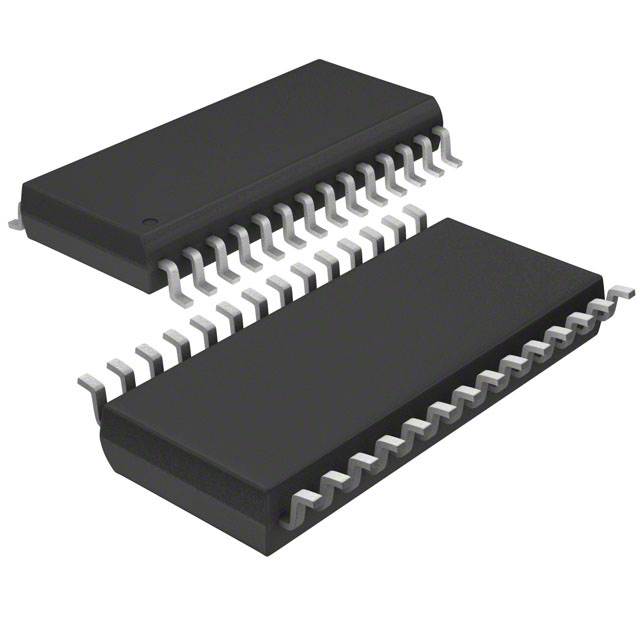
The CDCV855IPW is a PLL Clock Driver IC manufactured by Texas Instruments, designed for clock distribution and timing applications requiring differential SSTL-2 signal levels. This device operates at a maximum frequency of 180MHz with a 1:5 input-to-output ratio and is housed in a 28-TSSOP surface mount package.
The CDCV855IPW carries a "Not For New Designs" product status, indicating that Texas Instruments has discontinued active development and support for this component. Organizations requiring this functionality in new designs or seeking components with extended availability and active manufacturer support should evaluate qualified substitute parts that maintain electrical and mechanical compatibility.
Substiute Parts
Key Parameters
| Parameter | Value |
|---|---|
| Manufacturer Part Number | CDCV855IPW |
| Manufacturer | Texas Instruments |
| Category | Clock/Timing |
| Type | PLL Clock Driver |
| Package / Case | 28-TSSOP (0.173", 4.40mm Width) |
| Mounting Type | Surface Mount |
| Input Signal Level | SSTL-2 |
| Output Signal Level | SSTL-2 |
| Frequency - Max | 180MHz |
| Ratio - Input:Output | 1:5 |
| Voltage - Supply | 2.3V ~ 2.7V |
| Operating Temperature | -40°C ~ 85°C |
| RoHS Status | ROHS3 Compliant |
| Moisture Sensitivity Level (MSL) | 1 (Unlimited) |
Substitute Part Grouping Explanation
Substitution eligibility for the CDCV855IPW is determined by the following critical parameters:
Mandatory Compatibility Parameters:
- Package / Case: 28-TSSOP (0.173", 4.40mm Width) — ensures mechanical and electrical pin compatibility
- Mounting Type: Surface Mount — maintains PCB assembly compatibility
- Input Signal Level: SSTL-2 — ensures signal integrity with existing driver circuits
- Output Signal Level: SSTL-2 — maintains compatibility with downstream receiver circuits
- Voltage - Supply: 2.3V ~ 2.7V — ensures operation within the same power distribution system
- Operating Temperature: -40°C ~ 85°C — maintains thermal operating envelope
Allowable Variation Parameters:
- Frequency - Max: May exceed 180MHz while maintaining all other specifications
- Ratio - Input:Output: May differ from 1:5 if application requirements permit alternative clock multiplication ratios
- Product Status: Active status preferred for new designs and long-term availability
The CDCVF855PW qualifies as a direct substitute based on identical package, signal levels, supply voltage, and operating temperature specifications, with enhanced frequency capability (220MHz) and active product status.
Parameter Comparison
| Parameter | CDCV855IPW (Main Part) | CDCVF855PW (Substitute) |
|---|---|---|
| Manufacturer | Texas Instruments | Texas Instruments |
| Category | Clock/Timing | Clock/Timing |
| Type | PLL Clock Driver | PLL Clock Driver |
| Package / Case | 28-TSSOP (0.173", 4.40mm Width) | 28-TSSOP (0.173", 4.40mm Width) |
| Mounting Type | Surface Mount | Surface Mount |
| Input Signal Level | SSTL-2 | SSTL-2 |
| Output Signal Level | SSTL-2 | SSTL-2 |
| Frequency - Max | 180MHz | 220MHz |
| Ratio - Input:Output | 1:5 | 2:5 |
| Voltage - Supply | 2.3V ~ 2.7V | 2.3V ~ 2.7V |
| Operating Temperature | -40°C ~ 85°C | -40°C ~ 85°C |
| Product Status | Not For New Designs | Active |
| RoHS Status | ROHS3 Compliant | ROHS3 Compliant |
| Moisture Sensitivity Level (MSL) | 1 (Unlimited) | 1 (Unlimited) |
Engineering Selection Recommendations
The CDCVF855PW is qualified as a direct substitute for the CDCV855IPW based on identical electrical and mechanical specifications across all mandatory compatibility parameters. Both devices share identical package geometry, signal levels, supply voltage range, and operating temperature specifications.
The CDCVF855PW offers the following advantages:
- Active product status with ongoing manufacturer support and availability
- Enhanced maximum frequency specification (220MHz vs. 180MHz)
- ROHS3 compliance and unlimited moisture sensitivity rating maintained
- Identical supply voltage and operating temperature specifications
The difference in input-to-output ratio (2:5 vs. 1:5) requires verification that the application can accommodate the alternative clock multiplication factor. If the original 1:5 ratio is a critical system requirement, this parameter difference must be evaluated against application specifications.
Frequently Asked Questions (FAQ)
Q: Can the CDCVF855PW be used as a direct replacement for the CDCV855IPW in existing designs?
A: The CDCVF855PW is mechanically and electrically compatible with the CDCV855IPW across all mandatory parameters: package, signal levels, supply voltage, and operating temperature. The input-to-output ratio differs (2:5 vs. 1:5), which must be evaluated against your specific clock distribution requirements. If the 1:5 ratio is not a critical constraint, substitution is feasible.
Q: What is the significance of the "Not For New Designs" status on the CDCV855IPW?
A: This status indicates that Texas Instruments has discontinued active development and support for this component. Existing inventory may be available, but long-term availability is not guaranteed. For new designs, the CDCVF855PW is the recommended alternative.
Q: Are the package dimensions identical between these two parts?
A: Yes. Both the CDCV855IPW and CDCVF855PW use the 28-TSSOP package with identical dimensions (0.173" width, 4.40mm width). No PCB layout modifications are required for substitution.
Q: What is the difference in maximum frequency capability?
A: The CDCV855IPW operates at a maximum frequency of 180MHz, while the CDCVF855PW operates at 220MHz. The CDCVF855PW provides additional frequency headroom for applications requiring higher clock speeds within the same package and signal level specifications.
Q: Do both parts require the same supply voltage?
A: Yes. Both devices operate within the identical supply voltage range of 2.3V to 2.7V and share the same operating temperature range of -40°C to 85°C.
Q: Are there any compliance or certification differences between these parts?
A: Both parts maintain ROHS3 compliance and unlimited moisture sensitivity rating (MSL 1). No compliance differences exist between the two devices.
Alternative Parts

SJ6012L2TP
Littelfuse Inc.
6 Alternative Parts

JMK107BBJ476MA-RE
Taiyo Yuden
10 Alternative Parts

GMK107BBJ475MA-T
Taiyo Yuden
5 Alternative Parts
SJ6020N2ARP
Littelfuse Inc.
3 Alternative Parts
SJ6025R2ATP
Littelfuse Inc.
4 Alternative Parts

2474-05L
API Delevan Inc.
1 Alternative Parts

4590R-684K
API Delevan Inc.
1 Alternative Parts

CM6560R-334
API Delevan Inc.
1 Alternative Parts

CM6460-104
API Delevan Inc.
1 Alternative Parts

5526-12
API Delevan Inc.
1 Alternative Parts