


Request Quote
(Ships tomorrow)
CDCLVD1212RHAT Equivalent & Substitute Parts
Part Overview
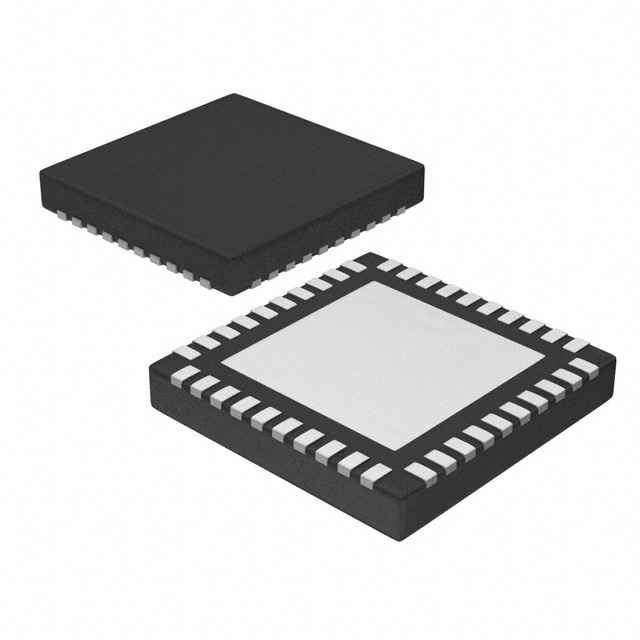
The CDCLVD1212RHAT is a Clock Fanout Buffer (Distribution) and Multiplexer IC manufactured by Texas Instruments. This device functions as a 2:12 clock distribution buffer operating at a maximum frequency of 800 MHz, designed for applications requiring differential input and LVDS output signal conversion. The part is currently in active production status with 1410 units available in inventory. Substitute parts are identified when equivalent functional performance can be achieved within the specified electrical and mechanical parameters while maintaining compatibility with the target application requirements.
Substiute Parts
Key Parameters
| Parameter | Value |
|---|---|
| Manufacturer Part Number | CDCLVD1212RHAT |
| Manufacturer | Texas Instruments |
| Category | Clock/Timing |
| Type | Fanout Buffer (Distribution), Multiplexer |
| Ratio - Input:Output | 2:12 |
| Frequency - Max | 800 MHz |
| Input Type | LVCMOS, LVDS, LVPECL |
| Output Type | LVDS |
| Voltage - Supply | 2.375V ~ 2.625V |
| Operating Temperature | -40°C ~ 85°C |
| Package / Case | 40-VFQFN Exposed Pad |
| Mounting Type | Surface Mount |
| Product Status | Active |
| RoHS Status | ROHS3 Compliant |
| MSL Rating | 3 (168 Hours) |
Substitute Part Grouping Explanation
Substitution eligibility for the CDCLVD1212RHAT is determined by the following critical parameters:
- Input:Output Ratio: Must be 2:12 to maintain functional equivalence in clock distribution architecture
- Differential Input and Output: Both input and output must support differential signaling (Yes/Yes)
- Output Signal Type: Must be LVDS to ensure compatibility with receiving circuits
- Package Type: Must be a 40-pin QFN variant with exposed pad to maintain PCB layout compatibility
- Operating Temperature Range: Must support -40°C to 85°C minimum
- Surface Mount Capability: Required for modern assembly processes
- Compliance Standards: RoHS3 compliance and REACH unaffected status required
The PI6C5921512ZDIEX from Diodes Incorporated meets all substitution criteria while offering enhanced performance specifications in frequency capability and supply voltage range flexibility.
Parameter Comparison
| Parameter | CDCLVD1212RHAT (Main) | PI6C5921512ZDIEX (Substitute) |
|---|---|---|
| Manufacturer | Texas Instruments | Diodes Incorporated |
| Category | Clock/Timing | Clock/Timing |
| Type | Fanout Buffer (Distribution), Multiplexer | Fanout Buffer (Distribution) |
| Ratio - Input:Output | 2:12 | 2:12 |
| Differential Input:Output | Yes/Yes | Yes/Yes |
| Output Type | LVDS | LVDS |
| Frequency - Max | 800 MHz | 1.5 GHz |
| Voltage - Supply | 2.375V ~ 2.625V | 2.375V ~ 3.465V |
| Operating Temperature | -40°C ~ 85°C | -40°C ~ 85°C |
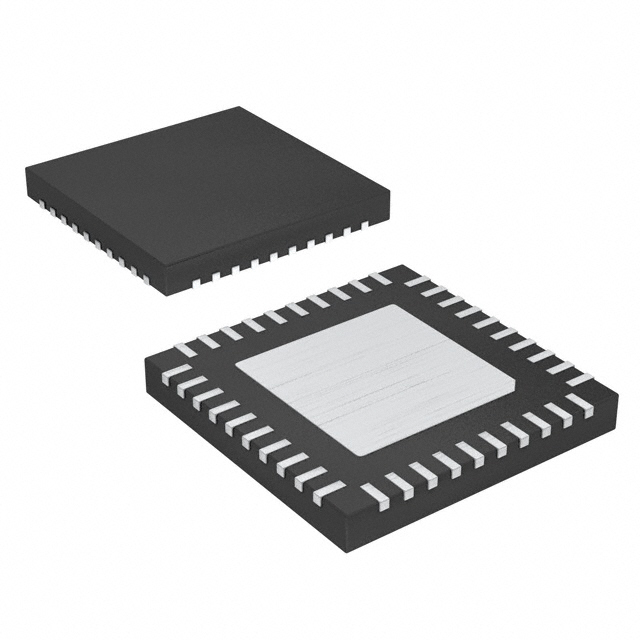
| Package / Case | 40-VFQFN Exposed Pad | 40-WFQFN Exposed Pad |
| Mounting Type | Surface Mount | Surface Mount |
| Product Status | Active | Active |
| RoHS Status | ROHS3 Compliant | ROHS3 Compliant |
| MSL Rating | 3 (168 Hours) | 1 (Unlimited) |
| Packaging | Tape & Reel (TR) | Tape & Reel (TR) |
Engineering Selection Recommendations
Both the CDCLVD1212RHAT and PI6C5921512ZDIEX are active production devices with full RoHS3 compliance and REACH unaffected status, meeting current regulatory requirements for electronic component manufacturing and use.
The CDCLVD1212RHAT remains the primary selection when the application operates within its specified 800 MHz frequency ceiling and 2.375V to 2.625V supply voltage window, with established design validation and production history.
The PI6C5921512ZDIEX serves as a qualified substitute when:
- The application requires frequency operation above 800 MHz up to 1.5 GHz
- Supply voltage flexibility beyond 2.625V is needed (up to 3.465V)
- Lower moisture sensitivity (MSL 1 vs. MSL 3) is advantageous for extended storage or humid environments
- The 40-pin QFN package footprint compatibility is confirmed for the target PCB layout
Both devices maintain identical 2:12 input:output ratio, differential signaling architecture, LVDS output configuration, and operating temperature range, ensuring functional interchangeability within their respective performance envelopes.
Frequently Asked Questions (FAQ)
Q: Can the PI6C5921512ZDIEX replace the CDCLVD1212RHAT in all applications?
A: The PI6C5921512ZDIEX is functionally compatible as a substitute when the application does not require the specific input signal types (LVCMOS, LVDS, LVPECL) of the CDCLVD1212RHAT. Both devices support differential input and LVDS output with identical 2:12 ratio. Verify that your circuit design accommodates the PI6C5921512ZDIEX input specification (Differential or Single-Ended) and supply voltage range (2.375V ~ 3.465V).
Q: Are the package footprints identical between these two parts?
A: Both devices use 40-pin QFN packages with exposed pads. The CDCLVD1212RHAT uses 40-VFQFN and the PI6C5921512ZDIEX uses 40-WFQFN. While both are 6x6 mm QFN variants, confirm PCB layout compatibility with the specific package designation before substitution.
Q: What is the significance of the MSL rating difference?
A: The CDCLVD1212RHAT has MSL 3 (168 hours), while the PI6C5921512ZDIEX has MSL 1 (Unlimited). MSL 1 indicates superior moisture resistance and allows indefinite shelf life under controlled conditions. MSL 3 requires reflow processing within 168 hours of package opening. For applications with extended component storage or high-humidity environments, the PI6C5921512ZDIEX offers operational advantages.
Q: Can I use the PI6C5921512ZDIEX if my circuit operates at 800 MHz?
A: Yes. The PI6C5921512ZDIEX maximum frequency rating of 1.5 GHz exceeds the 800 MHz requirement. The device operates within specification at lower frequencies. Ensure supply voltage compatibility (2.375V ~ 3.465V range) with your circuit design.
Q: What are the input signal compatibility differences?
A: The CDCLVD1212RHAT accepts LVCMOS, LVDS, or LVPECL input signals. The PI6C5921512ZDIEX accepts Differential or Single-Ended input signals. If your design requires LVCMOS or LVPECL input specifically, the CDCLVD1212RHAT is the appropriate selection. For differential or single-ended inputs, both devices are compatible.
Alternative Parts

SJ6012L2TP
Littelfuse Inc.
6 Alternative Parts

JMK107BBJ476MA-RE
Taiyo Yuden
10 Alternative Parts

GMK107BBJ475MA-T
Taiyo Yuden
5 Alternative Parts
SJ6020N2ARP
Littelfuse Inc.
3 Alternative Parts
SJ6025R2ATP
Littelfuse Inc.
4 Alternative Parts

2474-05L
API Delevan Inc.
1 Alternative Parts

4590R-684K
API Delevan Inc.
1 Alternative Parts

CM6560R-334
API Delevan Inc.
1 Alternative Parts

CM6460-104
API Delevan Inc.
1 Alternative Parts

5526-12
API Delevan Inc.
1 Alternative Parts