



Request Quote
(Ships tomorrow)
C8051F816-GS Equivalent & Substitute Parts
Part Overview
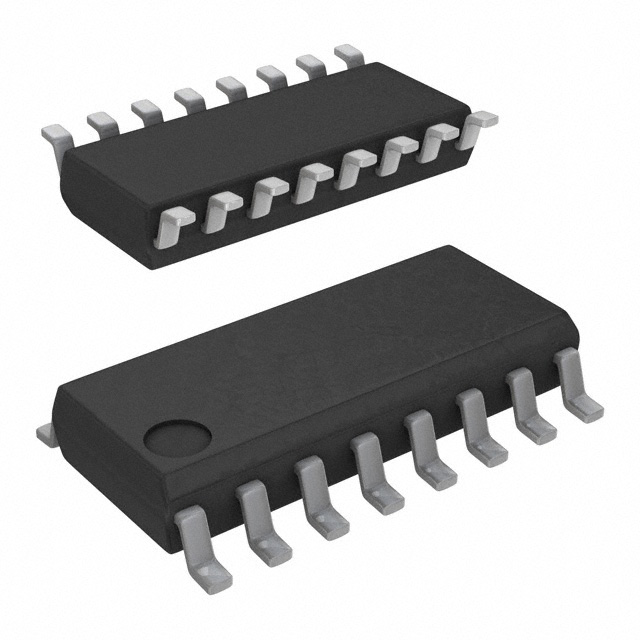
The C8051F816-GS is an 8-bit microcontroller from Silicon Labs' C8051F81x series, featuring an 8051 core processor with 8KB FLASH memory and 512 bytes of RAM. This device operates at 25MHz with integrated peripherals including SMBus/I2C, SPI, UART/USART, capacitive sensing, and temperature sensing capabilities. The part is currently in Last Time Buy status, making identification of functionally equivalent alternatives essential for ongoing design support and production continuity.
Substiute Parts
Key Parameters
| Parameter | C8051F816-GS |
|---|---|
| Core Processor | 8051 |
| Core Size | 8-Bit |
| Speed | 25MHz |
| Program Memory Type | FLASH |
| Program Memory Size | 8KB |
| RAM Size | 512 x 8 |
| Voltage Supply Range | 1.8V ~ 3.6V |
| Operating Temperature | -40°C ~ 85°C |
| Mounting Type | Surface Mount |
| Package | 16-SOIC |
| RoHS Status | ROHS3 Compliant |
| MSL Rating | 3 (168 Hours) |
Substitute Part Grouping Explanation
Substitution of the C8051F816-GS is evaluated based on the following critical parameters:
Core Architecture & Processing Capability: Both the main part and substitute must support 8-bit processing with equivalent instruction set compatibility for existing firmware.
Memory Configuration: Program memory size, type (FLASH), and RAM capacity must meet or exceed the original specification to ensure code and data storage requirements are satisfied.
Operating Voltage Range: The substitute must operate within the specified supply voltage window (1.8V ~ 3.6V for the main part) to ensure compatibility with existing power distribution designs.
Connectivity Interfaces: Presence of SMBus/I2C, SPI, and UART/USART interfaces is required to maintain communication protocol compatibility.
Thermal & Environmental Specifications: Operating temperature range (-40°C ~ 85°C) and moisture sensitivity level (MSL 3) must be maintained.
Compliance & Certifications: RoHS3 compliance and equivalent regulatory status ensure production and supply chain continuity.
Package & Mounting: Surface mount packaging with compatible pin count and footprint considerations.
Parameter Comparison
| Parameter | C8051F816-GS | ATTINY167-MMU |
|---|---|---|
| Manufacturer | Silicon Labs | Microchip Technology |
| Core Processor | 8051 | AVR |
| Core Size | 8-Bit | 8-Bit |
| Speed | 25MHz | 20MHz |
| Program Memory Size | 8KB | 16KB |
| Program Memory Type | FLASH | FLASH |
| RAM Size | 512 x 8 | 512 x 8 |
| EEPROM Size | — | 512 x 8 |
| Voltage Supply Range | 1.8V ~ 3.6V | 1.8V ~ 5.5V |
| Data Converters | A/D 12x10b | A/D 11x10b |
| Number of I/O | 13 | 16 |
| Connectivity | SMBus (2-Wire/I2C), SPI, UART/USART | I2C, LINbus, SPI, UART/USART, USI |
| Peripherals | Cap Sense, POR, PWM, Temp Sensor, WDT | Brown-out Detect/Reset, POR, PWM, Temp Sensor, WDT |
| Operating Temperature | -40°C ~ 85°C | -40°C ~ 85°C |
| Mounting Type | Surface Mount | Surface Mount |
| Package | 16-SOIC | 20-WQFN (4x4) |
| RoHS Status | ROHS3 Compliant | ROHS3 Compliant |
| MSL Rating | 3 (168 Hours) | 3 (168 Hours) |
| Product Status | Last Time Buy | Active |
Engineering Selection Recommendations
The ATTINY167-MMU from Microchip Technology is listed as a substitute for the C8051F816-GS based on functional equivalence in 8-bit microcontroller capability. Both devices maintain identical operating temperature ranges (-40°C ~ 85°C), equivalent moisture sensitivity levels (MSL 3), and RoHS3 compliance status.
Key considerations for selection:
Architecture Difference: The ATTINY167-MMU uses an AVR core architecture rather than the 8051 core of the C8051F816-GS. This architectural difference requires firmware recompilation and validation, as instruction sets are not compatible.
Memory Advantage: The ATTINY167-MMU provides 16KB of FLASH memory compared to 8KB in the main part, offering additional program storage capacity. The substitute also includes 512 x 8 bytes of EEPROM, which the main part does not provide.
Speed Trade-off: The ATTINY167-MMU operates at 20MHz versus 25MHz for the C8051F816-GS, representing a 20% reduction in clock frequency.
Voltage Supply Range: The ATTINY167-MMU supports a wider supply voltage range (1.8V ~ 5.5V) compared to the main part (1.8V ~ 3.6V), providing greater flexibility in power supply design.
Package Difference: The ATTINY167-MMU uses a 20-WQFN (4x4) package with 16 I/O pins versus the 16-SOIC package with 13 I/O pins in the main part. This package change requires PCB layout redesign.
Product Status: The ATTINY167-MMU maintains Active product status, ensuring long-term availability and supply continuity compared to the Last Time Buy status of the C8051F816-GS.
Frequently Asked Questions (FAQ)
Q: Can the ATTINY167-MMU directly replace the C8051F816-GS without firmware changes?
A: No. The ATTINY167-MMU uses an AVR core architecture while the C8051F816-GS uses an 8051 core. Existing firmware compiled for the 8051 instruction set cannot execute on the AVR architecture. Complete firmware recompilation and functional validation are required.
Q: What are the package compatibility implications?
A: The C8051F816-GS uses a 16-SOIC package while the ATTINY167-MMU uses a 20-WQFN (4x4) package. These packages have different footprints, pin counts, and pinout arrangements. PCB redesign is necessary for mechanical and electrical compatibility.
Q: Does the ATTINY167-MMU provide all required connectivity interfaces?
A: The ATTINY167-MMU provides I2C, SPI, and UART/USART interfaces, matching the core communication protocols of the C8051F816-GS. The substitute adds LINbus and USI (Universal Serial Interface) capabilities. The main part's SMBus interface is compatible with the I2C implementation on the substitute.
Q: How does the memory difference affect application design?
A: The ATTINY167-MMU provides double the FLASH memory (16KB versus 8KB) and includes 512 x 8 bytes of EEPROM, which the main part lacks. Applications requiring more than 8KB of program storage benefit from this increase. The identical RAM size (512 x 8) remains unchanged.
Q: What is the impact of the 5MHz speed reduction?
A: The ATTINY167-MMU operates at 20MHz compared to 25MHz for the C8051F816-GS. This 20% reduction in clock frequency may affect real-time performance, interrupt response times, and timing-critical operations. Application-specific timing analysis is required to determine compatibility.
Q: Are both devices compliant with the same regulatory standards?
A: Yes. Both the C8051F816-GS and ATTINY167-MMU are RoHS3 compliant with identical MSL ratings (3, 168 Hours). Both support the same operating temperature range (-40°C ~ 85°C), ensuring equivalent environmental performance specifications.
Q: What is the significance of the wider voltage range on the ATTINY167-MMU?
A: The ATTINY167-MMU supports 1.8V ~ 5.5V operation compared to 1.8V ~ 3.6V for the main part. This wider range provides design flexibility for systems with variable supply voltages, though applications designed for the narrower range of the C8051F816-GS will operate within the ATTINY167-MMU's specifications.
Alternative Parts

SJ6012L2TP
Littelfuse Inc.
6 Alternative Parts

JMK107BBJ476MA-RE
Taiyo Yuden
10 Alternative Parts

GMK107BBJ475MA-T
Taiyo Yuden
5 Alternative Parts
SJ6020N2ARP
Littelfuse Inc.
3 Alternative Parts
SJ6025R2ATP
Littelfuse Inc.
4 Alternative Parts

2474-05L
API Delevan Inc.
1 Alternative Parts

4590R-684K
API Delevan Inc.
1 Alternative Parts

CM6560R-334
API Delevan Inc.
1 Alternative Parts

CM6460-104
API Delevan Inc.
1 Alternative Parts

5526-12
API Delevan Inc.
1 Alternative Parts