


Request Quote
(Ships tomorrow)
C8051F342-GMR Equivalent & Substitute Parts
Part Overview
The C8051F342-GMR is an 8-bit microcontroller from Silicon Labs' C8051F34x series, featuring a 48MHz 8051 core with 64KB FLASH memory and integrated peripherals including SMBus, SPI, UART, and USB connectivity. The device is classified as Not For New Designs, indicating end-of-life status. Finding equivalent or substitute parts is necessary for ongoing system maintenance, legacy product support, and applications requiring similar functional capabilities with potentially improved availability or extended product lifecycle support.
Substiute Parts
Key Parameters
| Parameter | Value |
|---|---|
| Core Processor | 8051 |
| Core Size | 8-Bit |
| Speed | 48MHz |
| Program Memory Size | 64KB FLASH |
| RAM Size | 4.25K x 8 |
| Voltage Supply (Vcc/Vdd) | 2.7V ~ 3.6V |
| Connectivity | SMBus (2-Wire/I2C), SPI, UART/USART, USB |
| Peripherals | Brown-out Detect/Reset, POR, PWM, Temp Sensor, WDT |
| Number of I/O | 25 |
| Data Converters | A/D 21x10b |
| Operating Temperature | -40°C ~ 85°C |
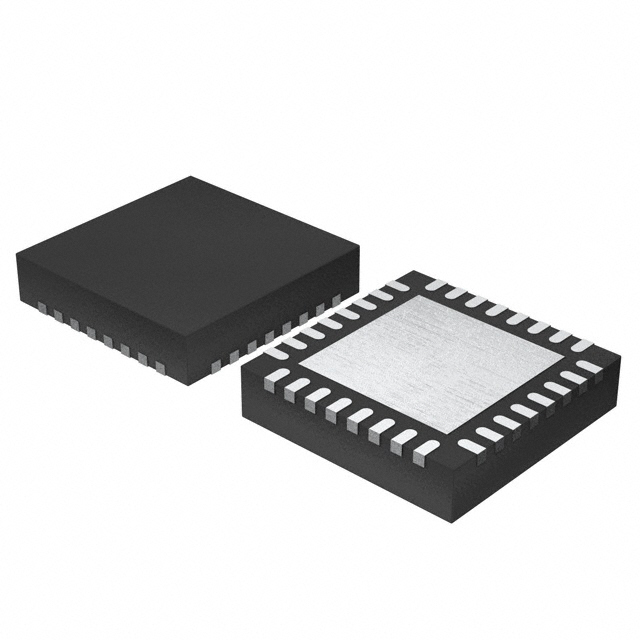
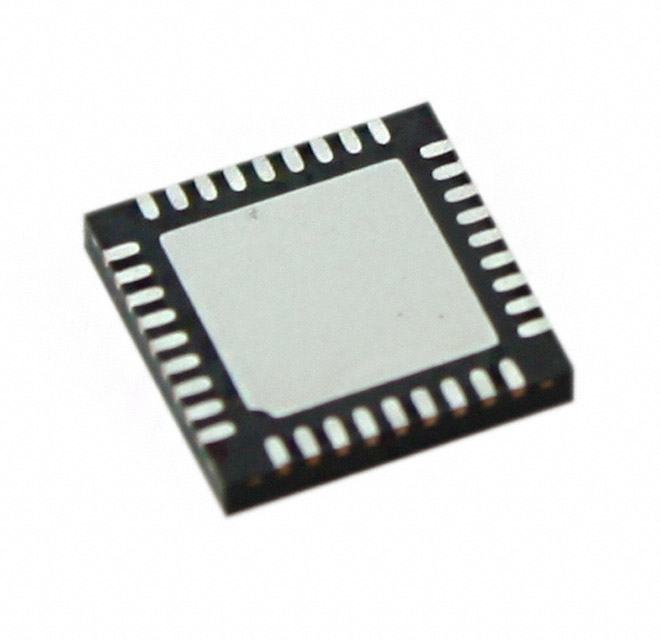
| Package | 32-VFQFN (5x5) |
| RoHS Status | ROHS3 Compliant |
| MSL Rating | 1 (Unlimited) |
Substitute Part Grouping Explanation
The STM32F103T8U6 is identified as a substitute for the C8051F342-GMR based on the following substitution criteria:
Matching Parameters:
- Program Memory Size: 64KB FLASH (identical)
- Operating Temperature Range: -40°C ~ 85°C (identical)
- Voltage Supply Range: 2V ~ 3.6V (overlapping, STM32F103T8U6 extends lower bound)
- RoHS3 Compliance: Both devices meet ROHS3 requirements
- ECCN and HTSUS Classification: Identical regulatory codes
Functional Equivalence Basis: The STM32F103T8U6 provides equivalent memory capacity and operating conditions suitable for applications previously served by the C8051F342-GMR. Both devices feature integrated connectivity options (I2C/SMBus, SPI, UART, USB), temperature sensing, watchdog timers, and power management peripherals. The substitute maintains compatibility with the same supply voltage envelope and industrial temperature range.
Parameter Comparison
| Parameter | C8051F342-GMR | STM32F103T8U6 |
|---|---|---|
| Manufacturer | Silicon Labs | STMicroelectronics |
| Core Processor | 8051 | ARM® Cortex®-M3 |
| Core Size | 8-Bit | 32-Bit Single-Core |
| Speed | 48MHz | 72MHz |
| Program Memory | 64KB FLASH | 64KB FLASH |
| RAM Size | 4.25K x 8 | 20K x 8 |
| Voltage Supply | 2.7V ~ 3.6V | 2V ~ 3.6V |
| Connectivity | SMBus, SPI, UART, USB | CANbus, I2C, IrDA, LINbus, SPI, UART, USB |
| Peripherals | Brown-out Detect/Reset, POR, PWM, Temp Sensor, WDT | DMA, Motor Control PWM, PDR, POR, PVD, PWM, Temp Sensor, WDT |
| Number of I/O | 25 | 26 |
| Data Converters | A/D 21x10b | A/D 10x12b |
| Operating Temperature | -40°C ~ 85°C | -40°C ~ 85°C |
| Package | 32-VFQFN (5x5) | 36-VFQFN (6x6) |
| Product Status | Not For New Designs | Active |
| RoHS Status | ROHS3 Compliant | ROHS3 Compliant |
| MSL Rating | 1 (Unlimited) | 3 (168 Hours) |
Engineering Selection Recommendations
Product Status Consideration: The C8051F342-GMR carries Not For New Designs status, indicating Silicon Labs has discontinued active development and support for this device. The STM32F103T8U6 maintains Active product status with STMicroelectronics, ensuring ongoing availability, technical support, and supply chain continuity.
Compliance and Certification: Both devices meet ROHS3 compliance requirements and share identical ECCN (3A991A2) and HTSUS (8542.31.0001) classifications, ensuring regulatory equivalence for export and procurement purposes.
Memory and Performance Alignment: Both microcontrollers provide 64KB FLASH program memory and operate within the same industrial temperature range (-40°C to 85°C). The STM32F103T8U6 offers enhanced performance through a 32-bit ARM Cortex-M3 architecture operating at 72MHz compared to the 8051 core at 48MHz, with significantly increased RAM (20K versus 4.25K) and expanded peripheral integration.
Packaging Consideration: The STM32F103T8U6 uses a 36-pin VFQFN package (6x6mm) compared to the 32-pin VFQFN package (5x5mm) of the C8051F342-GMR. PCB layout modifications are required for substitution.
Frequently Asked Questions (FAQ)
Q: What are the primary substitution criteria between C8051F342-GMR and STM32F103T8U6?
A: The substitution is based on matching program memory capacity (64KB FLASH), identical operating temperature range (-40°C to 85°C), overlapping supply voltage specifications (2V to 3.6V), and equivalent regulatory compliance (ROHS3, ECCN, HTSUS). Both devices provide integrated connectivity and peripheral support suitable for legacy system replacement.
Q: Are there package compatibility issues when substituting the STM32F103T8U6 for C8051F342-GMR?
A: Yes. The C8051F342-GMR uses a 32-pin VFQFN (5x5mm) package, while the STM32F103T8U6 uses a 36-pin VFQFN (6x6mm) package. PCB redesign is required, including footprint modification, trace routing adjustments, and potential board size changes. Pin-to-pin compatibility does not exist.
Q: What are the differences in memory architecture between these devices?
A: The C8051F342-GMR provides 4.25KB RAM with an 8-bit 8051 core, while the STM32F103T8U6 provides 20KB RAM with a 32-bit ARM Cortex-M3 core. Both share 64KB FLASH capacity. The STM32F103T8U6 offers significantly greater RAM for complex applications and data buffering.
Q: How do the analog-to-digital converter specifications compare?
A: The C8051F342-GMR features 21 channels at 10-bit resolution, while the STM32F103T8U6 features 10 channels at 12-bit resolution. Application requirements determine which specification is appropriate; the STM32F103T8U6 provides higher resolution but fewer channels.
Q: What is the impact of the MSL (Moisture Sensitivity Level) difference?
A: The C8051F342-GMR has MSL 1 (unlimited shelf life), while the STM32F103T8U6 has MSL 3 (168-hour limit after moisture exposure). The STM32F103T8U6 requires controlled storage conditions and baking procedures before reflow soldering if moisture absorption occurs.
Q: Are firmware and software changes required when substituting these microcontrollers?
A: Yes. The C8051F342-GMR uses 8051 instruction set architecture, while the STM32F103T8U6 uses ARM Cortex-M3 architecture. Complete firmware rewrite or porting is necessary. Development tools, compiler support, and peripheral driver libraries differ between manufacturers.
Q: What connectivity options are available on each device?
A: The C8051F342-GMR provides SMBus (2-Wire/I2C), SPI, UART, and USB. The STM32F103T8U6 provides CANbus, I2C, IrDA, LINbus, SPI, UART, and USB, offering expanded communication protocol support.
Alternative Parts

SJ6012L2TP
Littelfuse Inc.
6 Alternative Parts

JMK107BBJ476MA-RE
Taiyo Yuden
10 Alternative Parts

GMK107BBJ475MA-T
Taiyo Yuden
5 Alternative Parts
SJ6020N2ARP
Littelfuse Inc.
3 Alternative Parts
SJ6025R2ATP
Littelfuse Inc.
4 Alternative Parts

2474-05L
API Delevan Inc.
1 Alternative Parts

4590R-684K
API Delevan Inc.
1 Alternative Parts

CM6560R-334
API Delevan Inc.
1 Alternative Parts

CM6460-104
API Delevan Inc.
1 Alternative Parts

5526-12
API Delevan Inc.
1 Alternative Parts