


Request Quote
(Ships tomorrow)
Equivalent & Substitute Parts for BUT11-S Bipolar (BJT) Transistor
Part Overview
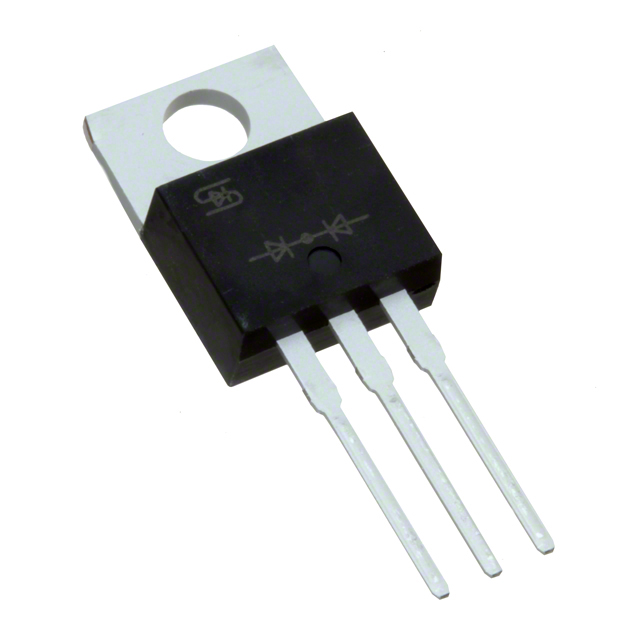
The Bourns Inc. BUT11-S is a Bipolar (BJT) Transistor, NPN-type, featuring a maximum collector-emitter breakdown voltage of 400 V, collector current of 5 A, and power dissipation of 100 W with a transition frequency of 12 MHz. The device is supplied in a TO-220-3 through-hole package. The part is currently classified as obsolete, making it necessary for engineers and procurement specialists to identify alternative models with comparable specifications and form factors to ensure continued maintenance and new design viability.
Substiute Parts
Key Parameters
| Parameter | Value |
|---|---|
| Transistor Type | NPN |
| Current - Collector (Ic) (Max) | 5 A |
| Voltage - Collector Emitter Breakdown (Max) | 400 V |
| Vce Saturation (Max) @ Ib, Ic | 1.5V @ 600mA, 3A |
| Current - Collector Cutoff (Max) | 50µA |
| DC Current Gain (hFE) (Min) @ Ic, Vce | 20 @ 500mA, 5V |
| Power - Max | 100 W |
| Frequency - Transition | 12 MHz |
| Operating Temperature | -65°C ~ 150°C (TJ) |
| Mounting Type | Through Hole |
| Package / Case | TO-220-3 |
| RoHS Status | ROHS3 Compliant |
| Moisture Sensitivity Level (MSL) | 1 (Unlimited) |
Substitute Part Grouping Explanation
Substitution logic for Bipolar (BJT) Transistors in this category is strictly governed by matching the following parameters: transistor type (NPN), collector-emitter breakdown voltage (Vce), collector current (Ic, max), TO-220-3 through-hole package compatibility, power dissipation capability, and compliance certifications such as RoHS and MSL. Only components matching these core criteria are listed as substitutes. No additional or inferred attributes are considered.
Parameter Comparison
| Part Number | Manufacturer | Transistor Type | Current - Collector (Ic) (Max) | Voltage - Collector Emitter Breakdown (Max) | Vce Saturation (Max) @ Ib, Ic | DC Current Gain (hFE) (Min) @ Ic, Vce | Power - Max | Frequency - Transition | Operating Temperature | Package / Case | RoHS Status | MSL |
|---|---|---|---|---|---|---|---|---|---|---|---|---|
| BUT11-S | Bourns Inc. | NPN | 5 A | 400 V | 1.5V @ 600mA, 3A | 20 @ 500mA, 5V | 100 W | 12MHz | -65°C ~ 150°C (TJ) | TO-220-3 | ROHS3 | 1 |
| BUL128D-B | STMicroelectronics | NPN | 4 A | 400 V | 500mV @ 1A, 4A | 12 @ 2A, 5V | 70 W | - | 150°C (TJ) | TO-220-3 | ROHS3 | 1 |
| BUL138 | STMicroelectronics | NPN | 5 A | 400 V | 700mV @ 1A, 5A | 8 @ 2A, 5V | 80 W | - | 150°C (TJ) | TO-220-3 | ROHS3 | 1 |
| BUL38D | STMicroelectronics | NPN | 5 A | 450 V | 1.1V @ 750mA, 3A | 10 @ 10mA, 5V | 80 W | - | 150°C (TJ) | TO-220-3 | ROHS3 | 1 |
| BUL49D | STMicroelectronics | NPN | 5 A | 450 V | 1.2V @ 800mA, 4A | 4 @ 7A, 10V | 80 W | - | 150°C (TJ) | TO-220-3 | ROHS3 | 1 |
| BUL742C | STMicroelectronics | NPN | 4 A | 400 V | 1.5V @ 1A, 3.5A | 25 @ 800mA, 3V | 70 W | - | 150°C (TJ) | TO-220-3 | ROHS3 | 1 |
| BUT11A | STMicroelectronics | NPN | 5 A | 450 V | 1.5V @ 500mA, 2.5A | 10 @ 500mA, 5V | 83 W | - | 150°C (TJ) | TO-220-3 | ROHS3 | 1 |
| FJP13009TU | onsemi | NPN | 12 A | 400 V | 3V @ 3A, 12A | 8 @ 5A, 5V | 100 W | 4MHz | 150°C (TJ) | TO-220-3 | ROHS3 | Not Applicable |
| FJP3305H1TU | Fairchild Semiconductor | NPN | 4 A | 400 V | 1V @ 1A, 4A | 8 @ 2A, 5V | 75 W | 4MHz | 150°C (TJ) | TO-220-3 | - | - |
| FJP5555TU | Fairchild Semiconductor | NPN | 5 A | 400 V | 1.5V @ 1A, 3.5A | 20 @ 800mA, 3V | 75 W | - | 150°C (TJ) | TO-220-3 | - | - |
| MJE13007G | onsemi | NPN | 8 A | 400 V | 3V @ 2A, 8A | 5 @ 5A, 5V | 80 W | 14MHz | -65°C ~ 150°C (TJ) | TO-220-3 | ROHS3 | Not Applicable |
| MJE15034G | onsemi | NPN | 4 A | 350 V | 500mV @ 100mA, 1A | 10 @ 2A, 5V | 2 W | 30MHz | -65°C ~ 150°C (TJ) | TO-220-3 | ROHS3 | Not Applicable |
| ST13007 | STMicroelectronics | NPN | 8 A | 400 V | 3V @ 2A, 8A | 5 @ 5A, 5V | 80 W | - | 150°C (TJ) | TO-220-3 | ROHS3 | 1 |
| STL128D | STMicroelectronics | NPN | 4 A | 400 V | 500mV @ 700mA, 3.5A | 10 @ 2A, 5V | 65 W | - | 150°C (TJ) | TO-220-3 | ROHS3 | 1 |
| TSC742CZ C0G | Taiwan Semiconductor Corporation | NPN | 5 A | 420 V | 1.5V @ 1A, 3.5A | 48 @ 100mA, 5V | 70 W | - | 150°C (TJ) | TO-220-3 | ROHS3 | 3 |
Engineering Selection Recommendations
Selection of substitute parts for BUT11-S should be based on product status (active vs. obsolete), compliance status (e.g., ROHS3 Compliant, MSL), and certification match. Only substitute parts with confirmed compliance and matching package type (TO-220-3, through-hole) align with strict engineering criteria for equivalence in form, fit, and function. Obsolete alternatives can be considered where inventory is available and compliance is verified.
Frequently Asked Questions (FAQ)
Q1: What are the critical parameters for substituting BUT11-S in a circuit?
A1: Substitution requires matching transistor type (NPN), collector-emitter breakdown voltage, maximum collector current, power rating, package/case (TO-220-3, through-hole), and compliance (ROHS and MSL).
Q2: Are all listed substitute parts in the same package as BUT11-S?
A2: Yes. Every substitute listed is in a TO-220-3 through-hole package, consistent with mechanical and mounting requirements.
Q3: How do compliance and MSL levels impact substitution?
A3: Parts must be ROHS compliant and have an unlimited or compatible MSL. This ensures environmental and assembly process compatibility.
Q4: Can an active part be preferred over an obsolete substitute?
A4: From a stock and ongoing availability perspective, active compliant parts are preferred, provided all technical and mechanical parameters match those of the original device.
Q5: Is it required to match the exact power and transition frequency rating?
A5: Substitute selection must be based on provided electrical parameters. Exact matches in power and frequency are preferred; deviations must be evaluated strictly on the supplied data fields.
Q6: What if the collector current or breakdown voltage is slightly higher or lower in a substitute?
A6: Only parameters provided in the comparison table are considered eligible for device substitution in this category. No extrapolated or inferred values are used for qualification.
Q7: Are there substitutes with lower DC Current Gain (hFE) than the main part?
A7: Yes. Substitute parts may have different minimum hFE values. Selection must observe the specific hFE as provided and compare to application circuit requirements strictly per supplied table data.
Q8: Do substitutes offer different saturation voltages or cutoff current limits?
A8: Substitute devices show variation in saturation voltage and cutoff current, as presented in the comparison table; selection should remain within the limits specified for the intended usage.
Alternative Parts

SJ6012L2TP
Littelfuse Inc.
6 Alternative Parts

JMK107BBJ476MA-RE
Taiyo Yuden
10 Alternative Parts

GMK107BBJ475MA-T
Taiyo Yuden
5 Alternative Parts
SJ6020N2ARP
Littelfuse Inc.
3 Alternative Parts
SJ6025R2ATP
Littelfuse Inc.
4 Alternative Parts

2474-05L
API Delevan Inc.
1 Alternative Parts

4590R-684K
API Delevan Inc.
1 Alternative Parts

CM6560R-334
API Delevan Inc.
1 Alternative Parts

CM6460-104
API Delevan Inc.
1 Alternative Parts

5526-12
API Delevan Inc.
1 Alternative Parts