


Request Quote
(Ships tomorrow)
BUF634P Equivalent & Substitute Parts
Part Overview
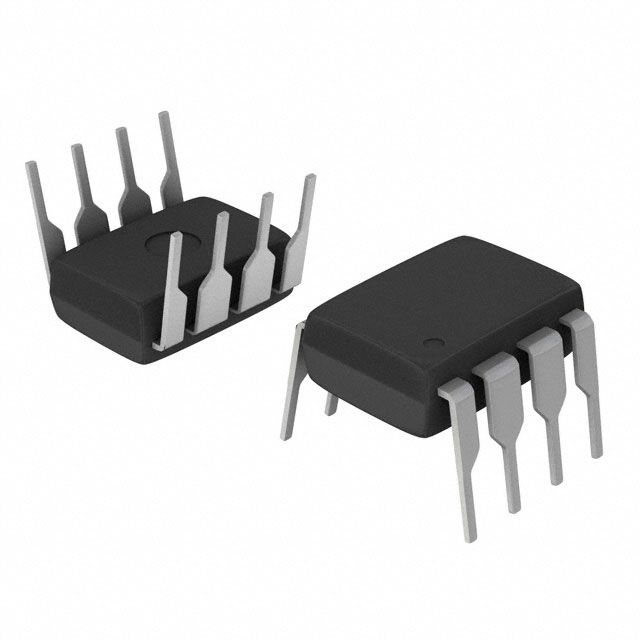
The BUF634P is a buffer amplifier integrated circuit manufactured by Texas Instruments, designed for high-speed signal conditioning applications. This device is classified as obsolete, which necessitates identification of equivalent substitute components for ongoing design requirements and production continuity. The BUF634P operates as a single-circuit buffer amplifier in an 8-DIP through-hole package, delivering 250 mA output current with a 2000 V/µs slew rate and 180 MHz bandwidth across a wide supply voltage range of 4.5 V to 36 V.
Substiute Parts
Key Parameters
| Parameter | Value | Unit |
|---|---|---|
| Amplifier Type | Buffer | — |
| Number of Circuits | 1 | — |
| Slew Rate | 2000 | V/µs |
| -3dB Bandwidth | 180 | MHz |
| Current - Input Bias | 5 | µA |
| Voltage - Input Offset | 30 | mV |
| Current - Supply | 15 | mA |
| Current - Output / Channel | 250 | mA |
| Voltage - Supply Span (Min) | 4.5 | V |
| Voltage - Supply Span (Max) | 36 | V |
| Operating Temperature | -40 to 85 | °C |
| Mounting Type | Through Hole | — |
| Package / Case | 8-DIP (0.300", 7.62mm) | — |
| RoHS Status | ROHS3 Compliant | — |
| Moisture Sensitivity Level | 1 (Unlimited) | — |
Substitute Part Grouping Explanation
Substitution of the BUF634P is determined by equivalence across the following critical parameters:
Functional Equivalence Criteria:
- Single-circuit amplifier configuration
- Output current capability of 250 mA per channel
- Supply voltage range compatibility (4.5 V to 36 V minimum and maximum)
- Operating temperature range coverage
Performance Equivalence Criteria:
- Slew rate and bandwidth characteristics sufficient for the application
- Input bias current and input offset voltage within acceptable tolerances
- Supply current consumption
Compliance and Manufacturing Status:
- RoHS3 compliance maintained
- Active product status preferred for long-term availability
The BUF634AIDR qualifies as a manufacturer-recommended substitute based on these parameters, despite differences in package type and certain performance specifications.
Parameter Comparison
| Parameter | BUF634P (Main Part) | BUF634AIDR (Substitute) | Unit |
|---|---|---|---|
| Manufacturer | Texas Instruments | Texas Instruments | — |
| Base Product Number | BUF634 | BUF634 | — |
| Amplifier Type | Buffer | General Purpose | — |
| Number of Circuits | 1 | 1 | — |
| Output Type | — | Push-Pull | — |
| Slew Rate | 2000 | 3750 | V/µs |
| -3dB Bandwidth | 180 | 210 | MHz |
| Current - Input Bias | 5 | 30 | nA |
| Voltage - Input Offset | 30 | 36 | mV |
| Current - Supply | 15 | 8.5 | mA |
| Current - Output / Channel | 250 | 250 | mA |
| Voltage - Supply Span (Min) | 4.5 | 4.5 | V |
| Voltage - Supply Span (Max) | 36 | 36 | V |
| Operating Temperature | -40 to 85 | -40 to 125 | °C |
| Mounting Type | Through Hole | Surface Mount | — |
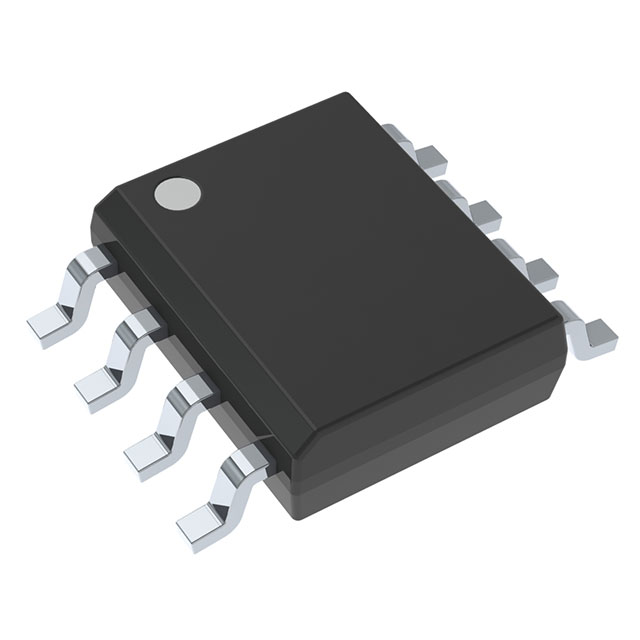
| Package / Case | 8-DIP (0.300", 7.62mm) | 8-SOIC (0.154", 3.90mm) | — |
| Product Status | Obsolete | Active | — |
| RoHS Status | ROHS3 Compliant | ROHS3 Compliant | — |
| Moisture Sensitivity Level | 1 (Unlimited) | 2 (1 Year) | — |
Engineering Selection Recommendations
Substitution Feasibility:
The BUF634AIDR is the manufacturer-recommended substitute for the BUF634P. Both devices share the same base product number (BUF634) and are manufactured by Texas Instruments. The substitute maintains electrical compatibility across critical parameters: identical output current (250 mA), matching supply voltage range (4.5 V to 36 V), and RoHS3 compliance.
Key Considerations:
-
Product Status: The BUF634P is obsolete, while the BUF634AIDR is active. The active status of the substitute ensures continued availability and manufacturing support.
-
Package Transition: The primary difference is the package format. The BUF634P uses through-hole 8-DIP packaging, while the BUF634AIDR uses surface-mount 8-SOIC packaging. This transition requires PCB redesign and assembly process modification.
-
Performance Enhancement: The BUF634AIDR provides superior performance specifications: higher slew rate (3750 V/µs versus 2000 V/µs), increased bandwidth (210 MHz versus 180 MHz), and lower supply current (8.5 mA versus 15 mA).
-
Operating Temperature Range: The BUF634AIDR extends the maximum operating temperature to 125°C, compared to 85°C for the BUF634P, providing broader thermal operating capability.
-
Compliance Status: Both devices maintain ROHS3 compliance and REACH unaffected status, ensuring regulatory alignment.
Frequently Asked Questions (FAQ)
Q: Can the BUF634AIDR directly replace the BUF634P without circuit modifications?
A: Electrical substitution is feasible due to matching output current, supply voltage range, and functional characteristics. However, package format differs (8-SOIC surface-mount versus 8-DIP through-hole), requiring PCB layout and assembly process changes.
Q: What are the performance differences between these parts?
A: The BUF634AIDR provides enhanced performance: slew rate increases from 2000 V/µs to 3750 V/µs, bandwidth increases from 180 MHz to 210 MHz, and supply current decreases from 15 mA to 8.5 mA. Operating temperature range extends from -40°C to 125°C (versus -40°C to 85°C).
Q: Are there any compliance or certification differences?
A: Both devices maintain ROHS3 compliance and REACH unaffected status. The BUF634AIDR has a higher moisture sensitivity level (MSL 2, 1 Year) compared to the BUF634P (MSL 1, Unlimited), requiring different storage and handling protocols.
Q: Why is the BUF634P obsolete?
A: The BUF634P is obsolete due to product lifecycle management. The BUF634AIDR represents the current active product offering from Texas Instruments for this functional category.
Q: What is the impact of switching from through-hole to surface-mount packaging?
A: Surface-mount packaging (8-SOIC) requires automated assembly equipment and different PCB design considerations compared to through-hole (8-DIP). This transition affects manufacturing processes, tooling, and board layout but provides improved space efficiency and performance characteristics.
Q: Are input bias current and input offset voltage differences significant?
A: The BUF634AIDR shows higher input bias current (30 nA versus 5 µA) and slightly higher input offset voltage (36 mV versus 30 mV). These differences are within typical operational tolerances for buffer amplifier applications but should be evaluated for precision signal conditioning circuits.
Alternative Parts

SJ6012L2TP
Littelfuse Inc.
6 Alternative Parts

JMK107BBJ476MA-RE
Taiyo Yuden
10 Alternative Parts

GMK107BBJ475MA-T
Taiyo Yuden
5 Alternative Parts
SJ6020N2ARP
Littelfuse Inc.
3 Alternative Parts
SJ6025R2ATP
Littelfuse Inc.
4 Alternative Parts

2474-05L
API Delevan Inc.
1 Alternative Parts

4590R-684K
API Delevan Inc.
1 Alternative Parts

CM6560R-334
API Delevan Inc.
1 Alternative Parts

CM6460-104
API Delevan Inc.
1 Alternative Parts

5526-12
API Delevan Inc.
1 Alternative Parts