


Request Quote
(Ships tomorrow)
BUD42D Equivalent & Substitute Parts
Part Overview
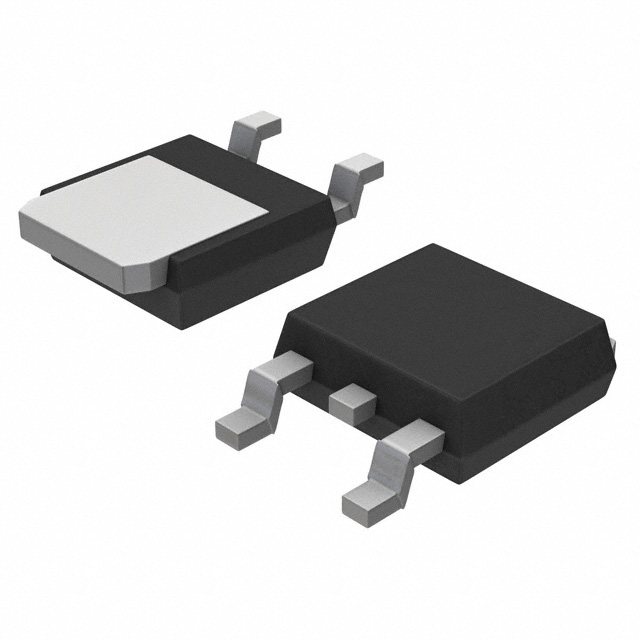
The BUD42D is an NPN bipolar junction transistor manufactured by onsemi, rated for 350 V collector-emitter breakdown voltage and 4 A maximum collector current in a surface mount DPAK package. This device is classified as obsolete, making identification of functionally equivalent alternatives necessary for ongoing design support and production continuity. The BUD42D delivers 25 W maximum power dissipation and operates across a temperature range of -65°C to 150°C.
Substiute Parts
Key Parameters
| Parameter | Value |
|---|---|
| Transistor Type | NPN |
| Voltage - Collector Emitter Breakdown (Max) | 350 V |
| Current - Collector (Ic) (Max) | 4 A |
| Power - Max | 25 W |
| Vce Saturation (Max) @ Ib, Ic | 1 V @ 500 mA, 2 A |
| DC Current Gain (hFE) (Min) @ Ic, Vce | 10 @ 2 A, 5 V |
| Current - Collector Cutoff (Max) | 100 µA |
| Operating Temperature | -65°C to 150°C (TJ) |
| Mounting Type | Surface Mount |
| Package / Case | TO-252-3, DPAK (2 Leads + Tab), SC-63 |
| Moisture Sensitivity Level (MSL) | 1 (Unlimited) |
| Product Status | Obsolete |
Substitute Part Grouping Explanation
Substitution of the BUD42D is determined by electrical and mechanical compatibility across the following critical parameters:
Electrical Compatibility Criteria:
- Transistor type must be NPN
- Collector-emitter breakdown voltage must equal or exceed 350 V
- Maximum collector current must equal or exceed 4 A
- Vce saturation characteristics must support the same switching performance
- DC current gain (hFE) must be comparable at rated operating points
- Collector cutoff current must remain within acceptable limits
Mechanical Compatibility Criteria:
- Package type must be TO-252-3 DPAK (2 Leads + Tab), SC-63
- Surface mount configuration required
- Moisture sensitivity level MSL 1 or better
The BUJD103AD,118 meets all electrical and mechanical substitution criteria for the BUD42D, with enhanced voltage rating (400 V) and power dissipation (80 W), providing design margin for legacy applications.
Parameter Comparison
| Parameter | BUD42D (Main Part) | BUJD103AD,118 (Substitute) |
|---|---|---|
| Manufacturer | onsemi | WeEn Semiconductors |
| Transistor Type | NPN | NPN |
| Voltage - Collector Emitter Breakdown (Max) | 350 V | 400 V |
| Current - Collector (Ic) (Max) | 4 A | 4 A |
| Power - Max | 25 W | 80 W |
| Vce Saturation (Max) @ Ib, Ic | 1 V @ 500 mA, 2 A | 1 V @ 1 A, 4 A |
| Current - Collector Cutoff (Max) | 100 µA | 100 µA |
| DC Current Gain (hFE) (Min) @ Ic, Vce | 10 @ 2 A, 5 V | 11 @ 2 A, 5 V |
| Operating Temperature (Max) | 150°C (TJ) | 150°C (TJ) |
| Mounting Type | Surface Mount | Surface Mount |
| Package / Case | TO-252-3, DPAK (2 Leads + Tab), SC-63 | TO-252-3, DPAK (2 Leads + Tab), SC-63 |
| Moisture Sensitivity Level (MSL) | 1 (Unlimited) | 1 (Unlimited) |
| Product Status | Obsolete | Active |
| RoHS Status | RoHS non-compliant | RoHS Compliant |
Engineering Selection Recommendations
The BUJD103AD,118 is a direct functional substitute for the BUD42D based on the following engineering criteria:
Electrical Equivalence: The BUJD103AD,118 maintains identical maximum collector current (4 A) and comparable DC current gain characteristics. The 50 V higher breakdown voltage (400 V vs. 350 V) provides additional design margin without introducing incompatibility. Vce saturation performance is equivalent across the specified operating points.
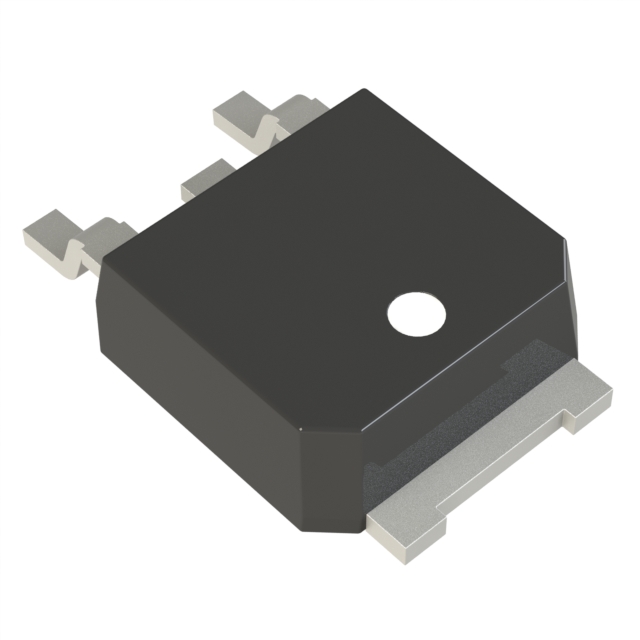
Mechanical Compatibility: Both devices utilize identical TO-252-3 DPAK packaging with the same pin configuration and thermal characteristics, enabling direct footprint substitution on printed circuit boards.
Product Status and Compliance: The BUJD103AD,118 carries active product status, ensuring long-term availability and supply chain continuity. The device is RoHS compliant, meeting current environmental and regulatory requirements, whereas the BUD42D is RoHS non-compliant. Both devices maintain MSL 1 moisture sensitivity classification.
Power Dissipation: The BUJD103AD,118 offers 80 W maximum power dissipation compared to the BUD42D's 25 W rating, providing thermal headroom for applications operating near power limits.
Frequently Asked Questions (FAQ)
Q: Can the BUJD103AD,118 replace the BUD42D in existing designs without circuit modification?
A: Yes. The BUJD103AD,118 is electrically and mechanically compatible with the BUD42D. Identical collector current rating (4 A), comparable DC current gain, and matching DPAK package enable direct substitution. The higher breakdown voltage (400 V) and power rating (80 W) provide design margin without requiring circuit changes.
Q: What is the significance of the 50 V difference in breakdown voltage between these devices?
A: The BUJD103AD,118 operates at 400 V maximum collector-emitter breakdown voltage compared to the BUD42D's 350 V. This 50 V margin increases the device's tolerance to voltage transients and overstress conditions, enhancing circuit reliability without affecting normal operation.
Q: Are the DPAK packages identical between the BUD42D and BUJD103AD,118?
A: Yes. Both devices use the TO-252-3 DPAK (2 Leads + Tab), SC-63 package. Pin configuration, footprint dimensions, and thermal tab characteristics are identical, permitting direct PCB substitution.
Q: What is the impact of the BUD42D's obsolete status?
A: The BUD42D is classified as obsolete, indicating discontinued manufacturing and limited availability. The BUJD103AD,118, with active product status, ensures ongoing supply and manufacturing support for new production runs and design revisions.
Q: Does the BUJD103AD,118's RoHS compliance affect substitution suitability?
A: The BUJD103AD,118 is RoHS compliant, whereas the BUD42D is RoHS non-compliant. For applications subject to RoHS regulations or customer requirements, the BUJD103AD,118 provides regulatory alignment. For legacy systems without RoHS mandates, both devices remain functionally equivalent.
Q: How do the Vce saturation characteristics compare?
A: The BUD42D specifies 1 V saturation at 500 mA base current and 2 A collector current. The BUJD103AD,118 specifies 1 V saturation at 1 A base current and 4 A collector current. Both maintain equivalent saturation voltage, ensuring comparable switching performance in saturated switching applications.
Alternative Parts

SJ6012L2TP
Littelfuse Inc.
6 Alternative Parts

JMK107BBJ476MA-RE
Taiyo Yuden
10 Alternative Parts

GMK107BBJ475MA-T
Taiyo Yuden
5 Alternative Parts
SJ6020N2ARP
Littelfuse Inc.
3 Alternative Parts
SJ6025R2ATP
Littelfuse Inc.
4 Alternative Parts

2474-05L
API Delevan Inc.
1 Alternative Parts

4590R-684K
API Delevan Inc.
1 Alternative Parts

CM6560R-334
API Delevan Inc.
1 Alternative Parts

CM6460-104
API Delevan Inc.
1 Alternative Parts

5526-12
API Delevan Inc.
1 Alternative Parts