


Request Quote
(Ships tomorrow)
BTM421 Bluetooth Transceiver Module - Equivalent & Substitute Parts
Part Overview
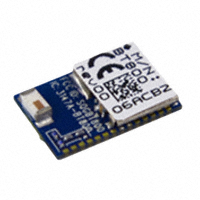
The BTM421 is a Bluetooth v2.1 +EDR transceiver module manufactured by Laird Connectivity Inc., designed for 2.4GHz RF applications requiring integrated chip-level antenna solutions. This module operates as a surface-mount component with HCI and USB serial interfaces. The BTM421 is classified as obsolete, necessitating identification of functionally compatible alternatives for ongoing design support and production continuity.
Substiute Parts
Key Parameters
| Parameter | BTM421 |
|---|---|
| Manufacturer | Laird Connectivity Inc. |
| RF Family/Standard | Bluetooth |
| Protocol Version | Bluetooth v2.1 +EDR |
| Frequency | 2.4GHz |
| Data Rate | 2.1Mbps |
| Power Output | 4dBm |
| Sensitivity | -84dBm |
| Serial Interfaces | HCI, USB |
| Antenna Type | Integrated, Chip |
| Voltage Supply | 3V ~ 3.3V |
| Current - Receiving | 40mA |
| Current - Transmitting | 40mA |
| Mounting Type | Surface Mount |
| Operating Temperature | -30°C ~ 85°C |
| Package Type | Module |
| Moisture Sensitivity Level | 3 (168 Hours) |
| Product Status | Obsolete |
| REACH Status | REACH Unaffected |
Substitute Part Grouping Explanation
Substitution of the BTM421 is determined by the following critical parameters:
Mandatory Compatibility Criteria:
- RF Family/Standard: Bluetooth (same family required)
- Frequency: 2.4GHz (identical frequency band)
- Mounting Type: Surface Mount (same assembly method)
- Package Type: Module (same form factor category)
- Antenna Type: Integrated, Chip (same antenna configuration)
Functional Compatibility Parameters:
- Serial Interfaces: Must support USB or HCI for host communication
- Operating Temperature Range: Must encompass or exceed -30°C ~ 85°C
- Moisture Sensitivity Level: Must be rated 3 or lower
Electrical Compatibility Considerations:
- Voltage Supply Range: Substitute must operate within or be compatible with 3V ~ 3.3V supply
- Current Consumption: Receiving and transmitting current must be evaluated for power budget compatibility
- Power Output and Sensitivity: Performance parameters that may differ while maintaining functional operation
The BT800 meets all mandatory compatibility criteria and is classified as an active product, making it a valid substitute for the obsolete BTM421.
Parameter Comparison
| Parameter | BTM421 | BT800 | Compatibility Notes |
|---|---|---|---|
| Manufacturer | Laird Connectivity Inc. | Laird Connectivity Inc. | Same manufacturer |
| RF Family/Standard | Bluetooth | Bluetooth | Identical |
| Protocol Version | Bluetooth v2.1 +EDR | Bluetooth v4.0 | BT800 is newer generation; backward compatible |
| Frequency | 2.4GHz | 2.4GHz | Identical |
| Data Rate | 2.1Mbps | 3Mbps | BT800 offers higher data rate |
| Power Output | 4dBm | 8dBm | BT800 provides higher output power |
| Sensitivity | -84dBm | -89dBm | BT800 has improved sensitivity |
| Serial Interfaces | HCI, USB | USB | BT800 supports USB; HCI support requires verification |
| Antenna Type | Integrated, Chip | Integrated, Chip | Identical |
| Voltage Supply | 3V ~ 3.3V | 1.7V ~ 3.6V | BT800 range encompasses BTM421 range |
| Current - Receiving | 40mA | 80mA | BT800 requires higher current |
| Current - Transmitting | 40mA | 80mA | BT800 requires higher current |
| Mounting Type | Surface Mount | Surface Mount | Identical |
| Operating Temperature | -30°C ~ 85°C | -30°C ~ 85°C | Identical |
| Package Type | Module | Module | Identical |
| Moisture Sensitivity Level | 3 (168 Hours) | 3 (168 Hours) | Identical |
| Product Status | Obsolete | Active | BT800 is in active production |
| RoHS Status | Not specified | RoHS Compliant | BT800 meets RoHS requirements |
| REACH Status | REACH Unaffected | REACH Unaffected | Identical |
Engineering Selection Recommendations
Primary Substitute: BT800
The BT800 is the designated substitute for the obsolete BTM421 based on the following engineering criteria:
Product Status Alignment: The BTM421 is classified as obsolete, creating supply chain risk. The BT800 is an active product with confirmed inventory availability (1658 Pcs), ensuring long-term procurement viability.
Compliance and Certification: Both modules share identical REACH status (REACH Unaffected) and identical Moisture Sensitivity Level (MSL 3, 168 Hours). The BT800 carries RoHS Compliance certification, meeting modern regulatory requirements. Both modules are assigned identical ECCN and HTSUS classifications, confirming regulatory equivalence.
Electrical and Functional Compatibility: The BT800 operates within an expanded voltage supply range (1.7V ~ 3.6V) that fully encompasses the BTM421 requirement (3V ~ 3.3V). Both modules feature identical mounting type (Surface Mount), package type (Module), antenna configuration (Integrated, Chip), and operating temperature range (-30°C ~ 85°C).
Performance Characteristics: The BT800 implements Bluetooth v4.0 protocol, representing a generational advancement from the BTM421's Bluetooth v2.1 +EDR. This upgrade provides improved data rate (3Mbps vs. 2.1Mbps), higher power output (8dBm vs. 4dBm), and superior sensitivity (-89dBm vs. -84dBm).
Design Considerations: Current consumption increases in the BT800 (80mA receiving/transmitting vs. 40mA for BTM421). Power supply design must accommodate this increased demand. Serial interface support includes USB; HCI interface compatibility requires confirmation with the BT800 datasheet prior to final design integration.
Frequently Asked Questions (FAQ)
Q: Can the BT800 directly replace the BTM421 without design modifications?
A: The BT800 is electrically and mechanically compatible with the BTM421 in terms of mounting type, package form factor, frequency band, and operating temperature range. However, the increased current consumption (80mA vs. 40mA) requires power supply design review. Serial interface compatibility must be confirmed, as the BT800 supports USB while HCI support requires datasheet verification.
Q: What are the key differences between BTM421 and BT800?
A: The primary differences are: (1) Protocol version—BT800 implements Bluetooth v4.0 versus BTM421's Bluetooth v2.1 +EDR; (2) Current consumption—BT800 requires double the current; (3) Performance—BT800 offers higher data rate, power output, and sensitivity; (4) Product status—BT800 is active while BTM421 is obsolete; (5) Compliance—BT800 is RoHS Compliant.
Q: Are there packaging differences between these modules?
A: Both modules are classified as Module package type with Surface Mount mounting. The BTM421 packaging is listed as "-" (unspecified), while the BT800 is supplied in Tray packaging. Both share identical Moisture Sensitivity Level (MSL 3, 168 Hours), indicating equivalent handling requirements.
Q: What voltage supply range is required for substitution?
A: The BTM421 operates at 3V ~ 3.3V. The BT800 operates at 1.7V ~ 3.6V, which fully encompasses the BTM421 range. Designs currently supplying 3V ~ 3.3V to the BTM421 can supply the same voltage to the BT800 without modification.
Q: How does the increased current consumption of the BT800 affect system design?
A: The BT800 requires 80mA during receiving and transmitting operations, compared to 40mA for the BTM421. Power supply capacity must be increased accordingly. Total system current budget must be recalculated to ensure adequate power delivery and thermal management.
Q: Are both modules compliant with REACH and RoHS regulations?
A: Both modules share REACH Unaffected status. The BT800 is RoHS Compliant, while the BTM421 RoHS status is not specified in the provided data. For applications requiring RoHS compliance, the BT800 is the appropriate selection.
Q: What is the significance of the Bluetooth protocol version difference?
A: The BT800 implements Bluetooth v4.0, a newer standard than the BTM421's Bluetooth v2.1 +EDR. Bluetooth v4.0 provides improved power efficiency, extended range capability, and enhanced data throughput. Existing Bluetooth v2.1 +EDR host devices remain compatible with Bluetooth v4.0 modules through backward compatibility mechanisms.
Q: Are there any serial interface compatibility concerns?
A: The BTM421 supports both HCI and USB interfaces. The BT800 supports USB. If the application design requires HCI interface specifically, compatibility must be confirmed with the BT800 technical documentation before substitution.
Alternative Parts

SJ6012L2TP
Littelfuse Inc.
6 Alternative Parts

JMK107BBJ476MA-RE
Taiyo Yuden
10 Alternative Parts

GMK107BBJ475MA-T
Taiyo Yuden
5 Alternative Parts
SJ6020N2ARP
Littelfuse Inc.
3 Alternative Parts
SJ6025R2ATP
Littelfuse Inc.
4 Alternative Parts

2474-05L
API Delevan Inc.
1 Alternative Parts

4590R-684K
API Delevan Inc.
1 Alternative Parts

CM6560R-334
API Delevan Inc.
1 Alternative Parts

CM6460-104
API Delevan Inc.
1 Alternative Parts

5526-12
API Delevan Inc.
1 Alternative Parts