


Request Quote
(Ships tomorrow)
BQ2002EPN Equivalent & Substitute Parts
Part Overview
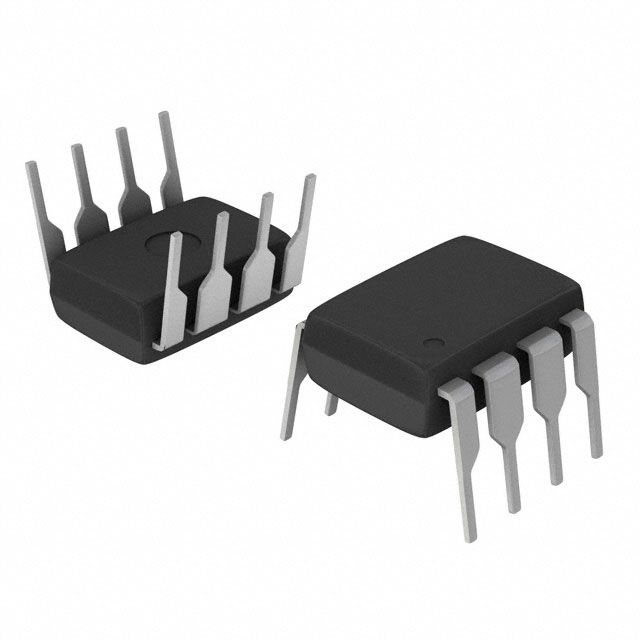
The BQ2002EPN is a multi-chemistry battery charger IC manufactured by Texas Instruments, housed in an 8-DIP through-hole package. This component functions as a battery control and charging management solution supporting constant and pulsed charging modes with programmable voltage features. The BQ2002EPN is classified as obsolete, making identification of equivalent substitute parts essential for ongoing system maintenance, repair, and component sourcing in legacy applications.
Substiute Parts
Key Parameters
| Parameter | Value |
|---|---|
| Manufacturer Part Number | BQ2002EPN |
| Manufacturer | Texas Instruments |
| Category | Power Management (PMIC) |
| Description | IC BATT CONTRL MULTI-CHEM 8DIP |
| Battery Chemistry Support | Multi-Chemistry |
| Charging Current Mode | Constant, Pulsed |
| Programmable Features | Voltage |
| Battery Pack Voltage | 2V |
| Supply Voltage (Max) | 6V |
| Operating Temperature Range | 0°C ~ 70°C (TA) |
| Mounting Type | Through Hole |
| Package / Case | 8-DIP (0.300", 7.62mm) |
| Supplier Device Package | 8-PDIP |
| Product Status | Obsolete |
| RoHS Status | ROHS3 Compliant |
| Moisture Sensitivity Level (MSL) | 1 (Unlimited) |
| REACH Status | REACH Unaffected |
Substitute Part Grouping Explanation
Substitute parts for the BQ2002EPN are identified based on strict parametric equivalence across the following critical criteria:
Electrical Parameters:
- Battery chemistry support (Multi-Chemistry)
- Charging current modes (Constant, Pulsed)
- Programmable voltage features
- Battery pack voltage rating (2V)
- Maximum supply voltage (6V)
- Operating temperature range (0°C ~ 70°C)
Mechanical & Package Parameters:
- Mounting type (Through Hole)
- Package designation (8-DIP, 0.300", 7.62mm)
- Supplier device package (8-PDIP)
Compliance & Environmental Parameters:
- RoHS3 compliance
- Moisture sensitivity level (MSL 1)
- REACH status (Unaffected)
The BQ2002GPN qualifies as a parametric equivalent substitute, matching all electrical, mechanical, and compliance specifications. The primary distinction is packaging format (Tube vs. standard packaging), which does not affect functional compatibility or electrical performance.
Parameter Comparison
| Parameter | BQ2002EPN | BQ2002GPN | Match Status |
|---|---|---|---|
| Manufacturer | Texas Instruments | Texas Instruments | Identical |
| Category | Power Management (PMIC) | Power Management (PMIC) | Identical |
| Battery Chemistry | Multi-Chemistry | Multi-Chemistry | Identical |
| Charging Current Mode | Constant, Pulsed | Constant, Pulsed | Identical |
| Programmable Features | Voltage | Voltage | Identical |
| Battery Pack Voltage | 2V | 2V | Identical |
| Supply Voltage (Max) | 6V | 6V | Identical |
| Operating Temperature | 0°C ~ 70°C (TA) | 0°C ~ 70°C (TA) | Identical |
| Mounting Type | Through Hole | Through Hole | Identical |
| Package / Case | 8-DIP (0.300", 7.62mm) | 8-DIP (0.300", 7.62mm) | Identical |
| Supplier Device Package | 8-PDIP | 8-PDIP | Identical |
| Product Status | Obsolete | Obsolete | Identical |
| RoHS Status | ROHS3 Compliant | ROHS3 Compliant | Identical |
| MSL | 1 (Unlimited) | 1 (Unlimited) | Identical |
| REACH Status | REACH Unaffected | REACH Unaffected | Identical |
Engineering Selection Recommendations
The BQ2002GPN is a direct parametric equivalent to the BQ2002EPN. Both components share identical electrical specifications, package dimensions, and compliance certifications. Selection between these parts should be based on:
Availability & Inventory: The BQ2002EPN maintains 1136 pieces in stock, while the BQ2002GPN has 1093 pieces available. Both are classified as new original stock.
Packaging Format: The BQ2002EPN is supplied in standard packaging, while the BQ2002GPN is supplied in tube packaging. This distinction affects handling and storage but does not impact electrical performance or circuit compatibility.
Compliance Assurance: Both parts maintain ROHS3 compliance, REACH unaffected status, and MSL 1 rating, confirming suitability for applications requiring environmental and regulatory compliance.
Obsolescence Consideration: Both components are classified as obsolete. For new designs or long-term production requirements, evaluation of current-generation battery management ICs from Texas Instruments is recommended to ensure sustained component availability.
Frequently Asked Questions (FAQ)
Q: Can the BQ2002GPN be used as a direct replacement for the BQ2002EPN in existing circuit designs?
A: Yes. The BQ2002GPN is a parametric equivalent with identical electrical specifications, pin configuration, package dimensions (8-DIP, 0.300", 7.62mm), and functional capabilities. No circuit modifications are required for substitution.
Q: What is the difference between the BQ2002EPN and BQ2002GPN?
A: The primary difference is packaging format. The BQ2002EPN uses standard packaging, while the BQ2002GPN is supplied in tube packaging. All electrical, mechanical, and compliance parameters are identical.
Q: Are both parts suitable for multi-chemistry battery applications?
A: Yes. Both the BQ2002EPN and BQ2002GPN support multi-chemistry battery charging with constant and pulsed current modes, programmable voltage features, and a 2V battery pack voltage rating.
Q: What is the operating temperature range for these components?
A: Both parts operate within the range of 0°C to 70°C (TA), making them suitable for standard industrial and consumer applications within this thermal envelope.
Q: Do these parts meet current environmental compliance standards?
A: Both the BQ2002EPN and BQ2002GPN are ROHS3 compliant and REACH unaffected, confirming compliance with current environmental regulations. MSL 1 rating indicates unlimited moisture sensitivity protection.
Q: Why are both parts classified as obsolete?
A: Obsolete status indicates these components are no longer in active production by Texas Instruments. For applications requiring sustained component availability or new designs, current-generation battery management solutions should be evaluated.
Q: Can these parts be used interchangeably in production environments?
A: Yes, from an electrical and functional standpoint. However, packaging format differences (standard vs. tube) may affect handling procedures, storage requirements, and automated assembly processes. Verify compatibility with your specific production equipment and procedures.
Alternative Parts

SJ6012L2TP
Littelfuse Inc.
6 Alternative Parts

JMK107BBJ476MA-RE
Taiyo Yuden
10 Alternative Parts

GMK107BBJ475MA-T
Taiyo Yuden
5 Alternative Parts
SJ6020N2ARP
Littelfuse Inc.
3 Alternative Parts
SJ6025R2ATP
Littelfuse Inc.
4 Alternative Parts

2474-05L
API Delevan Inc.
1 Alternative Parts

4590R-684K
API Delevan Inc.
1 Alternative Parts

CM6560R-334
API Delevan Inc.
1 Alternative Parts

CM6460-104
API Delevan Inc.
1 Alternative Parts

5526-12
API Delevan Inc.
1 Alternative Parts