



Request Quote
(Ships tomorrow)
BPV11 Equivalent & Substitute Parts
Part Overview
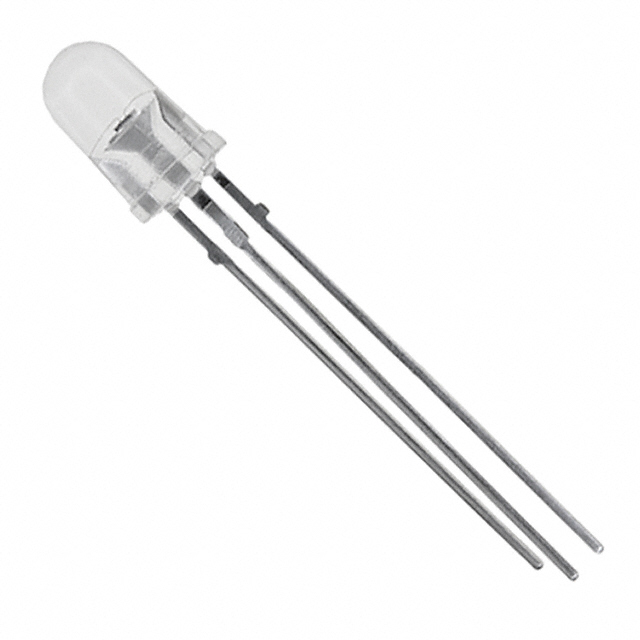
The BPV11 is an active phototransistor manufactured by Vishay Semiconductor Opto Division, designed for optical sensing applications across the 450 to 1080 nm wavelength range with peak sensitivity at 850 nm. This component operates in through-hole radial configuration with a 5mm diameter package (T 1 3/4 form factor). The BPV11 maintains active product status with 1007 units in current inventory. Substitute parts are identified when design requirements permit wavelength variation, thermal operating range adjustment, or electrical parameter tolerance shifts within the optical sensor category while maintaining package compatibility and through-hole mounting configuration.
Substiute Parts
Key Parameters
| Parameter | Value | Unit |
|---|---|---|
| Manufacturer | Vishay Semiconductor Opto Division | — |
| Part Number | BPV11 | — |
| Category | Optical Sensors | — |
| Wavelength | 850 | nm |
| Voltage - Collector Emitter Breakdown (Max) | 70 | V |
| Current - Collector (Ic) (Max) | 10 | mA |
| Current - Dark (Id) (Max) | 50 | nA |
| Power - Max | 150 | mW |
| Operating Temperature Range | -40 to 100 | °C |
| Package / Case | Radial, 5mm Dia (T 1 3/4) | — |
| Mounting Type | Through Hole | — |
| RoHS Status | ROHS3 Compliant | — |
| Product Status | Active | — |
Substitute Part Grouping Explanation
Substitution eligibility for the BPV11 is determined by the following criteria:
- Package compatibility: Radial, 5mm diameter (T 1 3/4) form factor
- Mounting configuration: Through-hole orientation
- Component category: Optical sensors (phototransistor type)
- Wavelength range: Near-infrared spectrum (850 nm to 940 nm acceptable for applications not requiring strict 850 nm specificity)
- Electrical parameter tolerance: Collector-emitter breakdown voltage, maximum collector current, and dark current within acceptable operational margins
- Compliance status: ROHS3 compliance and active product status
The PT333-3C from Everlight Electronics Co Ltd qualifies as a substitute based on identical package geometry, through-hole mounting, and optical sensor category. Wavelength shifts from 850 nm to 940 nm and electrical parameter variations are permissible when application requirements do not mandate strict spectral matching or specific thermal operating boundaries.
Parameter Comparison
| Parameter | BPV11 (Vishay) | PT333-3C (Everlight) | Unit |
|---|---|---|---|
| Wavelength | 850 | 940 | nm |
| Voltage - Collector Emitter Breakdown (Max) | 70 | 30 | V |
| Current - Collector (Ic) (Max) | 10 | 20 | mA |
| Current - Dark (Id) (Max) | 50 | 100 | nA |
| Power - Max | 150 | — | mW |
| Operating Temperature Range | -40 to 100 | -25 to 85 | °C |
| Package / Case | Radial, 5mm Dia (T 1 3/4) | Radial, 5mm Dia (T 1 3/4) | — |
| Mounting Type | Through Hole | Through Hole | — |
| RoHS Status | ROHS3 Compliant | ROHS3 Compliant | — |
| Product Status | Active | Active | — |
Engineering Selection Recommendations
Both the BPV11 and PT333-3C maintain active product status with ROHS3 compliance and REACH unaffected classification. Selection between these components depends on application-specific requirements:
The BPV11 is specified when designs require 850 nm wavelength sensitivity, extended operating temperature range (-40°C to 100°C), higher collector-emitter breakdown voltage (70 V), or lower dark current characteristics (50 nA maximum).
The PT333-3C is applicable when 940 nm wavelength sensitivity is acceptable, operating temperature range of -25°C to 85°C is sufficient, higher collector current capacity (20 mA maximum) is beneficial, or lower component cost is a priority. Both components share identical package geometry and through-hole mounting configuration, enabling direct mechanical substitution in PCB layouts.
Frequently Asked Questions (FAQ)
Q: Can PT333-3C replace BPV11 in all applications?
A: PT333-3C is mechanically and electrically compatible for applications where 940 nm wavelength sensitivity is acceptable instead of 850 nm, operating temperature does not exceed 85°C, and collector-emitter voltage stress remains below 30 V. Applications requiring strict 850 nm spectral matching or extended low-temperature operation (-40°C) require the BPV11.
Q: What are the package compatibility considerations?
A: Both components use identical Radial, 5mm diameter (T 1 3/4) through-hole packages. PCB footprints, lead spacing, and mounting hole dimensions are equivalent, permitting direct mechanical substitution without layout modification.
Q: How do wavelength differences affect optical sensing performance?
A: The BPV11 operates at 850 nm while PT333-3C operates at 940 nm. Wavelength selection depends on the light source spectral output and optical filter characteristics in the application. Applications using 850 nm LEDs or lasers require the BPV11; applications using 940 nm sources or broadband infrared require PT333-3C.
Q: What electrical parameter differences should be considered?
A: The BPV11 provides higher collector-emitter breakdown voltage (70 V vs. 30 V) and lower dark current (50 nA vs. 100 nA). PT333-3C offers higher maximum collector current (20 mA vs. 10 mA). Circuit design must accommodate these differences in voltage headroom, bias current, and signal-to-noise ratio.
Q: Are both components suitable for industrial temperature ranges?
A: The BPV11 supports -40°C to 100°C operation, suitable for extended industrial and automotive applications. PT333-3C supports -25°C to 85°C, suitable for standard commercial and light industrial applications. Temperature range selection depends on end-use environment specifications.
Alternative Parts

SJ6012L2TP
Littelfuse Inc.
6 Alternative Parts

JMK107BBJ476MA-RE
Taiyo Yuden
10 Alternative Parts

GMK107BBJ475MA-T
Taiyo Yuden
5 Alternative Parts
SJ6020N2ARP
Littelfuse Inc.
3 Alternative Parts
SJ6025R2ATP
Littelfuse Inc.
4 Alternative Parts

2474-05L
API Delevan Inc.
1 Alternative Parts

4590R-684K
API Delevan Inc.
1 Alternative Parts

CM6560R-334
API Delevan Inc.
1 Alternative Parts

CM6460-104
API Delevan Inc.
1 Alternative Parts

5526-12
API Delevan Inc.
1 Alternative Parts