


Request Quote
(Ships tomorrow)
BMA280 Equivalent & Substitute Parts
Part Overview
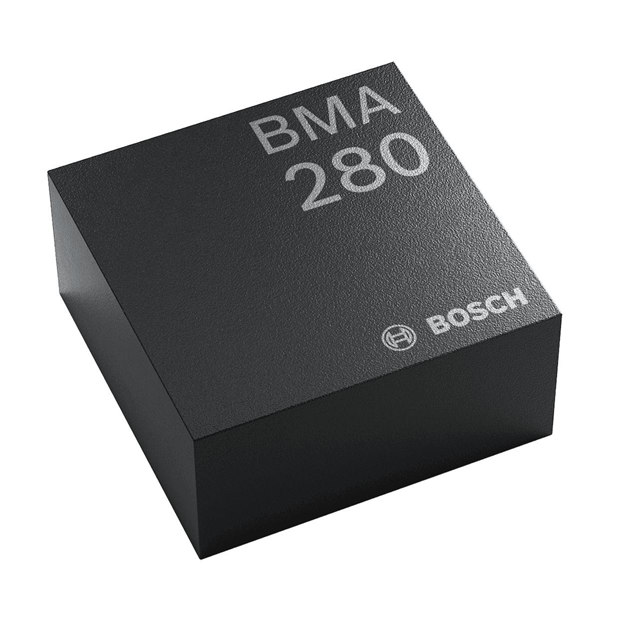
The BMA280 is an active product-status digital accelerometer manufactured by Bosch Sensortec, designed for motion sensing applications requiring tri-axial acceleration measurement. This component operates across selectable acceleration ranges (±2g through ±16g) with configurable bandwidth (8Hz to 500Hz) and communicates via I2C or SPI interfaces. Alternative models are evaluated when addressing specific application requirements related to bandwidth specifications, feature sets, or inventory availability.
Substiute Parts
Key Parameters
| Parameter | Value |
|---|---|
| Manufacturer Part Number | BMA280 |
| Manufacturer | Bosch Sensortec |
| Category | Motion Sensors |
| Type | Digital |
| Acceleration Axis | X, Y, Z |
| Acceleration Range | ±2g, 4g, 6g, 8g, 16g |
| Bandwidth | 8Hz ~ 500Hz |
| Output Type | I2C, SPI |
| Supply Voltage | 1.62V ~ 3.6V |
| Operating Temperature | -40°C ~ 85°C |
| Package Type | 12-VFLGA (2x2) |
| RoHS Status | ROHS3 Compliant |
| Product Status | Active |
Substitute Part Grouping Explanation
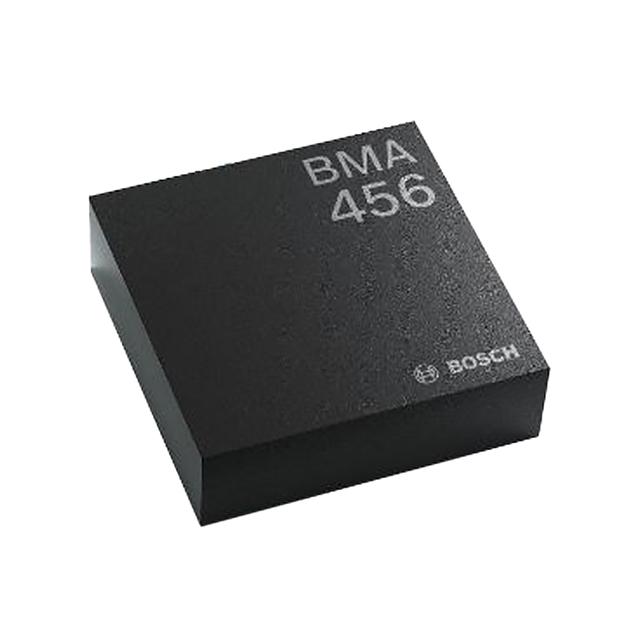
The BMA456 is classified as a functional equivalent based on the following substitution criteria:
Common Parameters:
- Tri-axial acceleration measurement (X, Y, Z axis)
- Selectable acceleration ranges (±2g, ±4g, ±8g, ±16g)
- Digital output via I2C and SPI communication protocols
- Supply voltage range (1.62V ~ 3.6V)
- Surface mount assembly (12-LGA 2x2 footprint)
- Operating temperature range (-40°C ~ 85°C)
- Active product status
- ROHS3 compliance
Distinguishing Parameters:
- Bandwidth specification differs: BMA280 (8Hz ~ 500Hz) versus BMA456 (5.06Hz ~ 684Hz)
- BMA280 includes selectable scale feature; BMA456 does not list this feature
- Package designation variant: BMA280 (12-VFLGA) versus BMA456 (12-WFLGA)
Parameter Comparison
| Parameter | BMA280 | BMA456 |
|---|---|---|
| Manufacturer Part Number | BMA280 | BMA456 |
| Manufacturer | Bosch Sensortec | Bosch Sensortec |
| Acceleration Axis | X, Y, Z | X, Y, Z |
| Acceleration Range | ±2g, 4g, 6g, 8g, 16g | ±2g, 4g, 8g, 16g |
| Bandwidth | 8Hz ~ 500Hz | 5.06Hz ~ 684Hz |
| Output Type | I2C, SPI | I2C, SPI |
| Supply Voltage | 1.62V ~ 3.6V | 1.62V ~ 3.6V |
| Operating Temperature | -40°C ~ 85°C | -40°C ~ 85°C |
| Package / Case | 12-VFLGA | 12-WFLGA |
| Supplier Device Package | 12-LGA (2x2) | 12-LGA (2x2) |
| RoHS Status | ROHS3 Compliant | ROHS3 Compliant |
| Product Status | Active | Active |
Engineering Selection Recommendations
Both BMA280 and BMA456 are active-status components with ROHS3 compliance suitable for equivalent substitution in motion sensing applications. Selection between these parts is determined by the specific bandwidth requirements of the application and the availability of the ±6g acceleration range option.
BMA280 selection criteria: Applications requiring the ±6g acceleration range or operation within the 8Hz ~ 500Hz bandwidth window.
BMA456 selection criteria: Applications benefiting from extended bandwidth capability (5.06Hz ~ 684Hz) and where the ±6g range is not required. The BMA456 provides lower minimum frequency response and higher maximum frequency response than the BMA280.
Both components maintain identical supply voltage requirements, operating temperature ranges, and communication interface options (I2C/SPI), enabling functional pin-to-pin replacement subject to firmware accommodation of bandwidth and range differences.
Frequently Asked Questions (FAQ)
Q: Are BMA280 and BMA456 pin-compatible? A: Both components utilize the 12-LGA (2x2) physical footprint with identical supply voltage and communication protocol support. Package designations differ (12-VFLGA versus 12-WFLGA); consult component datasheets for precise pin-level compatibility verification.
Q: What acceleration ranges are available on each part? A: The BMA280 supports ±2g, ±4g, ±6g, ±8g, and ±16g ranges. The BMA456 supports ±2g, ±4g, ±8g, and ±16g ranges. The ±6g range is exclusive to the BMA280.
Q: How do bandwidth specifications differ? A: The BMA280 operates between 8Hz and 500Hz. The BMA456 extends this range to 5.06Hz ~ 684Hz, providing lower minimum and higher maximum frequency response capabilities.
Q: Are both parts suitable for industrial temperature applications? A: Yes. Both components operate across the -40°C ~ 85°C temperature range and are specified for industrial applications within this envelope.
Q: What is the difference between 12-VFLGA and 12-WFLGA packaging? A: Both designations refer to 12-lead very fine pitch land grid array packages with 2x2mm dimensions. Consult the respective component datasheets for specific dimensional and thermal characteristic differences.
Q: Do both parts support I2C and SPI communication? A: Yes. Both BMA280 and BMA456 support dual communication protocols: I2C and SPI.
You can now copy this entire text and paste it into your markdown editor or save it as a .md file as needed.
Alternative Parts

SJ6012L2TP
Littelfuse Inc.
6 Alternative Parts

JMK107BBJ476MA-RE
Taiyo Yuden
10 Alternative Parts

GMK107BBJ475MA-T
Taiyo Yuden
5 Alternative Parts
SJ6020N2ARP
Littelfuse Inc.
3 Alternative Parts
SJ6025R2ATP
Littelfuse Inc.
4 Alternative Parts

2474-05L
API Delevan Inc.
1 Alternative Parts

4590R-684K
API Delevan Inc.
1 Alternative Parts

CM6560R-334
API Delevan Inc.
1 Alternative Parts

CM6460-104
API Delevan Inc.
1 Alternative Parts

5526-12
API Delevan Inc.
1 Alternative Parts