


Request Quote
(Ships tomorrow)
BF421-AP Equivalent & Substitute Parts
Part Overview
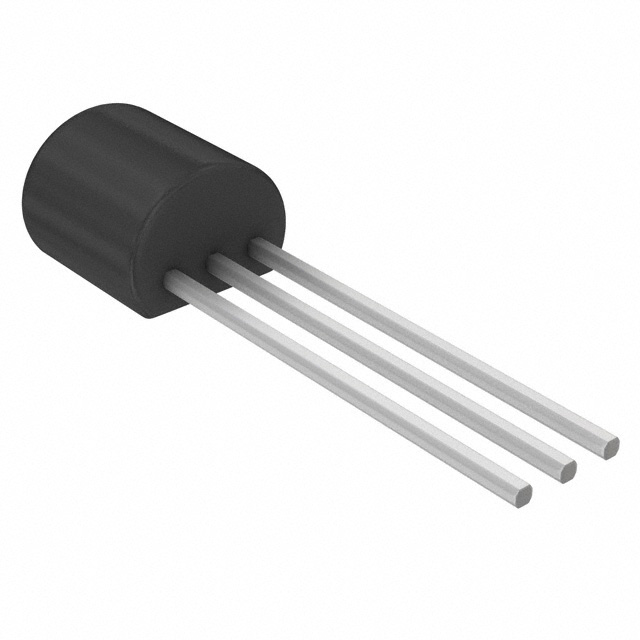
The BF421-AP is a PNP bipolar junction transistor manufactured by STMicroelectronics, designed for general-purpose switching and amplification applications. It features a 300 V collector-emitter breakdown voltage rating and 500 mA maximum collector current in a TO-92-3 through-hole package. The device is classified as obsolete, making identification of suitable substitute components essential for ongoing production and maintenance applications. Active alternatives with equivalent electrical characteristics are available to ensure design continuity and supply chain reliability.
Substiute Parts
Key Parameters
| Parameter | Value | Unit |
|---|---|---|
| Transistor Type | PNP | — |
| Voltage - Collector Emitter Breakdown (Max) | 300 | V |
| Current - Collector (Ic) (Max) | 500 | mA |
| Power - Max | 830 | mW |
| Frequency - Transition | 60 | MHz |
| DC Current Gain (hFE) (Min) | 50 | — |
| Mounting Type | Through Hole | — |
| Package / Case | TO-92-3 | — |
Substitute Part Grouping Explanation
Substitution of the BF421-AP is determined by strict equivalence across the following critical electrical and mechanical parameters:
Electrical Equivalence Criteria:
- Transistor polarity: PNP configuration
- Voltage rating: Collector-emitter breakdown voltage of 300 V or greater
- Current capacity: Maximum collector current of 500 mA or greater
- DC current gain: Minimum hFE of 50 or greater
- Power dissipation: Maximum power rating of 830 mW or greater
Mechanical Equivalence Criteria:
- Mounting type: Through-hole configuration
- Package compatibility: TO-92-3 or TO-92-compatible package form factor
The ZTX757 manufactured by Diodes Incorporated meets all specified electrical and mechanical substitution criteria. This device maintains PNP polarity, 300 V breakdown voltage, 500 mA collector current, and through-hole mounting in a TO-92-compatible E-Line package. The ZTX757 is classified as active product status, ensuring ongoing availability and supply chain support.
Parameter Comparison
| Parameter | BF421-AP (STMicroelectronics) | ZTX757 (Diodes Incorporated) | Compatibility |
|---|---|---|---|
| Transistor Type | PNP | PNP | Equivalent |
| Voltage - Collector Emitter Breakdown (Max) | 300 V | 300 V | Equivalent |
| Current - Collector (Ic) (Max) | 500 mA | 500 mA | Equivalent |
| Power - Max | 830 mW | 1 W | Substitute Exceeds Specification |
| Frequency - Transition | 60 MHz | 30 MHz | Substitute Below Specification |
| DC Current Gain (hFE) (Min) | 50 @ 25mA, 20V | 50 @ 100mA, 5V | Equivalent Minimum Value |
| Vce Saturation (Max) | 600 mV @ 5mA, 30mA | 500 mV @ 10mA, 100mA | Substitute Superior Performance |
| Mounting Type | Through Hole | Through Hole | Equivalent |
| Package / Case | TO-92-3 | E-Line (TO-92 compatible) | Mechanically Compatible |
| Product Status | Obsolete | Active | Substitute Actively Supported |
| RoHS Status | ROHS3 Compliant | ROHS3 Compliant | Equivalent |
Engineering Selection Recommendations
The ZTX757 is a qualified substitute for the obsolete BF421-AP based on the following engineering criteria:
Electrical Compatibility: The ZTX757 maintains identical voltage and current ratings (300 V, 500 mA) and equivalent minimum DC current gain (50). The substitute device demonstrates superior saturation voltage performance (500 mV versus 600 mV), indicating improved switching efficiency in saturation-mode applications.
Mechanical Compatibility: Both devices employ through-hole mounting in physically compatible packages. The ZTX757 E-Line package is specified as TO-92 compatible, enabling direct board-level substitution without layout modification.
Regulatory Compliance: Both the BF421-AP and ZTX757 are ROHS3 compliant and REACH unaffected, meeting current environmental and regulatory requirements for electronic component procurement.
Product Status Advantage: The ZTX757 is classified as active product status, ensuring long-term availability, ongoing manufacturing support, and supply chain continuity. This addresses the primary limitation of the obsolete BF421-AP.
Frequency Consideration: The ZTX757 transition frequency of 30 MHz is lower than the BF421-AP specification of 60 MHz. This parameter difference is acceptable for applications operating below 30 MHz. Applications requiring transition frequencies above 30 MHz require evaluation of alternative substitute devices.
Frequently Asked Questions (FAQ)
Q: Can the ZTX757 be used as a direct replacement for the BF421-AP in all applications?
A: The ZTX757 is electrically and mechanically compatible for applications operating at transition frequencies of 30 MHz or below. Applications requiring higher frequency performance must evaluate alternative substitute devices. Both devices share identical voltage and current ratings, enabling substitution in DC and low-frequency switching applications.
Q: What is the significance of the TO-92 compatible package designation for the ZTX757?
A: The E-Line package used by the ZTX757 is physically and functionally compatible with standard TO-92-3 package footprints. This compatibility permits direct board-level substitution without requiring PCB layout modifications or mechanical redesign.
Q: Why is the BF421-AP classified as obsolete?
A: Obsolete classification indicates that the manufacturer has discontinued production and no longer provides supply or technical support. The ZTX757 active status ensures ongoing availability and manufacturing continuity for new designs and production requirements.
Q: Are there compliance differences between the BF421-AP and ZTX757?
A: Both devices are ROHS3 compliant and REACH unaffected. No compliance barriers exist for substitution from a regulatory perspective.
Q: What does the superior saturation voltage of the ZTX757 indicate?
A: The ZTX757 saturation voltage of 500 mV (versus 600 mV for the BF421-AP) represents improved switching performance in saturation-mode operation. This characteristic reduces power dissipation and heat generation in switching applications, providing a performance advantage over the original device.
Q: How should frequency specifications be evaluated when selecting between these devices?
A: The transition frequency parameter defines the maximum frequency at which the transistor maintains specified gain characteristics. Applications operating below 30 MHz are unaffected by the ZTX757 frequency specification. Applications requiring operation above 30 MHz must identify alternative substitute devices with higher transition frequency ratings.
Alternative Parts

SJ6012L2TP
Littelfuse Inc.
6 Alternative Parts

JMK107BBJ476MA-RE
Taiyo Yuden
10 Alternative Parts

GMK107BBJ475MA-T
Taiyo Yuden
5 Alternative Parts
SJ6020N2ARP
Littelfuse Inc.
3 Alternative Parts
SJ6025R2ATP
Littelfuse Inc.
4 Alternative Parts

2474-05L
API Delevan Inc.
1 Alternative Parts

4590R-684K
API Delevan Inc.
1 Alternative Parts

CM6560R-334
API Delevan Inc.
1 Alternative Parts

CM6460-104
API Delevan Inc.
1 Alternative Parts

5526-12
API Delevan Inc.
1 Alternative Parts