


Request Quote
(Ships tomorrow)
BD7LS14G-CTL Equivalent & Substitute Parts
Part Overview
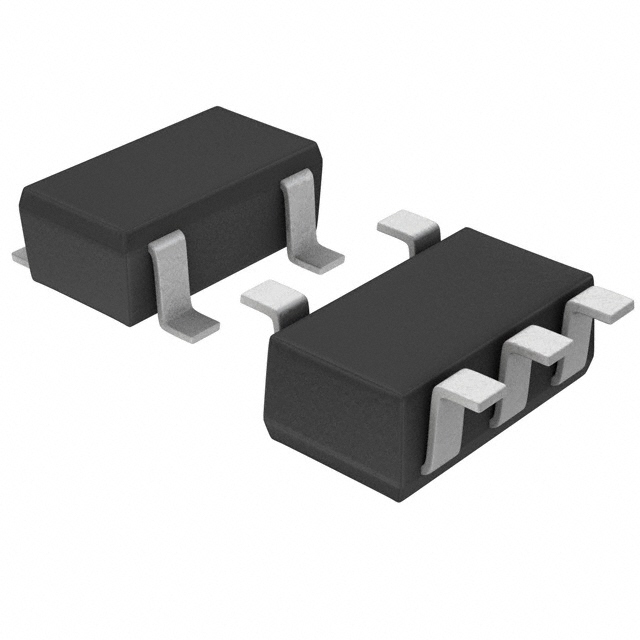
The BD7LS14G-CTL is an inverting buffer logic integrated circuit manufactured by Rohm Semiconductor. This device functions as a single-element, single-bit inverting buffer with Schmitt trigger input capability, designed for automotive-grade applications. The part operates across a wide supply voltage range of 1.65V to 5.5V and maintains active product status with full AEC-Q100 automotive qualification. Substitute parts are identified when equivalent electrical performance and mechanical compatibility are required due to inventory constraints, design flexibility, or application-specific requirements.
Substiute Parts
Key Parameters
| Parameter | Value |
|---|---|
| Manufacturer | Rohm Semiconductor |
| Category | Logic |
| Logic Type | Buffer, Inverting |
| Number of Elements | 1 |
| Number of Bits per Element | 1 |
| Input Type | Schmitt Trigger |
| Current - Output High, Low | 32mA, 32mA |
| Voltage - Supply | 1.65V ~ 5.5V |
| Operating Temperature | -40°C ~ 125°C (TA) |
| Grade | Automotive |
| Qualification | AEC-Q100 |
| Package / Case | SC-74A, SOT-753 |
| Supplier Device Package | 5-SSOP |
| Mounting Type | Surface Mount |
| RoHS Status | ROHS3 Compliant |
| Moisture Sensitivity Level (MSL) | 3 (168 Hours) |
| REACH Status | REACH Unaffected |
| Product Status | Active |
Substitute Part Grouping Explanation
Substitution of the BD7LS14G-CTL is determined by strict alignment of electrical and mechanical parameters. The primary substitute identified is the BD7LS17G-CTL, which shares identical specifications across all critical parameters with one functional exception: logic type. Both parts maintain identical supply voltage ranges (1.65V ~ 5.5V), output current ratings (32mA, 32mA), operating temperature ranges (-40°C ~ 125°C), automotive grade qualification (AEC-Q100), package configuration (SC-74A, SOT-753, 5-SSOP), and compliance certifications (ROHS3, REACH Unaffected).
The BD7LS17G-CTL functions as a non-inverting buffer, whereas the BD7LS14G-CTL functions as an inverting buffer. This functional difference is the sole distinguishing parameter between the two parts. Both devices employ Schmitt trigger input architecture, contain a single element with one bit per element, and are rated for automotive applications. Substitution is valid only when the application logic requirements accommodate the inversion polarity difference.
Parameter Comparison
| Parameter | BD7LS14G-CTL (Main Part) | BD7LS17G-CTL (Substitute) |
|---|---|---|
| Manufacturer | Rohm Semiconductor | Rohm Semiconductor |
| Category | Logic | Logic |
| Logic Type | Buffer, Inverting | Buffer, Non-Inverting |
| Number of Elements | 1 | 1 |
| Number of Bits per Element | 1 | 1 |
| Input Type | Schmitt Trigger | Schmitt Trigger |
| Current - Output High, Low | 32mA, 32mA | 32mA, 32mA |
| Voltage - Supply | 1.65V ~ 5.5V | 1.65V ~ 5.5V |
| Operating Temperature | -40°C ~ 125°C (TA) | -40°C ~ 125°C (TA) |
| Grade | Automotive | Automotive |
| Qualification | AEC-Q100 | AEC-Q100 |
| Package / Case | SC-74A, SOT-753 | SC-74A, SOT-753 |
| Supplier Device Package | 5-SSOP | 5-SSOP |
| Mounting Type | Surface Mount | Surface Mount |
| RoHS Status | ROHS3 Compliant | ROHS3 Compliant |
| Moisture Sensitivity Level (MSL) | 3 (168 Hours) | 3 (168 Hours) |
| REACH Status | REACH Unaffected | REACH Unaffected |
| Product Status | Active | Active |
Engineering Selection Recommendations
Both the BD7LS14G-CTL and BD7LS17G-CTL maintain active product status with full automotive-grade qualification under AEC-Q100 standards. Both parts comply with ROHS3 requirements and are unaffected by REACH regulations, making them suitable for regulated automotive and industrial applications.
Selection between these parts is determined by circuit logic requirements. The BD7LS14G-CTL provides inverting buffer functionality, while the BD7LS17G-CTL provides non-inverting buffer functionality. The choice depends on whether the application requires signal inversion or direct signal buffering. All other electrical and mechanical parameters are identical, including supply voltage tolerance, output drive capability, temperature range, package configuration, and compliance certifications.
Frequently Asked Questions (FAQ)
Q: Can the BD7LS17G-CTL replace the BD7LS14G-CTL in any application?
A: The BD7LS17G-CTL can replace the BD7LS14G-CTL only when the application logic accommodates a non-inverting buffer function instead of an inverting buffer function. All electrical specifications, package configurations, and compliance certifications are identical. The functional difference in logic type is the sole consideration.
Q: Are the package dimensions identical between BD7LS14G-CTL and BD7LS17G-CTL?
A: Yes. Both parts use the SC-74A package configuration with SOT-753 designation and 5-SSOP supplier device package. Physical dimensions and pin configurations are identical, allowing direct PCB footprint compatibility.
Q: What is the significance of the Schmitt trigger input on these parts?
A: The Schmitt trigger input provides hysteresis, which improves noise immunity and ensures clean signal transitions. Both the BD7LS14G-CTL and BD7LS17G-CTL incorporate this input type, making them functionally equivalent in this regard.
Q: Are both parts suitable for automotive applications?
A: Yes. Both the BD7LS14G-CTL and BD7LS17G-CTL carry automotive grade qualification with AEC-Q100 certification. Both operate across the temperature range of -40°C to 125°C and comply with automotive reliability standards.
Q: What is the output drive capability of these buffer ICs?
A: Both parts provide 32mA output current capability for both high and low logic states, enabling direct drive of standard logic loads and moderate capacitive loads.
Q: Do these parts require different handling or storage procedures?
A: No. Both parts share identical moisture sensitivity level (MSL 3, 168 hours) and are supplied in Tape & Reel packaging. Storage and handling procedures are identical.
Alternative Parts

SJ6012L2TP
Littelfuse Inc.
6 Alternative Parts

JMK107BBJ476MA-RE
Taiyo Yuden
10 Alternative Parts

GMK107BBJ475MA-T
Taiyo Yuden
5 Alternative Parts
SJ6020N2ARP
Littelfuse Inc.
3 Alternative Parts
SJ6025R2ATP
Littelfuse Inc.
4 Alternative Parts

2474-05L
API Delevan Inc.
1 Alternative Parts

4590R-684K
API Delevan Inc.
1 Alternative Parts

CM6560R-334
API Delevan Inc.
1 Alternative Parts

CM6460-104
API Delevan Inc.
1 Alternative Parts

5526-12
API Delevan Inc.
1 Alternative Parts