






Request Quote
(Ships tomorrow)
BCW66G Equivalent & Substitute Parts
Part Overview
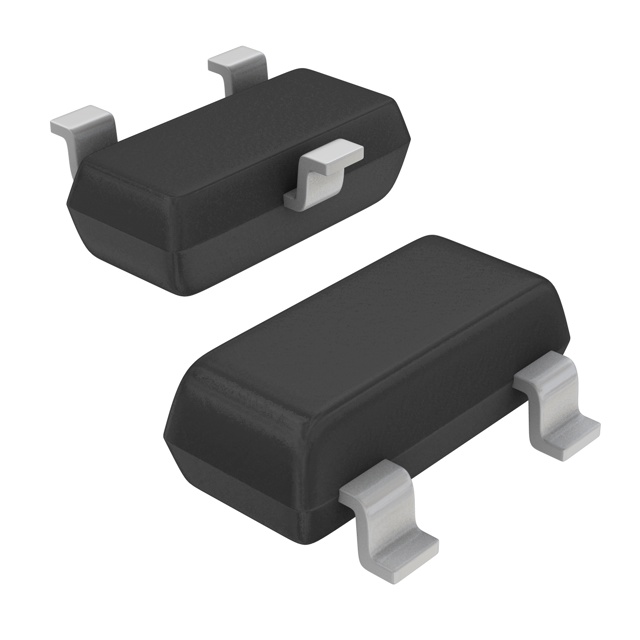
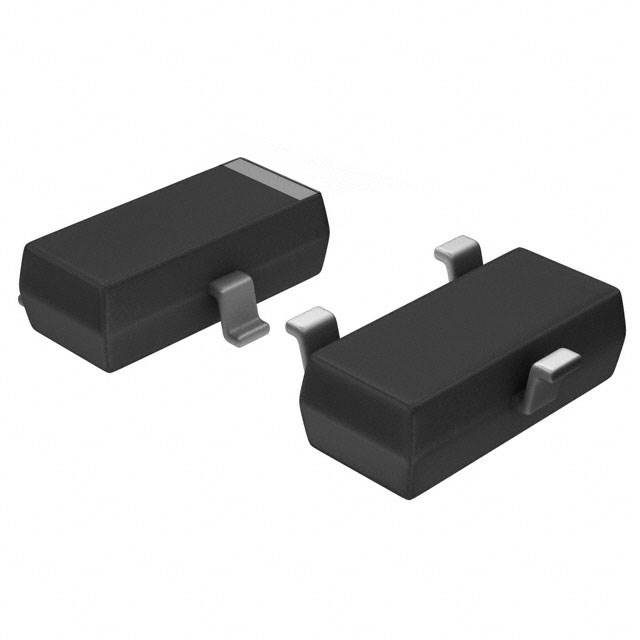
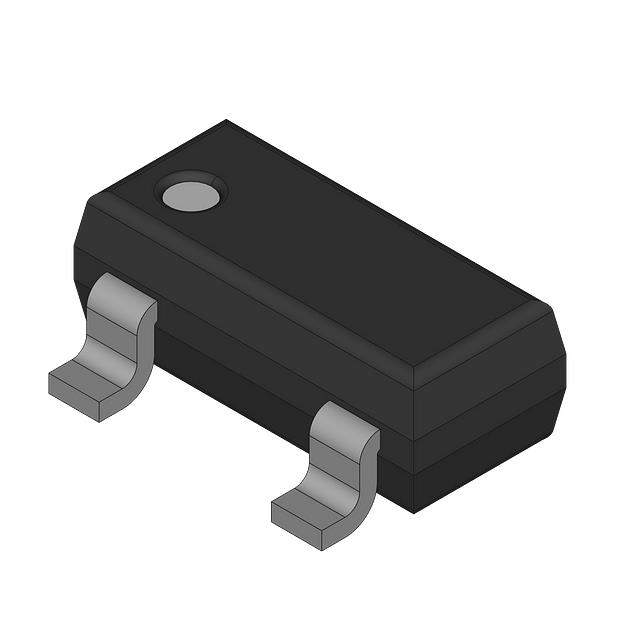
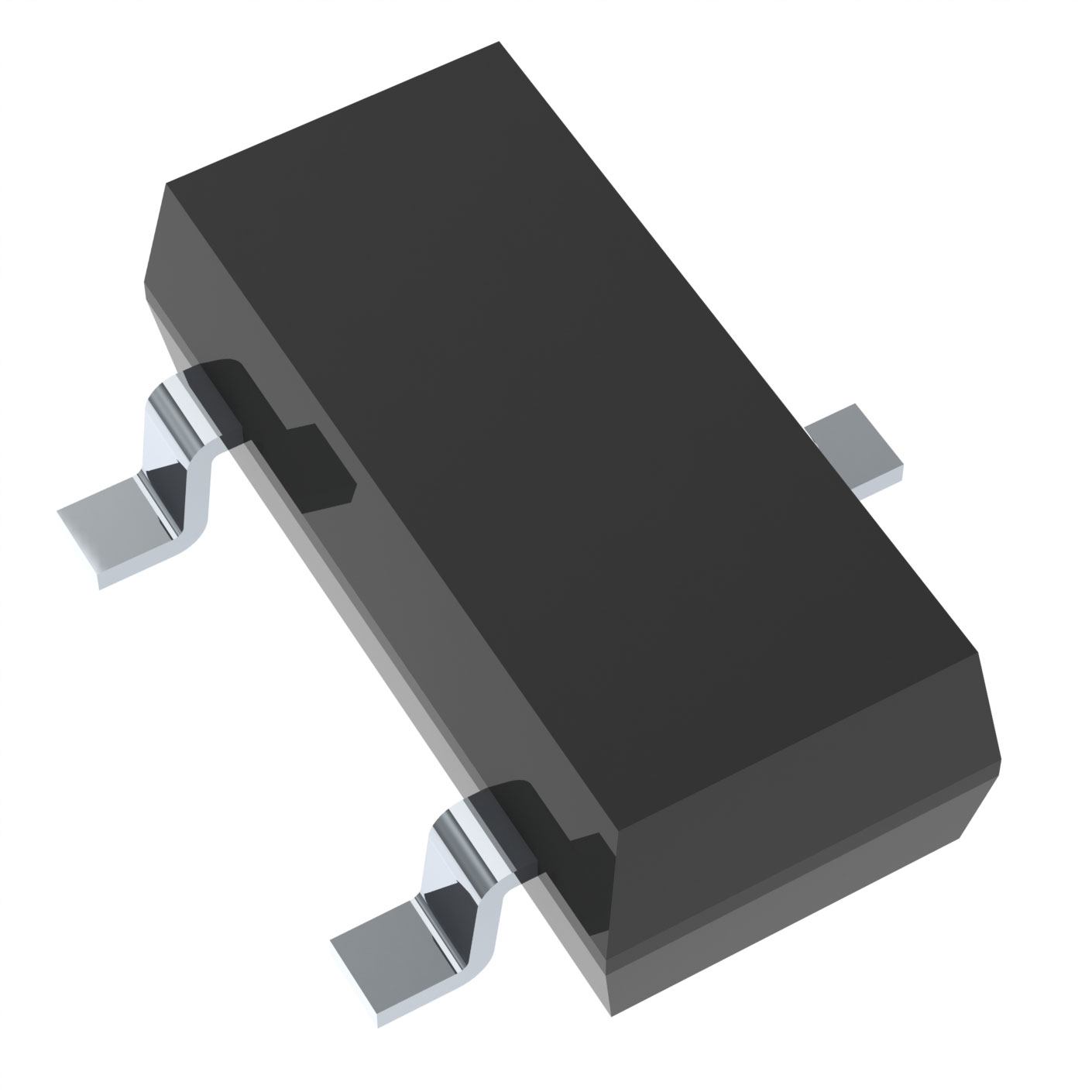
The BCW66G is an NPN bipolar junction transistor manufactured by onsemi, designed for general-purpose switching and amplification applications. The device features a 45 V collector-emitter breakdown voltage, 1 A maximum collector current, and 100 MHz transition frequency in a surface mount SOT-23-3 package. The BCW66G is classified as obsolete, necessitating identification of active equivalent and substitute components for new designs and production continuity. Substitute parts are selected based on electrical parameter compatibility and mechanical package equivalence.
Substiute Parts
Key Parameters
| Parameter | BCW66G | Unit |
|---|---|---|
| Transistor Type | NPN | — |
| Voltage - Collector Emitter Breakdown (Max) | 45 | V |
| Current - Collector (Ic) (Max) | 1 | A |
| Power - Max | 350 | mW |
| Frequency - Transition | 100 | MHz |
| DC Current Gain (hFE) (Min) @ Ic, Vce | 160 @ 100mA, 1V | — |
| Vce Saturation (Max) @ Ib, Ic | 700mV @ 50mA, 500mA | — |
| Current - Collector Cutoff (Max) | 20 | nA |
| Operating Temperature Range | -55 to 150 | °C |
| Package / Case | SOT-23-3 (TO-236-3, SC-59) | — |
| Mounting Type | Surface Mount | — |
| Product Status | Obsolete | — |
Substitute Part Grouping Explanation
Substitute parts for the BCW66G are grouped into two categories based on electrical parameter compatibility:
Direct Substitute (Electrical Equivalence): The BCW66GLT1G maintains the same base product number (BCW66) and shares identical electrical characteristics with the BCW66G, including 45 V breakdown voltage, 100 MHz transition frequency, and matching DC current gain specifications. The primary difference is reduced maximum collector current (800 mA versus 1 A) and maximum power dissipation (300 mW versus 350 mW). This part is active and RoHS3 compliant.
Similar Substitutes (Reduced Current Rating): The BC817 series parts (BC817-16LT1G, BC817-16LT3G, BC817-25LT1G, BC817-25LT3G, BC817-40LT1G, BC817-40LT3G) and BC847 series parts (BC847ALT1G, BC847BLT1G, BC847BLT3G) operate within the same 45 V breakdown voltage and 100 MHz frequency envelope. These parts feature reduced maximum collector current ratings (500 mA for BC817 variants, 100 mA for BC847 variants) and are suitable for applications where the BCW66G's 1 A capability is not required. All similar substitutes are active and RoHS3 compliant.
Key Parameters Determining Substitution:
- Collector-emitter breakdown voltage: 45 V (fixed across all substitutes)
- Transition frequency: 100 MHz (fixed across all substitutes)
- Package: SOT-23-3 surface mount (fixed across all substitutes)
- Transistor type: NPN (fixed across all substitutes)
- Maximum collector current: 1 A (BCW66G), 800 mA (BCW66GLT1G), 500 mA (BC817 series), 100 mA (BC847 series)
- Maximum power dissipation: 350 mW (BCW66G), 300 mW (all substitutes)
Parameter Comparison
| Part Number | Manufacturer | Ic (Max) | VCEO (Max) | Power (Max) | fT | hFE (Min) @ Ic, Vce | Package | Status | RoHS |
|---|---|---|---|---|---|---|---|---|---|
| BCW66G | onsemi | 1 A | 45 V | 350 mW | 100 MHz | 160 @ 100mA, 1V | SOT-23-3 | Obsolete | — |
| BCW66GLT1G | onsemi | 800 mA | 45 V | 300 mW | 100 MHz | 160 @ 100mA, 1V | SOT-23-3 | Active | ROHS3 |
| BC817-16LT1G | onsemi | 500 mA | 45 V | 300 mW | 100 MHz | 100 @ 100mA, 1V | SOT-23-3 | Active | ROHS3 |
| BC817-16LT3G | onsemi | 500 mA | 45 V | 300 mW | 100 MHz | 100 @ 100mA, 1V | SOT-23-3 | Active | ROHS3 |
| BC817-25LT1G | onsemi | 500 mA | 45 V | 300 mW | 100 MHz | 160 @ 100mA, 1V | SOT-23-3 | Active | ROHS3 |
| BC817-25LT3G | onsemi | 500 mA | 45 V | 300 mW | 100 MHz | 160 @ 100mA, 1V | SOT-23-3 | Active | ROHS3 |
| BC817-40LT1G | onsemi | 500 mA | 45 V | 300 mW | 100 MHz | 250 @ 100mA, 1V | SOT-23-3 | Active | ROHS3 |
| BC817-40LT3G | onsemi | 500 mA | 45 V | 300 mW | 100 MHz | 250 @ 100mA, 1V | SOT-23-3 | Active | ROHS3 |
| BC847ALT1G | onsemi | 100 mA | 45 V | 300 mW | 100 MHz | 110 @ 2mA, 5V | SOT-23-3 | Active | ROHS3 |
| BC847BLT1G | onsemi | 100 mA | 45 V | 300 mW | 100 MHz | 200 @ 2mA, 5V | SOT-23-3 | Active | ROHS3 |
| BC847BLT3G | onsemi | 100 mA | 45 V | 300 mW | 100 MHz | 200 @ 2mA, 5V | SOT-23-3 | Active | ROHS3 |
Engineering Selection Recommendations
For Direct Replacement (Highest Compatibility): The BCW66GLT1G is the primary substitute for the obsolete BCW66G. This part carries the same base product number and maintains electrical equivalence across all critical parameters including breakdown voltage, transition frequency, and DC current gain. The BCW66GLT1G is active and RoHS3 compliant, ensuring long-term availability and regulatory compliance. The reduced maximum collector current (800 mA versus 1 A) and power dissipation (300 mW versus 350 mW) are acceptable for most general-purpose switching applications where the BCW66G was deployed.
For Current-Limited Applications: The BC817 series (BC817-16LT1G, BC817-16LT3G, BC817-25LT1G, BC817-25LT3G, BC817-40LT1G, BC817-40LT3G) provides substitution for applications requiring maximum collector currents of 500 mA or less. These parts maintain the 45 V breakdown voltage and 100 MHz transition frequency. Selection within the BC817 series depends on required DC current gain: BC817-16 variants provide 100 minimum hFE, BC817-25 variants provide 160 minimum hFE, and BC817-40 variants provide 250 minimum hFE.
For Low-Current Signal Applications: The BC847 series (BC847ALT1G, BC847BLT1G, BC847BLT3G) is suitable for applications requiring maximum collector currents of 100 mA or less. These parts maintain the 45 V breakdown voltage and 100 MHz transition frequency. BC847A provides 110 minimum hFE, while BC847B variants provide 200 minimum hFE.
All substitute parts are manufactured by onsemi, carry RoHS3 compliance, and are classified as active products with established supply chains.
Frequently Asked Questions (FAQ)
Q: Can BCW66GLT1G directly replace BCW66G in all applications? A: The BCW66GLT1G is electrically equivalent to the BCW66G across all critical parameters (breakdown voltage, transition frequency, DC current gain, saturation voltage). The reduced maximum collector current (800 mA versus 1 A) and power dissipation (300 mW versus 350 mW) are acceptable for applications where the BCW66G was used. Circuit design verification is required only if the application demands the full 1 A collector current or 350 mW power dissipation of the original part.
Q: What is the difference between BC817-16, BC817-25, and BC817-40 variants? A: The numeric suffix indicates the minimum DC current gain (hFE) specification. BC817-16 specifies 100 minimum hFE, BC817-25 specifies 160 minimum hFE, and BC817-40 specifies 250 minimum hFE. All variants share identical maximum collector current (500 mA), breakdown voltage (45 V), and transition frequency (100 MHz). Selection depends on the required current gain for the specific application.
Q: Are there packaging differences between substitute parts? A: All substitute parts use the SOT-23-3 surface mount package, identical to the BCW66G. Packaging variants (Cut Tape, Tape & Reel) differ only in supply format and do not affect electrical or mechanical compatibility. The supplier device package designation (SOT-23-3 or TO-236) refers to the same physical package.
Q: Can BC847 series parts substitute for BCW66G? A: BC847 series parts are suitable only for applications where the maximum collector current requirement is 100 mA or less. These parts maintain the 45 V breakdown voltage and 100 MHz transition frequency but are not recommended for applications requiring the 1 A or 800 mA capability of BCW66G or BCW66GLT1G.
Q: What is the operating temperature range for substitute parts? A: BCW66GLT1G and BC817 series parts operate from -55°C to 150°C junction temperature. BC847 series parts operate from -55°C to 150°C junction temperature. All parts support the same temperature envelope as the original BCW66G.
Q: Are all substitute parts RoHS3 compliant? A: Yes. All substitute parts listed (BCW66GLT1G, BC817 series, and BC847 series) are RoHS3 compliant and REACH unaffected, meeting current regulatory requirements for electronic component manufacturing and use.
Q: What is the difference between LT1G and LT3G packaging designations? A: The LT1G and LT3G designations indicate different tape and reel configurations for automated assembly. Both designations refer to the same electrical component in the same SOT-23-3 package. Selection between LT1G and LT3G depends on assembly equipment compatibility and supply chain requirements, not electrical performance.
Alternative Parts

SJ6012L2TP
Littelfuse Inc.
6 Alternative Parts

JMK107BBJ476MA-RE
Taiyo Yuden
10 Alternative Parts

GMK107BBJ475MA-T
Taiyo Yuden
5 Alternative Parts
SJ6020N2ARP
Littelfuse Inc.
3 Alternative Parts
SJ6025R2ATP
Littelfuse Inc.
4 Alternative Parts

2474-05L
API Delevan Inc.
1 Alternative Parts

4590R-684K
API Delevan Inc.
1 Alternative Parts

CM6560R-334
API Delevan Inc.
1 Alternative Parts

CM6460-104
API Delevan Inc.
1 Alternative Parts

5526-12
API Delevan Inc.
1 Alternative Parts