




Request Quote
(Ships tomorrow)
BCW61DTA Equivalent & Substitute Parts
Part Overview
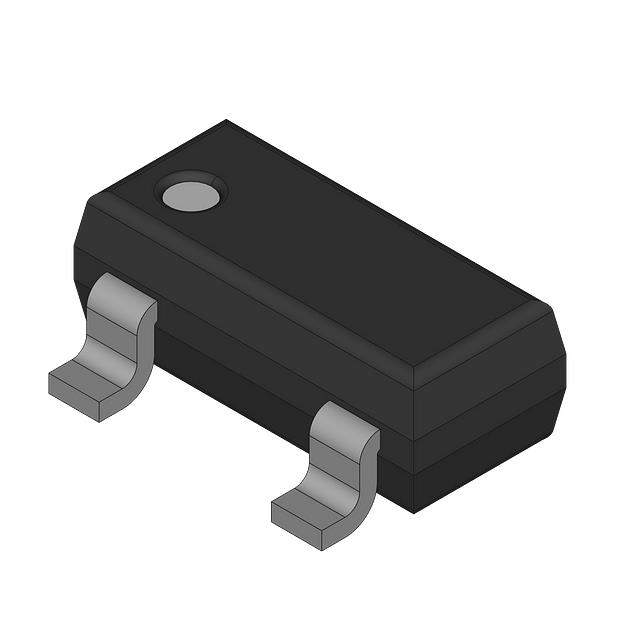
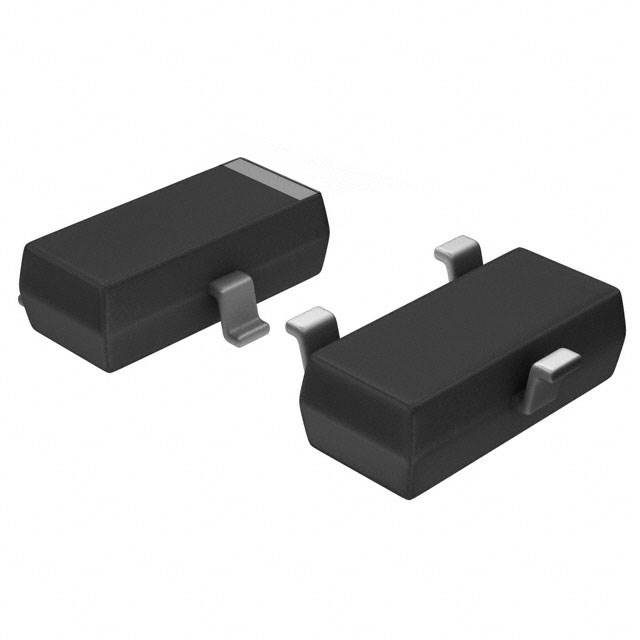
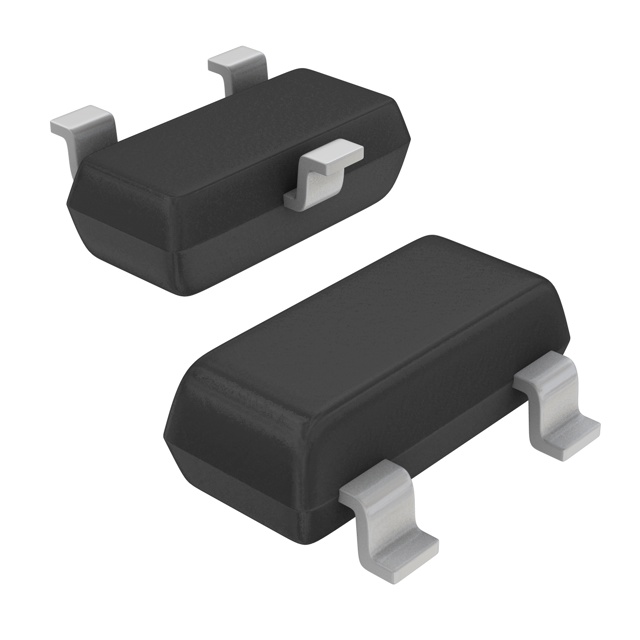
The BCW61DTA is a PNP bipolar junction transistor manufactured by Diodes Incorporated, designed for surface mount applications in the SOT-23-3 package. This device is rated for 32 V collector-emitter breakdown voltage with a maximum collector current of 200 mA and 330 mW power dissipation. The BCW61DTA operates across a temperature range of -55°C to 150°C and features a transition frequency of 180 MHz.
The BCW61DTA is classified as an obsolete product. Identifying equivalent and substitute parts is necessary to maintain design continuity, ensure supply chain availability, and support ongoing production requirements for applications currently utilizing this component.
Substiute Parts
Key Parameters
| Parameter | BCW61DTA Value | Unit |
|---|---|---|
| Transistor Type | PNP | — |
| Collector Current (Max) | 200 | mA |
| Collector-Emitter Breakdown Voltage (Max) | 32 | V |
| Vce Saturation (Max) | 550 | mV @ 1.25mA, 50mA |
| Collector Cutoff Current (Max) | 20 | nA |
| DC Current Gain (hFE Min) | 380 | @ 2mA, 5V |
| Power Dissipation (Max) | 330 | mW |
| Transition Frequency | 180 | MHz |
| Operating Temperature Range | -55 to 150 | °C |
| Package Type | SOT-23-3 | — |
| Mounting Type | Surface Mount | — |
| RoHS Status | Non-compliant | — |
Substitute Part Grouping Explanation
Substitution of the BCW61DTA is determined by strict adherence to the following electrical and mechanical parameters:
Primary Substitution Criteria:
- Transistor type must be PNP
- Collector-emitter breakdown voltage must be greater than or equal to 32 V
- Maximum collector current must be greater than or equal to 200 mA
- Power dissipation must be greater than or equal to 330 mW
- Package must be SOT-23-3 or mechanically compatible equivalent
- Operating temperature range must encompass the application requirements
Secondary Compatibility Factors:
- Vce saturation characteristics
- DC current gain (hFE)
- Transition frequency
- Collector cutoff current
Substitute parts are grouped into two categories based on their electrical performance relative to the BCW61DTA:
Category A: Direct Electrical Equivalents — Parts meeting or exceeding all primary substitution criteria with comparable electrical characteristics.
Category B: Higher-Performance Alternatives — Parts exceeding the BCW61DTA specifications in collector current, power dissipation, or transition frequency while maintaining package compatibility and voltage ratings.
Parameter Comparison
| Parameter | BCW61DTA | 2SB1695KT146 | 2SB1695TL | 2STR2230 | BC858ALT1G | BC858B,215 | BC858B,235 | BC858BLT1G | BC858CLT1G | BC859B,215 |
|---|---|---|---|---|---|---|---|---|---|---|
| Manufacturer | Diodes Inc. | Rohm Semi. | Rohm Semi. | STMicro. | onsemi | Nexperia | Nexperia | onsemi | onsemi | NXP Semi. |
| Transistor Type | PNP | PNP | PNP | PNP | PNP | PNP | PNP | PNP | PNP | PNP |
| Ic (Max) [mA] | 200 | 1500 | 1500 | 1500 | 100 | 100 | 100 | 100 | 100 | 100 |
| Vce Breakdown (Max) [V] | 32 | 30 | 30 | 30 | 30 | 30 | 30 | 30 | 30 | 30 |
| Vce Saturation (Max) [mV] | 550 | 370 | 370 | 800 | 650 | 650 | 650 | 650 | 650 | 650 |
| Icbo (Max) [nA] | 20 | 100 | 100 | 100 | 15 | 15 | 15 | 15 | 15 | 15 |
| hFE (Min) | 380 | 270 | 270 | 170 | 125 | 220 | 220 | 220 | 420 | 220 |
| Power (Max) [mW] | 330 | 200 | 500 | 500 | 300 | 250 | 250 | 300 | 300 | 250 |
| Frequency [MHz] | 180 | 280 | 280 | 100 | 100 | 100 | 100 | 100 | 100 | 100 |
| Temp Range [°C] | -55 to 150 | to 150 | to 150 | -65 to 150 | -55 to 150 | to 150 | to 150 | -55 to 150 | -55 to 150 | to 150 |
| Package | SOT-23-3 | SMT3 | TSMT3 | SOT-23-3 | SOT-23-3 | TO-236AB | TO-236AB | SOT-23-3 | SOT-23-3 | TO-236AB |
| Product Status | Obsolete | Active | Active | Active | Active | Active | Active | Active | Active | Active |
| RoHS Status | Non-compliant | ROHS3 Compliant | ROHS3 Compliant | ROHS3 Compliant | ROHS3 Compliant | ROHS3 Compliant | ROHS3 Compliant | ROHS3 Compliant | ROHS3 Compliant | ROHS3 Compliant |
Engineering Selection Recommendations
For Applications Requiring Direct Current Capability (≥200 mA):
The 2SB1695KT146 and 2SB1695TL from Rohm Semiconductor are the primary substitutes for the BCW61DTA. Both devices support 1.5 A collector current, exceeding the BCW61DTA specification of 200 mA. The 2SB1695TL offers superior power dissipation at 500 mW compared to the BCW61DTA's 330 mW. Both parts are ROHS3 compliant and carry active product status, ensuring long-term availability. The 2SB1695TL is packaged in TSMT3, while the 2SB1695KT146 uses SMT3 packaging; both are mechanically compatible with SOT-23-3 footprints.
The 2STR2230 from STMicroelectronics provides an alternative with 1.5 A collector current capability and 500 mW power dissipation. This device operates across an extended temperature range of -65°C to 150°C and is ROHS3 compliant with active product status.
For Applications with Lower Current Requirements (<200 mA):
The BC858 series devices (BC858ALT1G, BC858B,215, BC858B,235, BC858BLT1G, BC858CLT1G) and BC859B,215 are suitable for applications where collector current does not exceed 100 mA. These parts are rated for 30 V collector-emitter breakdown voltage and are available from multiple manufacturers including onsemi and Nexperia. All BC858 variants are ROHS3 compliant with active product status.
The BC858CLT1G offers the highest DC current gain (hFE Min = 420 @ 2mA, 5V) among the BC858 series, providing enhanced amplification characteristics. The BC858B,215 and BC858B,235 variants carry AEC-Q101 automotive qualification, suitable for automotive-grade applications.
Compliance Considerations:
All recommended substitute parts are ROHS3 compliant, addressing environmental regulatory requirements. The BCW61DTA is RoHS non-compliant; migration to compliant alternatives is recommended for new designs and long-term production continuity.
Frequently Asked Questions (FAQ)
Q: Can the BC858 series directly replace the BCW61DTA in all applications?
A: The BC858 series is suitable only for applications where the collector current requirement does not exceed 100 mA. The BCW61DTA is rated for 200 mA maximum collector current. If your application requires 100 mA to 200 mA, the BC858 series is not appropriate. Use the 2SB1695 series or 2STR2230 instead.
Q: What is the difference between the 2SB1695KT146 and 2SB1695TL?
A: Both devices share identical electrical specifications: 1.5 A collector current, 30 V breakdown voltage, and 270 hFE minimum. The primary difference is packaging: 2SB1695KT146 uses SMT3, while 2SB1695TL uses TSMT3. The 2SB1695TL offers higher power dissipation at 500 mW versus 200 mW for the KT146 variant. Select based on your PCB footprint requirements and thermal design constraints.
Q: Are the BC858 variants interchangeable with each other?
A: BC858ALT1G, BC858BLT1G, and BC858CLT1G share the same electrical ratings and SOT-23-3 package. The primary difference is DC current gain: BC858ALT1G has hFE Min of 125, BC858BLT1G and BC858B variants have hFE Min of 220, and BC858CLT1G has hFE Min of 420. Select based on your required gain characteristics. BC858B,215 and BC858B,235 are automotive-qualified variants with AEC-Q101 certification.
Q: Why is the BCW61DTA classified as obsolete?
A: The BCW61DTA is marked as obsolete by the manufacturer. This designation indicates that the part is no longer in active production and future availability cannot be guaranteed. Existing inventory may be available from distributors, but long-term supply is not assured. For new designs and ongoing production, migration to active alternatives is recommended.
Q: What is the significance of the SOT-23-3 package compatibility?
A: The SOT-23-3 package is a three-terminal surface mount package with standardized pin spacing and footprint dimensions. Devices in SOT-23-3, TO-236-3, SC-59, SMT3, and TSMT3 packages are mechanically compatible on standard PCB layouts. However, verify specific footprint requirements with your PCB design tools, as minor variations may exist between package variants.
Q: Can I use a higher-rated device as a substitute if it fits the same package?
A: Yes, provided the substitute device meets or exceeds all critical electrical parameters. A device with higher collector current rating, higher power dissipation, or higher breakdown voltage can replace a lower-rated device in the same package. However, ensure that the substitute's electrical characteristics do not negatively impact circuit performance. For example, lower Vce saturation or higher hFE may alter circuit behavior in sensitive applications.
Q: What does RoHS3 compliance mean for my application?
A: ROHS3 compliance indicates that the device meets Restriction of Hazardous Substances Directive requirements, restricting the use of lead, mercury, cadmium, and other hazardous materials. If your application or end market requires RoHS compliance, all recommended substitutes are ROHS3 compliant. The BCW61DTA is RoHS non-compliant; if compliance is required, substitute parts must be selected from the active, compliant alternatives listed.
Q: How do I determine which substitute is best for my circuit?
A: Identify the critical parameters for your application: required collector current, operating temperature range, power dissipation budget, and frequency response. Match these requirements against the substitute part specifications. If your application requires 200 mA collector current, use the 2SB1695 series or 2STR2230. If current is below 100 mA, the BC858 series is appropriate. Verify package compatibility with your PCB layout and confirm compliance requirements.
Alternative Parts

SJ6012L2TP
Littelfuse Inc.
6 Alternative Parts

JMK107BBJ476MA-RE
Taiyo Yuden
10 Alternative Parts

GMK107BBJ475MA-T
Taiyo Yuden
5 Alternative Parts
SJ6020N2ARP
Littelfuse Inc.
3 Alternative Parts
SJ6025R2ATP
Littelfuse Inc.
4 Alternative Parts

2474-05L
API Delevan Inc.
1 Alternative Parts

4590R-684K
API Delevan Inc.
1 Alternative Parts

CM6560R-334
API Delevan Inc.
1 Alternative Parts

CM6460-104
API Delevan Inc.
1 Alternative Parts

5526-12
API Delevan Inc.
1 Alternative Parts