




Request Quote
(Ships tomorrow)
BC549B Equivalent & Substitute Parts
Part Overview
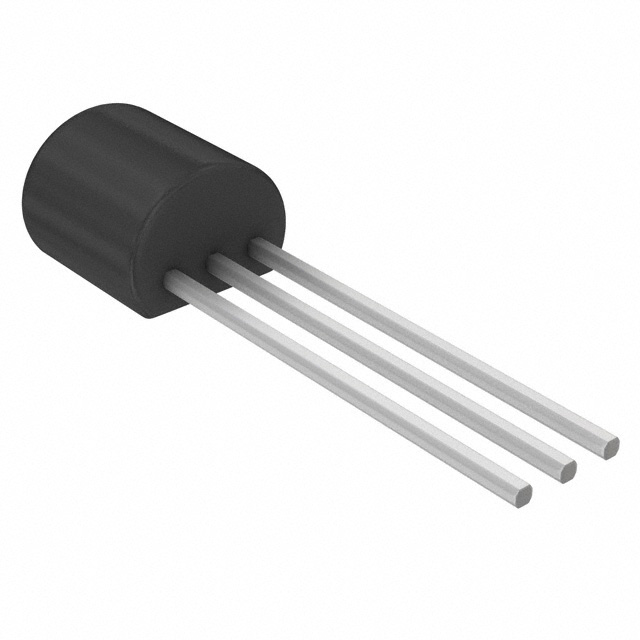
The BC549B is an NPN bipolar junction transistor (BJT) manufactured by onsemi in a TO-92-3 through-hole package. This device is rated for 30V collector-emitter breakdown voltage, 100mA maximum collector current, and 500mW power dissipation. The BC549B is classified as obsolete, necessitating identification of active equivalent and substitute components for new designs and ongoing production requirements. Substitute parts must maintain electrical and mechanical compatibility within the specified parameter ranges.
Substiute Parts
Key Parameters
| Parameter | Value | Unit |
|---|---|---|
| Transistor Type | NPN | — |
| Voltage - Collector Emitter Breakdown (Max) | 30 | V |
| Current - Collector (Ic) (Max) | 100 | mA |
| Power - Max | 500 | mW |
| Frequency - Transition | 300 | MHz |
| DC Current Gain (hFE) (Min) @ Ic, Vce | 200 @ 2mA, 5V | — |
| Operating Temperature (Max) | 150 | °C |
| Mounting Type | Through Hole | — |
| Package / Case | TO-92-3 | — |
Substitute Part Grouping Explanation
Substitute parts for the BC549B are selected based on strict electrical and mechanical parameter compatibility. The primary substitution criteria are:
Electrical Compatibility Requirements:
- Transistor type must be NPN
- Voltage - Collector Emitter Breakdown (Max) must be ≥30V
- Current - Collector (Ic) (Max) must be ≥100mA
- Power - Max must be ≥500mW
- Operating Temperature (Max) must be ≥150°C
- Package / Case must be TO-92-3
Mechanical Compatibility Requirements:
- Mounting type must be Through Hole
- Package must be TO-92-3 (TO-226-3 or TO-226AA equivalent)
Parts meeting these criteria are classified as direct substitutes. Parts with reduced electrical ratings (lower current capacity, lower frequency response, or lower power dissipation) are classified as limited-application substitutes and are suitable only for circuits where the reduced specifications do not compromise performance.
Parameter Comparison
| Parameter | BC549B | BC549BTA | 2N5088 PBFREE |
|---|---|---|---|
| Manufacturer | onsemi | onsemi | Central Semiconductor Corp |
| Product Status | Obsolete | Active | Active |
| Transistor Type | NPN | NPN | NPN |
| Voltage - Collector Emitter Breakdown (Max) | 30V | 30V | 30V |
| Current - Collector (Ic) (Max) | 100mA | 100mA | 50mA |
| Vce Saturation (Max) @ Ib, Ic | 600mV @ 5mA, 100mA | 600mV @ 5mA, 100mA | 500mV @ 1mA, 10mA |
| Current - Collector Cutoff (Max) | 15nA (ICBO) | 15nA (ICBO) | 50nA (ICBO) |
| DC Current Gain (hFE) (Min) @ Ic, Vce | 200 @ 2mA, 5V | 200 @ 2mA, 5V | 300 @ 100µA, 5V |
| Power - Max | 500mW | 500mW | 625mW |
| Frequency - Transition | 300MHz | 300MHz | 50MHz |
| Operating Temperature (Max) | 150°C | 150°C | 150°C |
| Mounting Type | Through Hole | Through Hole | Through Hole |
| Package / Case | TO-92-3 | TO-92-3 | TO-92-3 |
| RoHS Status | Not specified | ROHS3 Compliant | ROHS3 Compliant |
| REACH Status | REACH Unaffected | REACH Unaffected | REACH Unaffected |
Engineering Selection Recommendations
BC549BTA (Primary Substitute)
The BC549BTA is the direct equivalent to the BC549B. Both devices share identical electrical specifications: 30V breakdown voltage, 100mA maximum collector current, 500mW power dissipation, 300MHz transition frequency, and 150°C maximum operating temperature. The BC549BTA is manufactured by onsemi and is classified as Active product status, ensuring continued availability and supply chain stability. The BC549BTA is ROHS3 compliant and REACH unaffected. The primary difference is packaging format: BC549BTA is supplied in Cut Tape (CT) format with formed leads, whereas BC549B was supplied in standard packaging. Both use the TO-92-3 package. The BC549BTA is the recommended direct replacement for BC549B applications.
2N5088 PBFREE (Limited-Application Substitute)
The 2N5088 PBFREE is a limited-application substitute suitable only for circuits where reduced electrical specifications are acceptable. This device is manufactured by Central Semiconductor Corp and is classified as Active product status. The 2N5088 PBFREE shares the same 30V breakdown voltage and 150°C maximum operating temperature as the BC549B. However, the maximum collector current is reduced to 50mA (versus 100mA), and the transition frequency is reduced to 50MHz (versus 300MHz). Power dissipation is increased to 625mW. The 2N5088 PBFREE is ROHS3 compliant and REACH unaffected. This substitute is applicable only to low-frequency, low-current circuits where the 50mA current limit and 50MHz frequency response do not constrain circuit performance.
Frequently Asked Questions (FAQ)
Q: Can BC549BTA be used as a direct replacement for BC549B?
A: Yes. The BC549BTA is electrically and mechanically identical to the BC549B. Both devices have 30V breakdown voltage, 100mA maximum collector current, 500mW power dissipation, 300MHz transition frequency, and TO-92-3 through-hole packaging. The BC549BTA is the recommended direct substitute.
Q: What are the limitations of using 2N5088 PBFREE as a substitute?
A: The 2N5088 PBFREE has reduced electrical specifications compared to BC549B. Maximum collector current is 50mA instead of 100mA, and transition frequency is 50MHz instead of 300MHz. This substitute is suitable only for circuits operating at currents below 50mA and frequencies below 50MHz.
Q: Are there packaging differences between BC549B and BC549BTA?
A: Both devices use the TO-92-3 package for through-hole mounting. The BC549BTA is supplied in Cut Tape (CT) format with formed leads, while BC549B was supplied in standard packaging. The physical package dimensions and pin configuration are identical.
Q: What is the product status difference between the substitutes?
A: BC549B is classified as Obsolete, meaning it is no longer manufactured. BC549BTA and 2N5088 PBFREE are both classified as Active, indicating current production and supply availability. For new designs and ongoing production, Active products are preferred.
Q: Are both substitutes RoHS and REACH compliant?
A: BC549BTA is ROHS3 compliant and REACH unaffected. 2N5088 PBFREE is ROHS3 compliant and REACH unaffected. Both substitutes meet current environmental compliance requirements.
Q: Can 2N5088 PBFREE be used in high-frequency applications?
A: No. The 2N5088 PBFREE has a transition frequency of 50MHz, which is significantly lower than the BC549B specification of 300MHz. This device is not suitable for applications requiring frequencies above 50MHz.
Q: What is the difference in DC current gain between BC549B and 2N5088 PBFREE?
A: BC549B has a minimum DC current gain (hFE) of 200 at 2mA collector current and 5V collector-emitter voltage. 2N5088 PBFREE has a minimum DC current gain of 300 at 100µA collector current and 5V collector-emitter voltage. The gain specifications are measured at different operating points and are not directly comparable.
Alternative Parts

SJ6012L2TP
Littelfuse Inc.
6 Alternative Parts

JMK107BBJ476MA-RE
Taiyo Yuden
10 Alternative Parts

GMK107BBJ475MA-T
Taiyo Yuden
5 Alternative Parts
SJ6020N2ARP
Littelfuse Inc.
3 Alternative Parts
SJ6025R2ATP
Littelfuse Inc.
4 Alternative Parts

2474-05L
API Delevan Inc.
1 Alternative Parts

4590R-684K
API Delevan Inc.
1 Alternative Parts

CM6560R-334
API Delevan Inc.
1 Alternative Parts

CM6460-104
API Delevan Inc.
1 Alternative Parts

5526-12
API Delevan Inc.
1 Alternative Parts