


Request Quote
(Ships tomorrow)
BC547A-BP Equivalent & Substitute Parts
Part Overview
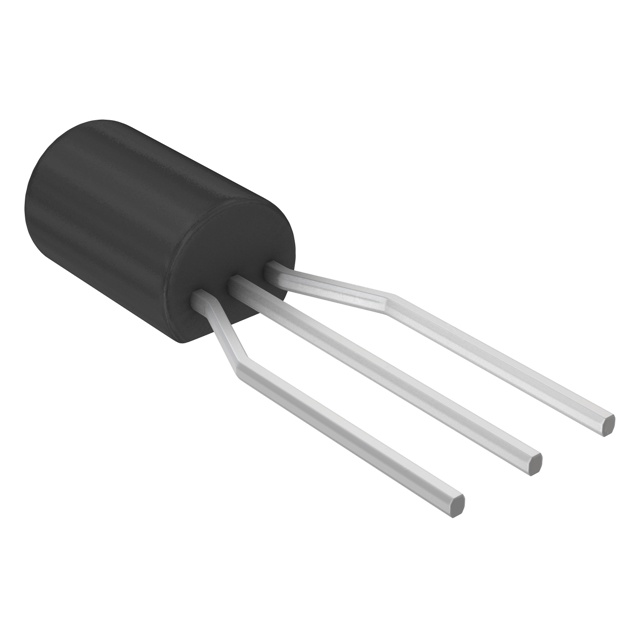
The BC547A-BP is an NPN bipolar junction transistor manufactured by Micro Commercial Co, designed for general-purpose switching and amplification applications. Specified for 45 V collector-emitter breakdown voltage and 100 mA maximum collector current, this device operates across a temperature range of -55°C to 150°C in a Through Hole TO-92 package. The BC547A-BP is classified as Obsolete, necessitating identification of functionally equivalent active alternatives for new designs and ongoing production requirements.
Substiute Parts
Key Parameters
| Parameter | Value | Unit |
|---|---|---|
| Transistor Type | NPN | — |
| Current - Collector (Ic) Max | 100 | mA |
| Voltage - Collector Emitter Breakdown (Max) | 45 | V |
| Power - Max | 625 | mW |
| Frequency - Transition | 300 | MHz |
| Operating Temperature Range | -55 to 150 | °C |
| Mounting Type | Through Hole | — |
| Package / Case | TO-92-3 | — |
Substitute Part Grouping Explanation
Substitution of the BC547A-BP is determined by strict equivalence across the following electrical and mechanical parameters:
Critical Matching Parameters:
- Transistor Type: NPN configuration
- Current - Collector (Ic) Max: 100 mA minimum
- Voltage - Collector Emitter Breakdown: 45 V or greater
- Frequency - Transition: 300 MHz or greater
- Package / Case: TO-92-3 (Through Hole)
- Operating Temperature Range: Must encompass or exceed -55°C to 150°C
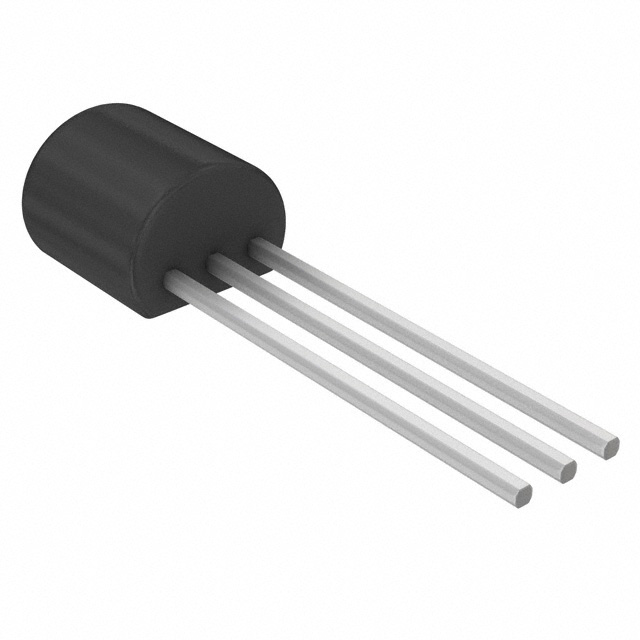
The BC550CBU, manufactured by onsemi, satisfies all substitution criteria. Both devices share identical maximum collector current (100 mA), collector-emitter breakdown voltage (45 V), transition frequency (300 MHz), and package configuration (TO-92-3). The BC550CBU maintains active product status with ROHS3 compliance, providing a direct functional replacement for obsolete BC547A-BP applications.
Parameter Comparison
| Parameter | BC547A-BP (Main Part) | BC550CBU (Substitute) | Unit |
|---|---|---|---|
| Manufacturer | Micro Commercial Co | onsemi | — |
| Transistor Type | NPN | NPN | — |
| Current - Collector (Ic) Max | 100 | 100 | mA |
| Voltage - Collector Emitter Breakdown (Max) | 45 | 45 | V |
| Vce Saturation (Max) @ Ib, Ic | 300mV @ 5mA, 100mA | 600mV @ 5mA, 100mA | mV |
| DC Current Gain (hFE) Min @ Ic, Vce | 110 @ 2mA, 5V | 420 @ 2mA, 5V | — |
| Power - Max | 625 | 500 | mW |
| Frequency - Transition | 300 | 300 | MHz |
| Operating Temperature (TJ) | -55 to 150 | Up to 150 | °C |
| Mounting Type | Through Hole | Through Hole | — |
| Package / Case | TO-92-3 | TO-92-3 | — |
| Product Status | Obsolete | Active | — |
| RoHS Status | RoHS Compliant | ROHS3 Compliant | — |
Engineering Selection Recommendations
The BC550CBU is the qualified substitute for BC547A-BP applications based on the following engineering criteria:
Electrical Equivalence: Both devices operate at identical maximum collector current (100 mA), collector-emitter breakdown voltage (45 V), and transition frequency (300 MHz). These parameters define the functional operating envelope for switching and amplification circuits.
Package Compatibility: Both devices utilize the TO-92-3 Through Hole package, ensuring mechanical and thermal compatibility with existing PCB layouts and assembly processes.
Product Status and Compliance: The BC550CBU maintains Active product status with ROHS3 compliance certification, providing long-term supply availability and regulatory alignment for new production. The BC547A-BP Obsolete status necessitates transition to an active equivalent.
Operational Differences: The BC550CBU exhibits higher DC current gain (hFE = 420 @ 2mA, 5V versus 110 @ 2mA, 5V) and higher Vce saturation voltage (600mV versus 300mV). These differences require circuit-level evaluation in applications where gain or saturation characteristics directly impact performance. Maximum power dissipation is reduced in the BC550CBU (500 mW versus 625 mW), requiring thermal design verification in high-power applications.
Frequently Asked Questions (FAQ)
Q: Can BC550CBU directly replace BC547A-BP in all applications?
A: BC550CBU satisfies all critical electrical parameters (Ic, Vce breakdown, frequency) and package requirements for functional substitution. However, differences in DC current gain and Vce saturation require circuit-level analysis. Applications sensitive to gain or saturation behavior must be evaluated individually.
Q: What are the key differences between BC547A-BP and BC550CBU?
A: Primary differences are: (1) DC current gain is significantly higher in BC550CBU (420 versus 110 @ 2mA, 5V); (2) Vce saturation is higher in BC550CBU (600mV versus 300mV); (3) Maximum power dissipation is lower in BC550CBU (500 mW versus 625 mW); (4) BC550CBU is Active status with ROHS3 compliance versus BC547A-BP Obsolete status.
Q: Are there thermal considerations when substituting BC550CBU for BC547A-BP?
A: The BC550CBU has lower maximum power dissipation (500 mW versus 625 mW). Applications operating near the 625 mW limit of BC547A-BP require thermal design review to ensure BC550CBU power dissipation remains within specified limits.
Q: Does the higher DC current gain of BC550CBU affect circuit design?
A: Higher DC current gain (hFE = 420 versus 110) reduces base current requirements for equivalent collector current. Circuits designed with base current calculations specific to BC547A-BP gain characteristics should be re-evaluated to prevent over-biasing or unintended circuit behavior.
Q: Is the TO-92-3 package identical between both devices?
A: Yes. Both BC547A-BP and BC550CBU use the TO-92-3 Through Hole package with identical pin configuration and mechanical dimensions, ensuring direct PCB compatibility.
Q: What is the compliance status of each device?
A: BC547A-BP is RoHS Compliant. BC550CBU is ROHS3 Compliant, representing current regulatory standards. Both devices carry EAR99 ECCN classification.
Alternative Parts

SJ6012L2TP
Littelfuse Inc.
6 Alternative Parts

JMK107BBJ476MA-RE
Taiyo Yuden
10 Alternative Parts

GMK107BBJ475MA-T
Taiyo Yuden
5 Alternative Parts
SJ6020N2ARP
Littelfuse Inc.
3 Alternative Parts
SJ6025R2ATP
Littelfuse Inc.
4 Alternative Parts

2474-05L
API Delevan Inc.
1 Alternative Parts

4590R-684K
API Delevan Inc.
1 Alternative Parts

CM6560R-334
API Delevan Inc.
1 Alternative Parts

CM6460-104
API Delevan Inc.
1 Alternative Parts

5526-12
API Delevan Inc.
1 Alternative Parts