



Request Quote
(Ships tomorrow)
BC212 Equivalent & Substitute Parts
Part Overview
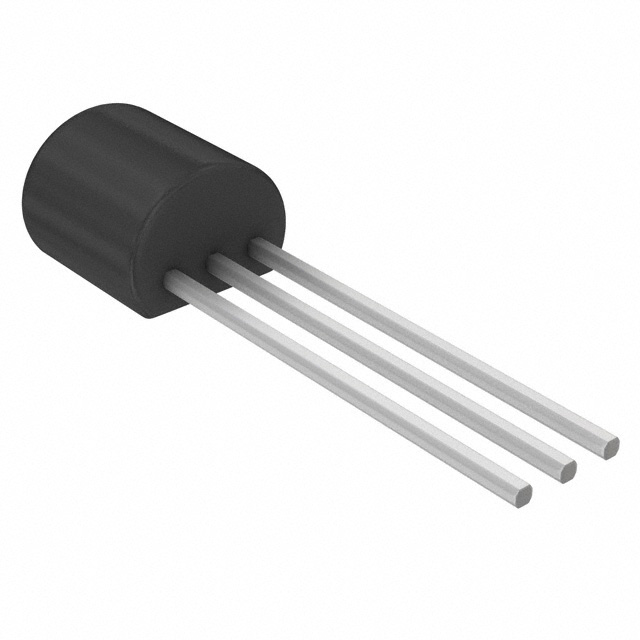
The BC212 is a PNP bipolar junction transistor manufactured by onsemi, designed for through-hole applications in the TO-92-3 package. This device operates at a maximum collector current of 300 mA and collector-emitter breakdown voltage of 50 V, with a maximum power dissipation of 625 mW. The BC212 is classified as obsolete, necessitating identification of active alternative components that maintain functional compatibility within circuit designs. Substitute parts must satisfy the electrical and mechanical constraints of the original specification while offering improved availability and product status.
Substiute Parts
Key Parameters
| Parameter | BC212 Specification |
|---|---|
| Transistor Type | PNP |
| Current - Collector (Ic) (Max) | 300 mA |
| Voltage - Collector Emitter Breakdown (Max) | 50 V |
| Vce Saturation (Max) @ Ib, Ic | 600 mV @ 5 mA, 100 mA |
| Current - Collector Cutoff (Max) | 15 nA (ICBO) |
| DC Current Gain (hFE) (Min) @ Ic, Vce | 60 @ 2 mA, 5 V |
| Power - Max | 625 mW |
| Operating Temperature | -55°C ~ 150°C (TJ) |
| Mounting Type | Through Hole |
| Package / Case | TO-92-3 (TO-226AA) |
| Product Status | Obsolete |
Substitute Part Grouping Explanation
Substitution of the BC212 requires evaluation against the following critical parameters: transistor polarity (PNP), maximum collector current rating, maximum collector-emitter breakdown voltage, power dissipation capability, and operating temperature range. The BC857BLT1G qualifies as a functional substitute based on the following substitution logic:
Substitution Criteria:
- Transistor polarity must remain PNP
- Maximum collector current of substitute must equal or exceed circuit requirements (BC212: 300 mA maximum)
- Maximum collector-emitter breakdown voltage must equal or exceed circuit requirements (BC212: 50 V maximum)
- Power dissipation capability must support circuit thermal demands (BC212: 625 mW maximum)
- Operating temperature range must encompass application requirements (BC212: -55°C to 150°C)
The BC857BLT1G operates within a reduced current envelope (100 mA maximum) and reduced voltage rating (45 V maximum) compared to the BC212. This substitute is applicable only to circuits where the actual operating collector current does not exceed 100 mA and the collector-emitter voltage does not exceed 45 V. The substitute offers active product status and improved frequency performance (100 MHz transition frequency), with surface-mount packaging requiring design and layout modifications.
Parameter Comparison
| Parameter | BC212 | BC857BLT1G | Compatibility Notes |
|---|---|---|---|
| Transistor Type | PNP | PNP | Matched |
| Current - Collector (Ic) (Max) | 300 mA | 100 mA | Substitute rated lower; verify circuit current requirements |
| Voltage - Collector Emitter Breakdown (Max) | 50 V | 45 V | Substitute rated lower; verify circuit voltage requirements |
| Vce Saturation (Max) @ Ib, Ic | 600 mV @ 5 mA, 100 mA | 650 mV @ 5 mA, 100 mA | Substitute exhibits slightly higher saturation voltage |
| Current - Collector Cutoff (Max) | 15 nA (ICBO) | 15 nA (ICBO) | Matched |
| DC Current Gain (hFE) (Min) @ Ic, Vce | 60 @ 2 mA, 5 V | 220 @ 2 mA, 5 V | Substitute exhibits higher current gain |
| Power - Max | 625 mW | 300 mW | Substitute rated lower; verify circuit power dissipation |
| Operating Temperature | -55°C ~ 150°C (TJ) | -55°C ~ 150°C (TJ) | Matched |
| Mounting Type | Through Hole | Surface Mount | Different; requires PCB redesign |
| Package / Case | TO-92-3 | SOT-23-3 (TO-236) | Different; requires PCB redesign |
| Frequency - Transition | Not specified | 100 MHz | Substitute offers specified frequency performance |
| Product Status | Obsolete | Active | Substitute offers improved availability |
Engineering Selection Recommendations
The BC857BLT1G is an active product offering improved long-term availability compared to the obsolete BC212. Selection of this substitute requires verification that circuit operating conditions remain within the reduced electrical ratings: maximum collector current of 100 mA and maximum collector-emitter voltage of 45 V. The substitute exhibits higher DC current gain (220 versus 60 at 2 mA, 5 V), which may alter circuit biasing characteristics and require recalculation of base resistor values.
The BC857BLT1G is RoHS3 compliant and maintains REACH unaffected status, consistent with the BC212. The surface-mount SOT-23-3 package requires PCB layout and assembly process modifications compared to the through-hole TO-92-3 package of the original component.
Substitution is not recommended for circuits operating at collector currents exceeding 100 mA or collector-emitter voltages exceeding 45 V. In such applications, alternative PNP transistors with higher current and voltage ratings must be evaluated.
Frequently Asked Questions (FAQ)
Q: Can the BC857BLT1G directly replace the BC212 in existing through-hole PCB designs?
A: No. The BC857BLT1G uses surface-mount SOT-23-3 packaging, while the BC212 uses through-hole TO-92-3 packaging. PCB redesign is required. Adapter boards or manual rework may be employed for prototype applications, but production designs require PCB layout modification.
Q: What are the critical electrical differences between BC212 and BC857BLT1G?
A: The BC857BLT1G has reduced maximum ratings: 100 mA collector current (versus 300 mA), 45 V collector-emitter breakdown voltage (versus 50 V), and 300 mW power dissipation (versus 625 mW). The BC857BLT1G exhibits higher DC current gain (220 versus 60 at 2 mA, 5 V) and includes specified transition frequency of 100 MHz.
Q: How do I determine if the BC857BLT1G is suitable for my application?
A: Verify that your circuit operates within these limits: collector current does not exceed 100 mA, collector-emitter voltage does not exceed 45 V, and power dissipation does not exceed 300 mW. If any parameter exceeds these values, the BC857BLT1G is not suitable.
Q: Does the higher DC current gain of the BC857BLT1G affect circuit operation?
A: Yes. The BC857BLT1G exhibits DC current gain of 220 at 2 mA, 5 V, compared to 60 for the BC212. This affects base current requirements and biasing calculations. Base resistor values may require adjustment to maintain proper circuit operation.
Q: Are there compliance or certification differences between these parts?
A: Both parts maintain REACH unaffected status and EAR99 ECCN classification. The BC857BLT1G is RoHS3 compliant, while the BC212 compliance status is not specified. Both operate across -55°C to 150°C junction temperature range.
Q: What is the saturation voltage difference between these transistors?
A: At 5 mA base current and 100 mA collector current, the BC212 exhibits 600 mV maximum saturation voltage, while the BC857BLT1G exhibits 650 mV maximum saturation voltage. This 50 mV difference may affect low-voltage switching applications.
Alternative Parts

SJ6012L2TP
Littelfuse Inc.
6 Alternative Parts

JMK107BBJ476MA-RE
Taiyo Yuden
10 Alternative Parts

GMK107BBJ475MA-T
Taiyo Yuden
5 Alternative Parts
SJ6020N2ARP
Littelfuse Inc.
3 Alternative Parts
SJ6025R2ATP
Littelfuse Inc.
4 Alternative Parts

2474-05L
API Delevan Inc.
1 Alternative Parts

4590R-684K
API Delevan Inc.
1 Alternative Parts

CM6560R-334
API Delevan Inc.
1 Alternative Parts

CM6460-104
API Delevan Inc.
1 Alternative Parts

5526-12
API Delevan Inc.
1 Alternative Parts