


Request Quote
(Ships tomorrow)
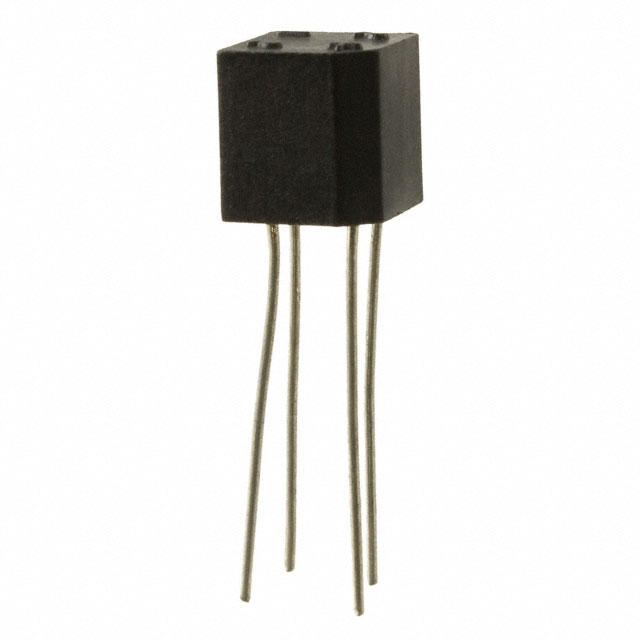
B500R Bridge Rectifier Equivalent & Substitute Parts
Part Overview
The B500R is a single-phase bridge rectifier manufactured by Diotec Semiconductor, rated for 1 kV peak reverse voltage and 2 A average rectified current. This component is designed for through-hole mounting in standard 4-circular WOG package configuration and operates across a temperature range of -50°C to 150°C. The part maintains active product status with 1923 units in current inventory.
Substitute parts become necessary when the primary component experiences supply constraints, extended lead times, or when design requirements permit operation within the electrical and mechanical tolerances of alternative qualified devices. Substitution must maintain compatibility across voltage ratings, current capacity, mounting type, and package dimensions.
Substiute Parts
Key Parameters
| Parameter | Value | Unit |
|---|---|---|
| Voltage - Peak Reverse (Max) | 1 | kV |
| Current - Average Rectified (Io) | 2 | A |
| Voltage - Forward (Vf) (Max) @ If | 1 V @ 1 A | V @ A |
| Current - Reverse Leakage @ Vr | 5 | µA @ 1000 V |
| Operating Temperature Range | -50 to 150 | °C (TJ) |
| Mounting Type | Through Hole | — |
| Package / Case | 4-Circular, WOG | — |
| Diode Type | Single Phase | — |
| Technology | Standard | — |
Substitute Part Grouping Explanation
Substitution of the B500R with the VS-1KAB100E is permissible based on the following alignment of critical electrical and mechanical parameters:
Voltage Compatibility: Both devices maintain identical peak reverse voltage ratings of 1 kV, ensuring equivalent voltage stress handling in the circuit.
Mounting and Package: Both components utilize through-hole mounting technology, enabling direct board-level installation without modification to PCB layout or assembly procedures.
Diode Type and Technology: Both parts are single-phase bridge rectifiers using standard semiconductor technology, maintaining functional equivalence in rectification performance.
Operating Temperature Range: The VS-1KAB100E operates from -55°C to 150°C, which encompasses the B500R operating range of -50°C to 150°C, providing thermal compatibility.
Current Rating Consideration: The VS-1KAB100E is rated for 1.2 A average rectified current, which is lower than the B500R's 2 A rating. This device functions as a substitute only in applications where the circuit current demand does not exceed 1.2 A.
Forward Voltage Characteristics: The VS-1KAB100E exhibits a forward voltage of 1.1 V @ 1.2 A compared to the B500R's 1 V @ 1 A. This minor difference is within acceptable engineering tolerance for standard bridge rectifier applications.
Parameter Comparison
| Parameter | B500R (Diotec) | VS-1KAB100E (Vishay) | Compatibility |
|---|---|---|---|
| Voltage - Peak Reverse (Max) | 1 kV | 1 kV | Matched |
| Current - Average Rectified (Io) | 2 A | 1.2 A | Substitute rated lower |
| Voltage - Forward (Vf) (Max) @ If | 1 V @ 1 A | 1.1 V @ 1.2 A | Similar |
| Current - Reverse Leakage @ Vr | 5 µA @ 1000 V | 10 µA @ 1000 V | Substitute higher |
| Operating Temperature Range | -50 to 150°C | -55 to 150°C | Substitute range wider |
| Mounting Type | Through Hole | Through Hole | Matched |
| Package / Case | 4-Circular, WOG | 4-Square, D-38 | Different form factor |
| Diode Type | Single Phase | Single Phase | Matched |
| Technology | Standard | Standard | Matched |
Engineering Selection Recommendations
Primary Selection: The B500R remains the preferred component for applications requiring the full 2 A average rectified current capacity and the specific WOG package form factor.
Substitute Selection Criteria: The VS-1KAB100E serves as a qualified substitute when all of the following conditions are met:
Circuit average rectified current demand does not exceed 1.2 A. The D-38 package form factor is mechanically compatible with the PCB layout and mounting structure. The application tolerates the slightly elevated reverse leakage current of 10 µA at 1000 V. The 1 kV voltage rating requirement is maintained.
Compliance Status: The VS-1KAB100E carries ROHS3 compliance certification and REACH Unaffected status, whereas the B500R lists RoHS status as not applicable. Both devices share the same ECCN classification (EAR99) and HTSUS code (8541.10.0080), indicating equivalent regulatory treatment for export and tariff purposes.
Inventory Consideration: The B500R maintains higher inventory availability (1923 units) compared to the VS-1KAB100E (1009 units), supporting preference for the primary part in standard procurement scenarios.
Frequently Asked Questions (FAQ)
Q: Can the VS-1KAB100E directly replace the B500R in all applications?
A: No. The VS-1KAB100E is suitable only for applications where the average rectified current requirement does not exceed 1.2 A. Applications requiring the full 2 A capacity of the B500R must use the primary part or identify alternative substitutes with matching current ratings.
Q: What is the significance of the different package types (WOG versus D-38)?
A: The WOG package uses a 4-circular pin configuration, while the D-38 package uses a 4-square configuration. These represent different physical form factors and pin layouts. Substitution requires verification that the D-38 package dimensions and pin spacing are compatible with the existing PCB footprint and mounting holes.
Q: How does the reverse leakage current difference affect circuit performance?
A: The VS-1KAB100E exhibits 10 µA reverse leakage at 1000 V compared to the B500R's 5 µA. This doubling of leakage current is within acceptable limits for standard bridge rectifier applications but may impact performance in precision analog circuits or high-impedance applications. Circuit analysis should confirm acceptability for the specific application.
Q: Are there compliance or regulatory differences between these parts?
A: The VS-1KAB100E carries ROHS3 compliance and REACH Unaffected certification. The B500R lists RoHS status as not applicable. Both share identical ECCN (EAR99) and HTSUS (8541.10.0080) classifications. Procurement requirements should specify whether ROHS3 compliance is mandatory for the application.
Q: What is the impact of the operating temperature range difference?
A: The VS-1KAB100E operates from -55°C to 150°C, extending 5°C lower than the B500R's -50°C minimum. This provides additional margin in cold-temperature environments but does not restrict substitution in applications within the B500R's original temperature specification.
Q: How should forward voltage differences be evaluated?
A: The B500R specifies 1 V forward voltage at 1 A, while the VS-1KAB100E specifies 1.1 V at 1.2 A. The 0.1 V difference is typical for standard bridge rectifier technology variations and does not constitute a functional incompatibility. Power dissipation calculations should incorporate the actual forward voltage of the selected device.
Alternative Parts

SJ6012L2TP
Littelfuse Inc.
6 Alternative Parts

JMK107BBJ476MA-RE
Taiyo Yuden
10 Alternative Parts

GMK107BBJ475MA-T
Taiyo Yuden
5 Alternative Parts
SJ6020N2ARP
Littelfuse Inc.
3 Alternative Parts
SJ6025R2ATP
Littelfuse Inc.
4 Alternative Parts

2474-05L
API Delevan Inc.
1 Alternative Parts

4590R-684K
API Delevan Inc.
1 Alternative Parts

CM6560R-334
API Delevan Inc.
1 Alternative Parts

CM6460-104
API Delevan Inc.
1 Alternative Parts

5526-12
API Delevan Inc.
1 Alternative Parts