


Request Quote
(Ships tomorrow)
ATTINY11-6PC Equivalent & Substitute Parts
Part Overview
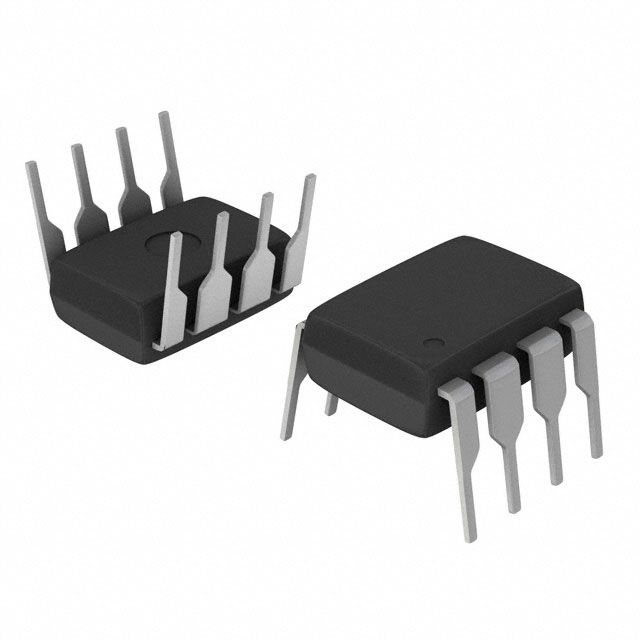
The ATTINY11-6PC is an 8-bit AVR microcontroller from Microchip Technology's ATtiny series, featuring 1KB of FLASH program memory and a 6MHz internal oscillator. This device is classified as obsolete and is no longer in active production. Due to its discontinued status, identifying compatible substitute components is essential for ongoing system support, design updates, and procurement continuity.
Substiute Parts
Key Parameters
| Parameter | Value |
|---|---|
| Manufacturer Part Number | ATTINY11-6PC |
| Manufacturer | Microchip Technology |
| Series | AVR® ATtiny |
| Core Processor | AVR |
| Core Size | 8-Bit |
| Speed | 6MHz |
| Program Memory Size | 1KB (512 x 16) |
| Program Memory Type | FLASH |
| Number of I/O | 6 |
| Voltage - Supply (Vcc/Vdd) | 4V ~ 5.5V |
| Operating Temperature | 0°C ~ 70°C (TA) |
| Package / Case | 8-DIP (0.300", 7.62mm) |
| Mounting Type | Through Hole |
| Product Status | Obsolete |
Substitute Part Grouping Explanation
Substitution of the ATTINY11-6PC is determined by the following critical parameters:
Core Compatibility Requirements:
- AVR core processor architecture
- 8-bit core size
- 1KB (512 x 16) FLASH program memory
- 6 I/O pins
- 8-DIP (0.300", 7.62mm) package footprint
- Through-hole mounting type
Electrical Compatibility Criteria:
- Supply voltage range must encompass or be compatible with 4V ~ 5.5V
- Operating temperature range must support the application environment
The ATTINY13-20PU meets these core substitution criteria while maintaining identical package geometry and pin configuration, enabling direct replacement in existing PCB designs.
Parameter Comparison
| Parameter | ATTINY11-6PC (Main Part) | ATTINY13-20PU (Substitute) |
|---|---|---|
| Manufacturer | Microchip Technology | Microchip Technology |
| Series | AVR® ATtiny | AVR® ATtiny |
| Core Processor | AVR | AVR |
| Core Size | 8-Bit | 8-Bit |
| Speed | 6MHz | 20MHz |
| Program Memory Size | 1KB (512 x 16) | 1KB (512 x 16) |
| Program Memory Type | FLASH | FLASH |
| Number of I/O | 6 | 6 |
| Voltage - Supply (Vcc/Vdd) | 4V ~ 5.5V | 2.7V ~ 5.5V |
| Operating Temperature | 0°C ~ 70°C (TA) | -40°C ~ 85°C (TA) |
| Package / Case | 8-DIP (0.300", 7.62mm) | 8-DIP (0.300", 7.62mm) |
| Mounting Type | Through Hole | Through Hole |
| Product Status | Obsolete | Active |
| RoHS Status | RoHS non-compliant | ROHS3 Compliant |
Engineering Selection Recommendations
The ATTINY13-20PU is the qualified substitute for the ATTINY11-6PC based on the following engineering criteria:
Functional Equivalence: Both devices share identical core architecture (AVR 8-bit), program memory capacity (1KB FLASH), I/O pin count (6), and package form factor (8-DIP). Pin-to-pin compatibility is maintained, enabling direct PCB replacement without layout modifications.
Product Status Advantage: The ATTINY13-20PU holds active product status with established supply chain availability, whereas the ATTINY11-6PC is obsolete. This transition ensures long-term component procurement reliability.
Compliance Enhancement: The ATTINY13-20PU is ROHS3 compliant, addressing modern regulatory requirements. The original ATTINY11-6PC is non-compliant with current RoHS standards.
Performance Headroom: The ATTINY13-20PU operates at 20MHz versus the ATTINY11-6PC's 6MHz, providing increased processing capability without architectural changes. The wider supply voltage range (2.7V ~ 5.5V) and extended operating temperature range (-40°C ~ 85°C) offer greater application flexibility.
Consideration: Applications with strict timing constraints tied to the 6MHz clock frequency require validation of timing-dependent code when migrating to the 20MHz substitute.
Frequently Asked Questions (FAQ)
Q: Can the ATTINY13-20PU directly replace the ATTINY11-6PC in existing designs?
A: Yes. Both devices use identical 8-DIP package geometry with matching pin assignments. No PCB modifications are required for physical substitution. Code compatibility depends on application-specific timing requirements.
Q: What are the key differences between these two parts?
A: The primary differences are clock speed (6MHz vs. 20MHz), product status (obsolete vs. active), supply voltage range (4V~5.5V vs. 2.7V~5.5V), operating temperature range (0°C~70°C vs. -40°C~85°C), and RoHS compliance status. Both share identical memory capacity, I/O count, and package form factor.
Q: Is the ATTINY13-20PU suitable for low-power applications?
A: The ATTINY13-20PU supports a lower minimum supply voltage (2.7V) compared to the ATTINY11-6PC (4V), expanding low-voltage application possibilities. However, the higher clock speed may increase power consumption in active modes.
Q: Are there any code compatibility issues when switching from ATTINY11-6PC to ATTINY13-20PU?
A: Both devices use the same AVR instruction set. Applications relying on specific clock frequencies or timing-dependent operations require validation. The ATTINY13-20PU's higher clock speed may affect delay loops and timing-critical sections.
Q: What is the packaging difference?
A: Both parts use 8-DIP (0.300", 7.62mm) through-hole packaging. No package-related design changes are necessary.
Alternative Parts

SJ6012L2TP
Littelfuse Inc.
6 Alternative Parts

JMK107BBJ476MA-RE
Taiyo Yuden
10 Alternative Parts

GMK107BBJ475MA-T
Taiyo Yuden
5 Alternative Parts
SJ6020N2ARP
Littelfuse Inc.
3 Alternative Parts
SJ6025R2ATP
Littelfuse Inc.
4 Alternative Parts

2474-05L
API Delevan Inc.
1 Alternative Parts

4590R-684K
API Delevan Inc.
1 Alternative Parts

CM6560R-334
API Delevan Inc.
1 Alternative Parts

CM6460-104
API Delevan Inc.
1 Alternative Parts

5526-12
API Delevan Inc.
1 Alternative Parts