



Request Quote
(Ships tomorrow)
AT93C56-10PI EEPROM Equivalent & Substitute Parts
Part Overview
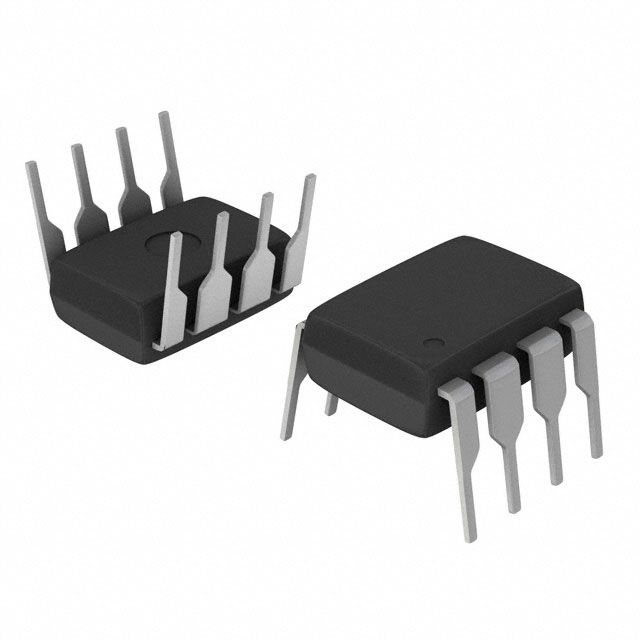
The AT93C56-10PI is a 2Kbit non-volatile EEPROM memory IC manufactured by Microchip Technology, featuring a 3-Wire Serial interface and 2 MHz clock frequency in an 8-DIP through-hole package. This device is classified as obsolete, making equivalent substitute parts necessary for new designs and production continuity. The part operates across a 4.5V to 5.5V supply range with a 10ms write cycle time and supports memory organization of 256 x 8 or 128 x 16 bits.
Substiute Parts
Key Parameters
| Parameter | Value |
|---|---|
| Memory Type | Non-Volatile EEPROM |
| Memory Size | 2Kbit |
| Memory Organization | 256 x 8, 128 x 16 |
| Memory Interface | 3-Wire Serial |
| Clock Frequency | 2 MHz |
| Write Cycle Time | 10ms |
| Voltage Supply Range | 4.5V ~ 5.5V |
| Operating Temperature | -40°C ~ 85°C |
| Package Type | 8-DIP (0.300", 7.62mm) |
| Mounting Type | Through Hole |
| Product Status | Obsolete |
Substitute Part Grouping Explanation
Substitution of the AT93C56-10PI is determined by the following critical parameters:
- Memory capacity (2Kbit) and organization (256 x 8, 128 x 16)
- Non-volatile EEPROM technology
- Serial interface protocol compatibility
- Package form factor (8-DIP through-hole)
- Operating temperature range (-40°C ~ 85°C)
- Supply voltage compatibility
The 93AA56C-I/P qualifies as a direct substitute based on matching memory size, organization, package type, and operating temperature range. While the substitute features an enhanced Microwire interface (compatible with 3-Wire Serial protocol), wider supply voltage range (1.8V ~ 5.5V), and faster clock frequency (3 MHz), these represent functional improvements rather than incompatibilities.
Parameter Comparison
| Parameter | AT93C56-10PI | 93AA56C-I/P |
|---|---|---|
| Memory Type | Non-Volatile EEPROM | Non-Volatile EEPROM |
| Memory Size | 2Kbit | 2Kbit |
| Memory Organization | 256 x 8, 128 x 16 | 256 x 8, 128 x 16 |
| Memory Interface | 3-Wire Serial | Microwire |
| Clock Frequency | 2 MHz | 3 MHz |
| Write Cycle Time | 10ms | 6ms |
| Voltage Supply Range | 4.5V ~ 5.5V | 1.8V ~ 5.5V |
| Operating Temperature | -40°C ~ 85°C | -40°C ~ 85°C |
| Package Type | 8-DIP (0.300", 7.62mm) | 8-DIP (0.300", 7.62mm) |
| Mounting Type | Through Hole | Through Hole |
| Product Status | Obsolete | Active |
| RoHS Status | RoHS non-compliant | ROHS3 Compliant |
Engineering Selection Recommendations
The 93AA56C-I/P is the qualified substitute for the obsolete AT93C56-10PI. Selection is justified by:
- Identical memory capacity and organization matching the original specification
- Pin-compatible 8-DIP package enabling direct board-level replacement
- Matching operating temperature range ensuring thermal compatibility
- Active product status providing long-term availability and supply continuity
- ROHS3 compliance meeting current environmental and regulatory requirements
- Enhanced performance characteristics (faster clock frequency, reduced write cycle time, extended supply voltage range) providing design margin without introducing incompatibilities
Frequently Asked Questions (FAQ)
Q: Can the 93AA56C-I/P directly replace the AT93C56-10PI on existing PCBs?
A: Yes. Both devices use identical 8-DIP through-hole packaging with matching pinouts, enabling direct board-level substitution without layout modifications.
Q: Are there interface protocol differences between the two parts?
A: The AT93C56-10PI uses 3-Wire Serial protocol, while the 93AA56C-I/P uses Microwire protocol. Microwire is compatible with 3-Wire Serial implementations, allowing functional substitution in existing circuits.
Q: What are the supply voltage considerations for substitution?
A: The original part operates at 4.5V ~ 5.5V. The substitute accepts 1.8V ~ 5.5V, providing broader voltage compatibility. Circuits designed for the original 4.5V ~ 5.5V range operate without modification.
Q: How do the write cycle times compare?
A: The AT93C56-10PI specifies 10ms write cycle time, while the 93AA56C-I/P specifies 6ms. The faster write performance of the substitute does not create incompatibility with existing firmware or timing-dependent code.
Q: What is the significance of the product status change from Obsolete to Active?
A: The substitute's active status ensures continued manufacturing, availability, and technical support, eliminating supply chain risk associated with obsolete components.
Q: Are there RoHS compliance implications?
A: The original part is RoHS non-compliant, while the substitute is ROHS3 compliant. For new designs or applications requiring regulatory compliance, the substitute meets current environmental standards.
Alternative Parts

SJ6012L2TP
Littelfuse Inc.
6 Alternative Parts

JMK107BBJ476MA-RE
Taiyo Yuden
10 Alternative Parts

GMK107BBJ475MA-T
Taiyo Yuden
5 Alternative Parts
SJ6020N2ARP
Littelfuse Inc.
3 Alternative Parts
SJ6025R2ATP
Littelfuse Inc.
4 Alternative Parts

2474-05L
API Delevan Inc.
1 Alternative Parts

4590R-684K
API Delevan Inc.
1 Alternative Parts

CM6560R-334
API Delevan Inc.
1 Alternative Parts

CM6460-104
API Delevan Inc.
1 Alternative Parts

5526-12
API Delevan Inc.
1 Alternative Parts