


Request Quote
(Ships tomorrow)
AT93C46A-10SC-2.7 Equivalent & Substitute Parts
Part Overview
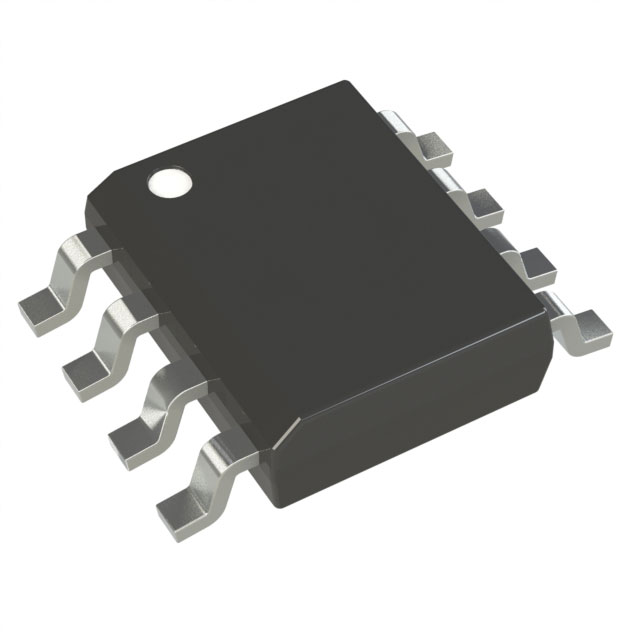
The AT93C46A-10SC-2.7 is a 1Kbit EEPROM memory IC manufactured by Microchip Technology, featuring a 3-Wire Serial interface with 2 MHz clock frequency and 8-SOIC surface mount packaging. This device operates across a 2.7V to 5.5V supply voltage range and supports 128 x 8 or 64 x 16 memory organization. The part is currently classified as obsolete, making identification of functionally equivalent alternatives essential for ongoing system support and new design implementations.
Substiute Parts
Key Parameters
| Parameter | Value |
|---|---|
| Memory Type | Non-Volatile EEPROM |
| Memory Size | 1Kbit |
| Memory Organization | 128 x 8, 64 x 16 |
| Memory Interface | 3-Wire Serial |
| Clock Frequency | 2 MHz |
| Write Cycle Time | 10ms |
| Supply Voltage Range | 2.7V ~ 5.5V |
| Operating Temperature | 0°C ~ 70°C |
| Package Type | 8-SOIC (0.154", 3.90mm Width) |
| Mounting Type | Surface Mount |
| Product Status | Obsolete |
Substitute Part Grouping Explanation
Substitution of the AT93C46A-10SC-2.7 is determined by the following critical parameters:
Memory Capacity & Organization: The substitute must maintain 1Kbit total capacity with compatible memory organization (64 x 16 or 128 x 8 formats).
Package Compatibility: The 8-SOIC surface mount package is mandatory for direct board-level replacement without layout modifications.
Interface Protocol: While the AT93C46A uses 3-Wire Serial protocol, the substitute 93LC46BXT-I/SNG employs Microwire protocol. Both protocols are serial-based and operate at the same 2 MHz clock frequency, enabling functional equivalence in applications where the serial interface timing and command structure are compatible.
Electrical Specifications: Supply voltage range and clock frequency must align to ensure proper operation within existing system parameters.
Memory Interface: 3-Wire Serial and Microwire are both serial protocols suitable for equivalent substitution in this memory category.
Parameter Comparison
| Parameter | AT93C46A-10SC-2.7 (Main) | 93LC46BXT-I/SNG (Substitute) |
|---|---|---|
| Manufacturer | Microchip Technology | Microchip Technology |
| Memory Type | Non-Volatile EEPROM | Non-Volatile EEPROM |
| Memory Size | 1Kbit | 1Kbit |
| Memory Organization | 128 x 8, 64 x 16 | 64 x 16 |
| Memory Interface | 3-Wire Serial | Microwire |
| Clock Frequency | 2 MHz | 2 MHz |
| Write Cycle Time | 10ms | 6ms |
| Supply Voltage Range | 2.7V ~ 5.5V | 2.5V ~ 5.5V |
| Operating Temperature | 0°C ~ 70°C | -40°C ~ 85°C |
| Package Type | 8-SOIC | 8-SOIC |
| Mounting Type | Surface Mount | Surface Mount |
| Product Status | Obsolete | Active |
| RoHS Status | RoHS non-compliant | ROHS3 Compliant |
| Packaging Format | Bulk | Tape & Reel (TR) |
Engineering Selection Recommendations
The 93LC46BXT-I/SNG serves as the primary substitute for the obsolete AT93C46A-10SC-2.7 based on the following engineering criteria:
Product Status: The substitute is classified as Active, ensuring continued availability and manufacturing support, whereas the main part is Obsolete.
Compliance & Certifications: The 93LC46BXT-I/SNG achieves ROHS3 compliance, meeting modern environmental and regulatory standards. The original AT93C46A-10SC-2.7 is RoHS non-compliant.
Electrical Performance: The substitute provides an extended operating temperature range (-40°C to 85°C versus 0°C to 70°C), supporting broader application environments. Write cycle time is improved at 6ms compared to 10ms.
Package & Interface Compatibility: Both devices utilize identical 8-SOIC surface mount packaging, enabling direct board-level substitution. The Microwire interface of the substitute is functionally equivalent to the 3-Wire Serial protocol for serial EEPROM applications operating at 2 MHz.
Supply Voltage: The substitute supports a marginally lower minimum voltage (2.5V versus 2.7V), maintaining compatibility with existing 2.7V to 5.5V system designs.
Frequently Asked Questions (FAQ)
Q: Can the 93LC46BXT-I/SNG directly replace the AT93C46A-10SC-2.7 on existing PCBs?
A: Yes. Both devices share identical 8-SOIC packaging and pinout compatibility. No PCB layout modifications are required for physical replacement.
Q: What is the difference between 3-Wire Serial and Microwire protocols?
A: Both are serial communication protocols for EEPROM devices operating at 2 MHz. The 3-Wire Serial interface and Microwire interface are functionally equivalent for memory read/write operations in this device category. Protocol selection depends on system controller compatibility.
Q: Does the substitute support the same memory organization as the main part?
A: The substitute supports 64 x 16 memory organization. The main part supports both 128 x 8 and 64 x 16 formats. Applications using 64 x 16 organization are fully compatible. Applications requiring 128 x 8 organization must verify controller compatibility with the substitute's 64 x 16 format.
Q: What are the compliance advantages of the substitute?
A: The 93LC46BXT-I/SNG is ROHS3 compliant and manufactured to current environmental standards, whereas the AT93C46A-10SC-2.7 is RoHS non-compliant. This is significant for new designs and systems requiring regulatory compliance.
Q: Is the extended temperature range of the substitute beneficial?
A: The substitute operates from -40°C to 85°C compared to the main part's 0°C to 70°C range. This extended range provides design flexibility for applications in wider temperature environments, though it is not required for systems designed for the original 0°C to 70°C specification.
Q: What is the packaging difference between the two parts?
A: The main part is supplied in bulk packaging, while the substitute is supplied in Tape & Reel (TR) format. This affects procurement and assembly processes but does not impact electrical or functional performance.
Alternative Parts

SJ6012L2TP
Littelfuse Inc.
6 Alternative Parts

JMK107BBJ476MA-RE
Taiyo Yuden
10 Alternative Parts

GMK107BBJ475MA-T
Taiyo Yuden
5 Alternative Parts
SJ6020N2ARP
Littelfuse Inc.
3 Alternative Parts
SJ6025R2ATP
Littelfuse Inc.
4 Alternative Parts

2474-05L
API Delevan Inc.
1 Alternative Parts

4590R-684K
API Delevan Inc.
1 Alternative Parts

CM6560R-334
API Delevan Inc.
1 Alternative Parts

CM6460-104
API Delevan Inc.
1 Alternative Parts

5526-12
API Delevan Inc.
1 Alternative Parts