



Request Quote
(Ships tomorrow)
AT88SC25616C-SU Equivalent & Substitute Parts
Part Overview
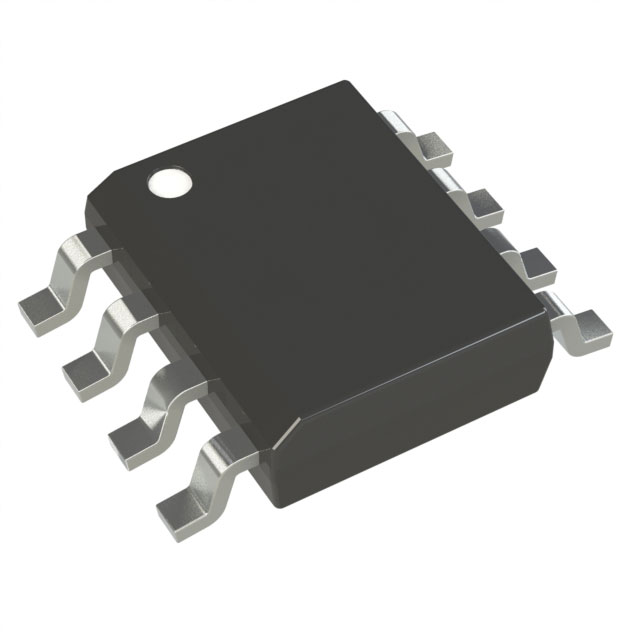
The AT88SC25616C-SU is a Secure Memory IC manufactured by Microchip Technology, classified as a CryptoMemory® series component. This 8-SOIC surface-mount device is designed for embedded and smart card applications requiring secure data storage. The part is currently in active production status with 4050 units in stock inventory.
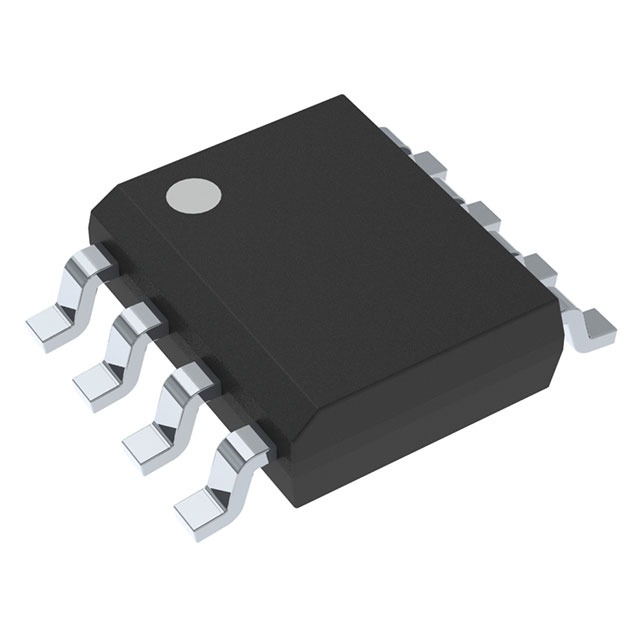
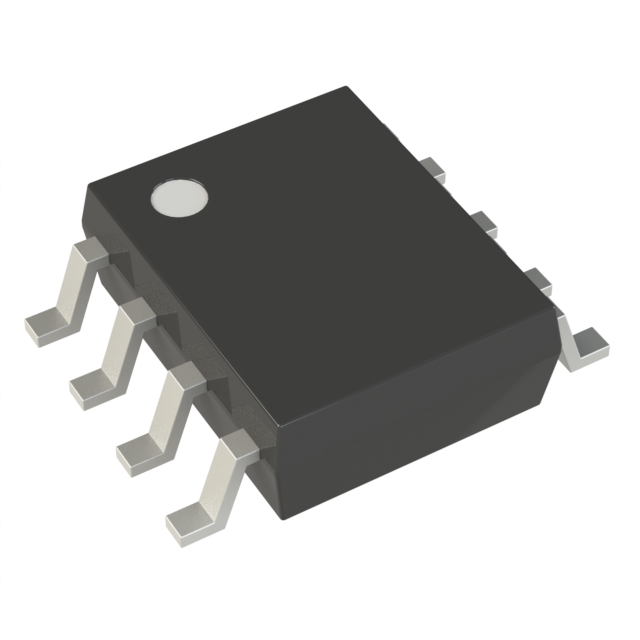
Substitute parts are necessary when the AT88SC25616C-SU becomes unavailable, when alternative supply chains are required, or when design flexibility permits functional equivalents that meet the same electrical and mechanical specifications. The substitute parts listed below are EEPROM memory devices that share compatible package, interface, and memory capacity characteristics.
Substiute Parts
Key Parameters
| Parameter | AT88SC25616C-SU |
|---|---|
| Manufacturer | Microchip Technology |
| Part Type | Secure Memory IC |
| Memory Size | 256Kbit |
| Package / Case | 8-SOIC (0.154", 3.90mm Width) |
| Mounting Type | Surface Mount |
| Memory Organization | 32K x 8 |
| RoHS Status | ROHS3 Compliant |
| Moisture Sensitivity Level | 3 (168 Hours) |
| Product Status | Active |
| REACH Status | REACH Unaffected |
Substitute Part Grouping Explanation
Substitution eligibility for the AT88SC25616C-SU is determined by the following critical parameters:
Primary Compatibility Criteria:
- Memory Size: 256Kbit (32K x 8 organization)
- Package Type: 8-SOIC (0.154", 3.90mm Width) or equivalent 8-pin SOP package
- Mounting Type: Surface Mount
- Memory Interface: I2C protocol support
- RoHS Compliance: ROHS3 Compliant
- Operating Temperature Range: Minimum -40°C to +85°C or wider
- Supply Voltage Range: Minimum 1.7V to 5.5V or compatible subset
Substitution Logic: All listed substitute parts are EEPROM memory devices with 256Kbit capacity in 8-pin surface-mount packages. These parts maintain electrical compatibility through I2C interface standardization and overlapping voltage/temperature specifications. Package variations between 8-SOIC and 8-SOP-J are mechanically equivalent for PCB footprint purposes. Differences in clock frequency (400 kHz vs. 1 MHz) and access time do not prevent substitution but represent performance variations within the same functional category.
Parameter Comparison
| Part Number | Manufacturer | Memory Size | Memory Interface | Clock Frequency | Package | Voltage Supply | Operating Temp | RoHS Status | Inventory |
|---|---|---|---|---|---|---|---|---|---|
| AT88SC25616C-SU | Microchip Technology | 256Kbit | Secure Memory | N/A | 8-SOIC | N/A | N/A | ROHS3 | 4050 |
| 24AA256-E/SN | Microchip Technology | 256Kbit | I2C | 400 kHz | 8-SOIC | 1.7V ~ 5.5V | -40°C ~ 125°C | ROHS3 | 6900 |
| 24AA256UID-I/SN | Microchip Technology | 256Kbit | I2C | 400 kHz | 8-SOIC | 1.7V ~ 5.5V | -40°C ~ 85°C | ROHS3 | 3844 |
| 24FC256-I/SN | Microchip Technology | 256Kbit | I2C | 1 MHz | 8-SOIC | 1.7V ~ 5.5V | -40°C ~ 85°C | ROHS3 | 1433 |
| 24LC256-E/SN | Microchip Technology | 256Kbit | I2C | 400 kHz | 8-SOIC | 2.5V ~ 5.5V | -40°C ~ 125°C | ROHS3 | 2100 |
| 24LC256-I/SN | Microchip Technology | 256Kbit | I2C | 400 kHz | 8-SOIC | 2.5V ~ 5.5V | -40°C ~ 85°C | ROHS3 | 24130 |
| AT24C256C-SSHL-B | Microchip Technology | 256Kbit | I2C | 1 MHz | 8-SOIC | 1.7V ~ 5.5V | -40°C ~ 85°C | ROHS3 | 8300 |
| BR24G256FJ-3AGTE2 | Rohm Semiconductor | 256Kbit | I2C | 1 MHz | 8-SOP-J | 1.7V ~ 5.5V | -40°C ~ 85°C | ROHS3 | 15385 |
| BR24G256FJ-3GTE2 | Rohm Semiconductor | 256Kbit | I2C | 400 kHz | 8-SOP-J | 1.6V ~ 5.5V | -40°C ~ 85°C | ROHS3 | 39100 |
| BR24S256FJ-WE2 | Rohm Semiconductor | 256Kbit | I2C | 400 kHz | 8-SOP-J | 1.7V ~ 5.5V | -40°C ~ 85°C | ROHS3 | 8529 |
| BR24T256FJ-WE2 | Rohm Semiconductor | 256Kbit | I2C | 400 kHz | 8-SOP-J | 1.6V ~ 5.5V | -40°C ~ 85°C | ROHS3 | 8525 |
Engineering Selection Recommendations
Microchip Technology EEPROM Substitutes (Same Manufacturer):
The 24AA256-E/SN, 24LC256-E/SN, and 24AA256-E/SN variants are direct functional equivalents from Microchip Technology. These parts maintain identical 256Kbit capacity, 8-SOIC packaging, and I2C interface compatibility. The 24AA256-E/SN supports the widest operating temperature range (-40°C to +125°C) and lowest supply voltage threshold (1.7V), making it suitable for extended environmental specifications. The 24LC256-I/SN offers the highest inventory availability (24,130 units) with verified programmability certification.
High-Speed Microchip Alternatives:
The 24FC256-I/SN and AT24C256C-SSHL-B operate at 1 MHz clock frequency, providing faster access times (400 ns and 550 ns respectively) compared to standard 400 kHz variants. These are appropriate when system timing requirements demand reduced memory access latency. Both maintain 1.7V minimum supply voltage and -40°C to +85°C operating range.
Rohm Semiconductor Substitutes (Alternative Manufacturer):
The BR24G256FJ, BR24S256FJ-WE2, and BR24T256FJ-WE2 series from Rohm Semiconductor provide equivalent 256Kbit I2C EEPROM functionality in 8-SOP-J packages. These parts are mechanically compatible with 8-SOIC footprints. The BR24G256FJ-3GTE2 offers the highest inventory (39,100 units) with 400 kHz operation. BR24S256FJ-WE2 is verified for programmability and supports 1.7V minimum supply voltage. All Rohm parts maintain ROHS3 compliance and -40°C to +85°C operating temperature range.
Selection Criteria by Application:
- Extended Temperature Range: 24AA256-E/SN or 24LC256-E/SN (-40°C to +125°C)
- Low Voltage Operation: 24AA256-E/SN (1.7V minimum)
- High-Speed Access: 24FC256-I/SN or AT24C256C-SSHL-B (1 MHz, 400-550 ns access time)
- Maximum Availability: 24LC256-I/SN (24,130 units) or BR24G256FJ-3GTE2 (39,100 units)
- Verified Programmability: 24AA256-E/SN, 24FC256-I/SN, 24LC256-E/SN, 24LC256-I/SN, AT24C256C-SSHL-B, BR24S256FJ-WE2
All substitute parts are ROHS3 compliant, REACH unaffected, and in active production status.
Frequently Asked Questions (FAQ)
Q: Can I directly replace AT88SC25616C-SU with any of the listed EEPROM parts?
A: The listed EEPROM parts are functionally equivalent in terms of memory capacity (256Kbit), package type (8-SOIC or equivalent 8-SOP-J), and I2C interface. However, the AT88SC25616C-SU is a Secure Memory device with cryptographic capabilities, while the substitutes are standard EEPROM devices. Substitution is valid only when secure memory features are not required by the application.
Q: What is the difference between 8-SOIC and 8-SOP-J packages?
A: Both 8-SOIC and 8-SOP-J are 8-pin surface-mount packages with 0.154" (3.90mm) width. They are mechanically and electrically compatible for PCB footprint purposes. The designations reflect different manufacturing standards but result in identical pin spacing and soldering characteristics.
Q: Why do some parts have different operating temperature ranges?
A: Operating temperature range is determined by the specific device design and manufacturing process. The 24AA256-E/SN and 24LC256-E/SN support -40°C to +125°C, while most other substitutes support -40°C to +85°C. Selection depends on whether your application requires extended high-temperature operation.
Q: What does "Verified Programmability" mean?
A: Verified Programmability indicates that DiGi-Electronics has tested and confirmed the part's programming functionality. Parts marked "Not Verified" have not undergone this specific testing but remain functionally equivalent based on manufacturer specifications.
Q: Are there differences in write cycle time between substitutes?
A: All listed substitutes specify a 5ms write cycle time for word and page operations. This parameter is consistent across all parts and does not differentiate substitution eligibility.
Q: Which substitute offers the best combination of availability and performance?
A: The 24LC256-I/SN provides 24,130 units in stock with verified programmability, 400 kHz I2C operation, and -40°C to +85°C temperature range. The BR24G256FJ-3GTE2 from Rohm offers even higher availability (39,100 units) with 1 MHz operation, though programmability is not verified.
Q: What is the significance of supply voltage range differences?
A: The 24AA256-E/SN supports 1.7V to 5.5V, while 24LC256 variants support 2.5V to 5.5V. If your circuit operates below 2.5V, the 24AA256-E/SN or 24FC256-I/SN are required. Most standard applications operate at 3.3V or 5.0V, where all substitutes are compatible.
Q: Can I use a 1 MHz part (24FC256-I/SN) as a drop-in replacement for a 400 kHz part?
A: Yes. The 1 MHz parts are backward compatible with 400 kHz I2C bus specifications. The higher clock frequency capability does not prevent operation on slower buses. This substitution improves access time performance without compatibility issues.
Q: What is the Moisture Sensitivity Level (MSL) and why does it vary?
A: MSL indicates how long a component can be exposed to ambient humidity before soldering. The AT88SC25616C-SU has MSL 3 (168 hours), while most EEPROM substitutes have MSL 1 (unlimited). Lower MSL values provide greater handling flexibility and reduced risk of moisture-induced defects during assembly.
Alternative Parts

SJ6012L2TP
Littelfuse Inc.
6 Alternative Parts

JMK107BBJ476MA-RE
Taiyo Yuden
10 Alternative Parts

GMK107BBJ475MA-T
Taiyo Yuden
5 Alternative Parts
SJ6020N2ARP
Littelfuse Inc.
3 Alternative Parts
SJ6025R2ATP
Littelfuse Inc.
4 Alternative Parts

2474-05L
API Delevan Inc.
1 Alternative Parts

4590R-684K
API Delevan Inc.
1 Alternative Parts

CM6560R-334
API Delevan Inc.
1 Alternative Parts

CM6460-104
API Delevan Inc.
1 Alternative Parts

5526-12
API Delevan Inc.
1 Alternative Parts